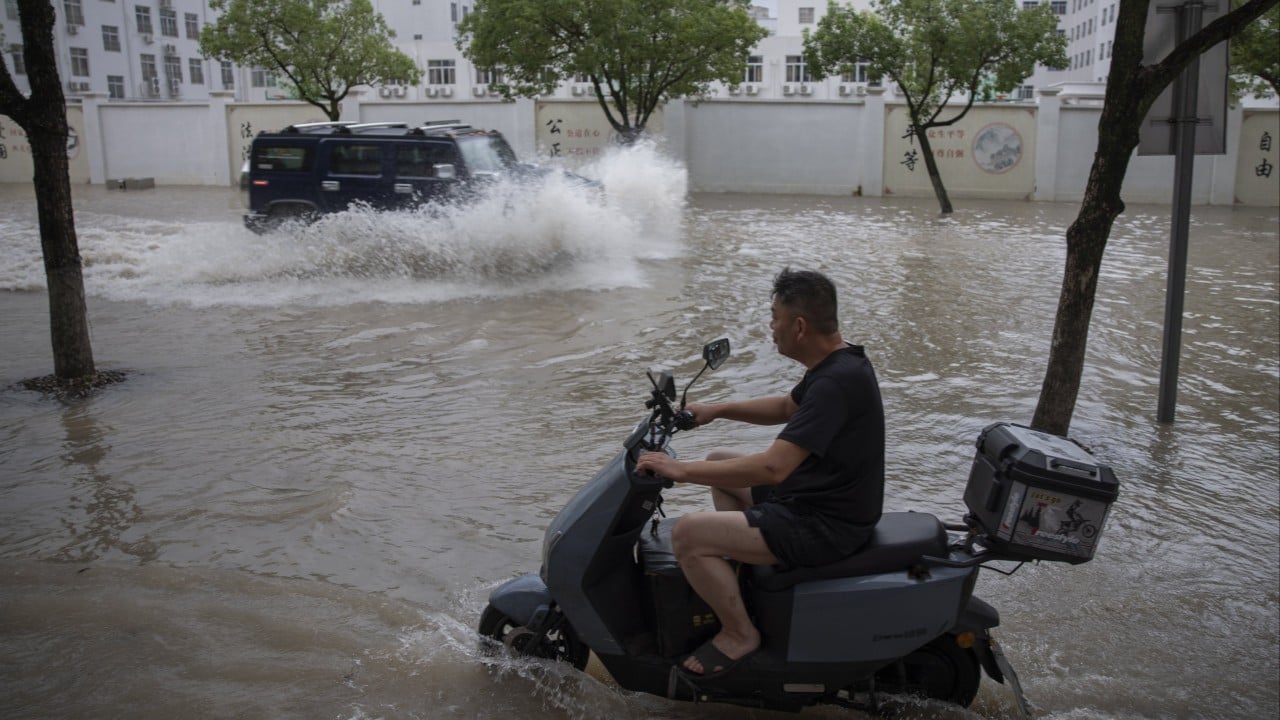
The current Super El Nino cycle has already disrupted global trade routes, scorched agricultural heartlands, and elevated sea surface temperatures to unprecedented levels. Yet the most severe fallout is yet to come. Climatologists and risk analysts warn that the cascading economic and meteorological effects will peak late this year and spill into next, transforming localized climate shocks into systemic global failures. From collapsing crop yields in South America to crippled hydroelectric grids in Asia, the infrastructure built to sustain modern civilization is failing against a destabilized Pacific Ocean.
The Pacific Heat Engine Broken Beyond Repair
El Nino is not a sudden anomaly. It is a periodic warming of the central and eastern tropical Pacific Ocean that alters global atmospheric circulation. Standard cycles occur every two to seven years. Super El Nino events occur when trade winds collapse completely, allowing massive reserves of deep ocean heat to surge eastward toward South America.
When sea surface temperatures cross a threshold of 2.0 degrees Celsius above baseline averages, the phenomenon ceases to be a routine weather pattern. It becomes an engine of mass destruction. Warm water suppresses the upwelling of cold, nutrient-rich deep ocean water along the American coast, destabilizing marine ecosystems and forcing atmospheric jet streams out of their historical tracks.
The immediate result is a severe redistribution of moisture. Drought hits areas accustomed to rain. Torrential downpours inundate arid zones. What makes the current cycle uniquely dangerous is its alignment with elevated background ocean temperatures driven by decades of thermal absorption. The ocean is running out of capacity to buffer the atmosphere.
Agriculture on the Brink of Systemic Shock
Food security relies on predictable weather patterns. Super El Nino destroys that predictability in a single season.
In Southeast Asia, extended dry spells threaten rice production across Thailand, Vietnam, and Indonesia. Rice is a staple calorie source for billions. When domestic yields plummet, governments impose export restrictions to protect internal supplies, triggering immediate price spikes on international markets.
Simultaneously, the southern hemisphere faces compounding agricultural threats.
- Soybean and Corn Belts: Drought conditions across Brazil and Argentina threaten global feed supplies, inflating meat production costs globally.
- Sugar and Coffee: Central American and Indian harvests face severe contraction, driving commodity markets to historic highs.
- Fisheries: The collapse of upwelling off the Peruvian coast decimates anchoveta stocks, collapsing the global fishmeal supply chain essential for aquaculture.
This is not merely about higher grocery bills in developed nations. It is a matter of acute starvation risks across import-dependent nations in North Africa and the Middle East. When basic food costs rise past critical thresholds, civil instability follows.
Hydroelectric Failure and the Energy Grid Cascade
Modern industrial economies demand reliable base-load electricity. Super El Nino undermines the physical water reserves required to generate it.
Drought conditions severely reduce river discharge across key watersheds. In regions heavily dependent on hydroelectric power, such as parts of South America and Southern China, falling reservoir levels force utilities to curtail industrial power usage. To prevent total grid failure, nations fall back on fossil fuel generation, increasing coal and gas combustion precisely when atmospheric carbon needs to drop.
The logistical impact extends beyond power generation. Low water levels in major commercial arteries, including the Mississippi and Rhine rivers, restrict barge capacity. Shipping lines must lighten loads, increasing transit costs and stalling raw material deliveries for manufacturing sectors worldwide. Logistics networks cannot quickly adapt to rivers that simply stop flowing.
The Economic Aftershocks Will Outlast the Heat
Central banks routinely treat climate events as temporary supply shocks. This assumption is dangerously flawed.
The economic damage from a Super El Nino accumulates long after ocean temperatures normalize. Rebuilding destroyed transport infrastructure, subsidizing failed agricultural sectors, and absorbing insurance losses drains capital out of productive investment. Marine ecosystems require years to recover from thermal stress. Soil moisture deficits persist across multiple growing seasons.
Insurance markets are already reacting. Insurers are raising premiums sharply or pulling out entirely from high-risk agricultural and coastal regions. Properties become uninsurable. Mortgages default. Local tax bases collapse. The financial contagion moves from rural farms directly into urban banking centers.
Governments attempt to mitigate these disruptions through emergency relief funds and price controls, but these measures fail to address the core problem. You cannot print water. You cannot bail out a dried-up aquifer.
Public Health Systems Facing Breakdown
Extreme heat waves combined with erratic rainfall create optimal conditions for disease transmission. Mosquito populations surge in regions hit by unseasonal flooding, expanding the geographical range of vector-borne illnesses such as dengue fever, malaria, and Zika virus.
Concurrent droughts compromise sanitation systems. Municipalities facing acute water shortages are forced to limit supply, increasing the incidence of waterborne pathogens. Rural populations turn to unsafe water sources, driving outbreaks of cholera and gastrointestinal infections that overwhelm underfunded regional healthcare facilities.
The physical strain of extreme ambient temperatures accelerates mortality among vulnerable populations. Heat stress strains cardiovascular and respiratory systems, generating spikes in emergency hospitalizations during peak heat domes. Industrial and agricultural labor productivity plummets, reducing economic output while medical expenditures soar.
Infrastructure Built for a World That No Longer Exists
Engineers designed urban systems, power grids, and transit networks around historical climate baselines. Those baselines are dead.
Rail tracks buckle under extreme heat. Asphalt highways soften and rut under heavy freight traffic during prolonged heat waves. Seaports designed for stable water levels face operational disruptions from volatile storm surges and altered tidal dynamics.
Retrofitting global infrastructure to withstand these extremes requires trillions of dollars in capital that governments do not have. As a result, repairs remain reactive, patching over broken systems until the next atmospheric surge breaks them again.
The focus on year-over-year temperatures misses the broader structural shift. The current Super El Nino is not an isolated event to be endured until conditions return to normal. It is a stress test for a global civilization operating at the absolute limit of its ecological margins. The system is failing the test, and the cost of inaction is compounding exponentially.


