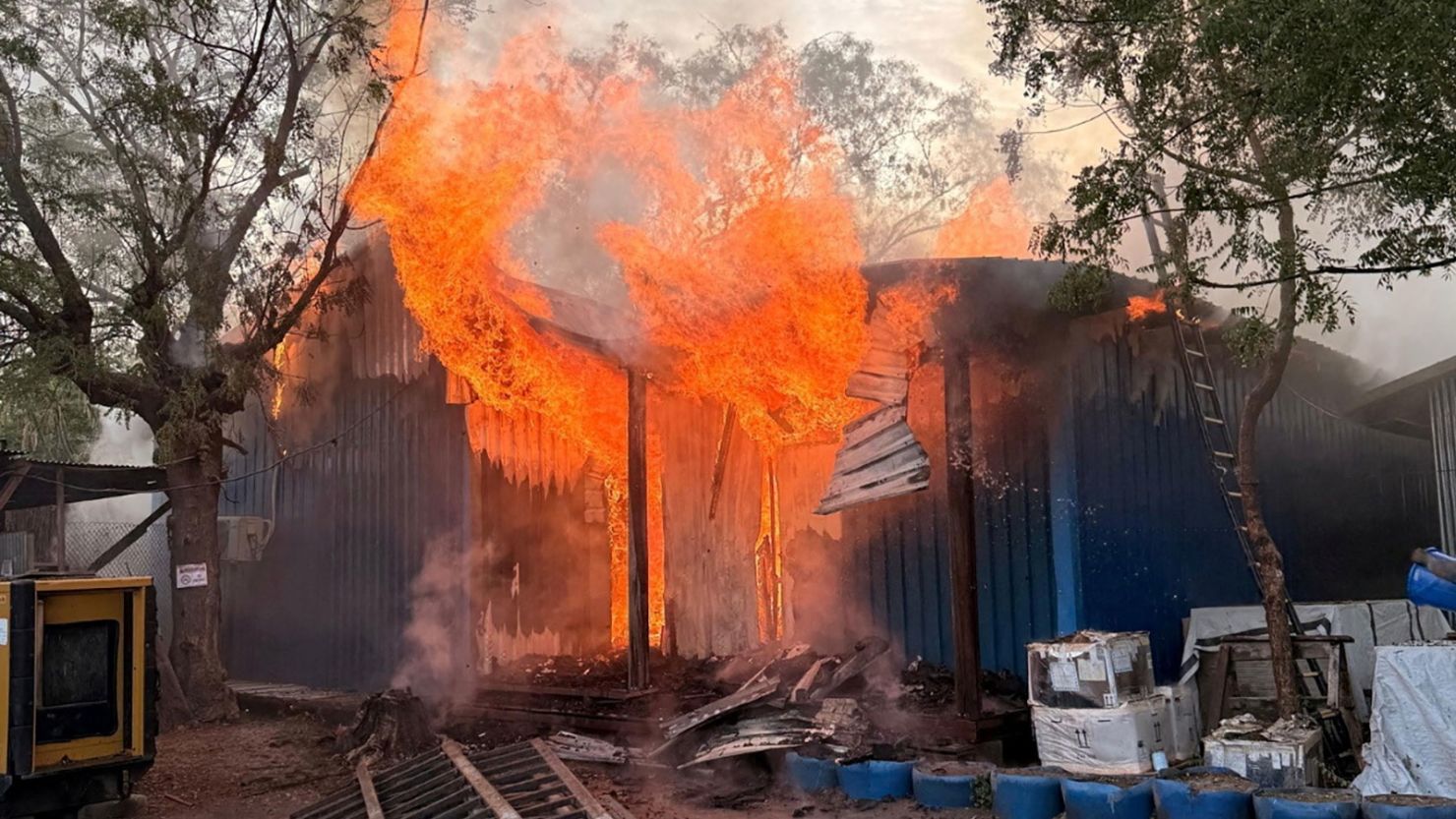
The shells didn't just hit a building. They tore through a sanctuary. When the World Health Organization (WHO) confirmed that 64 people died in an attack on a Sudanese hospital, including 13 children, it wasn't just another statistic in a messy civil war. It was a clear signal that the basic rules of human decency have evaporated in the conflict between the Sudanese Armed Forces (SAF) and the Rapid Support Forces (RSF).
You can't look at these numbers and feel anything but rage. Hospitals are supposed to be the one place where the shooting stops. Instead, they’ve become targets. This specific strike didn't just kill patients; it destroyed the very idea of safety for thousands of civilians trapped in the crossfire.
The Human Cost of the Sudan Hospital Strike
The details coming out of the region are harrowing. According to official reports from the WHO, the 64 victims weren't soldiers. They were people seeking care, families visiting loved ones, and children who happened to be in the wrong place at the most horrific time possible.
Think about that for a second. 13 children.
These kids weren't part of any political movement. They weren't fighting for control of Khartoum or the nation's gold mines. They were likely there for basic medical needs in a country where the healthcare system is already on life support. The WHO has been sounding the alarm for months, but this specific incident stands out for its sheer scale and the vulnerability of the victims.
When a shell hits a ward, it doesn't just kill those in the blast radius. It creates a vacuum of care. Doctors flee. Nurses, traumatized and exhausted, can no longer perform surgeries. The equipment—ventilators, monitors, sterile supplies—gets ruined or looted. One attack kills 64 people today, but it kills hundreds more in the coming weeks because the hospital can't function.
Why Healthcare Is Under Fire in Sudan
It's easy to dismiss this as "collateral damage." That's a clinical, heartless term used by people who don't want to admit to war crimes. In the context of the Sudan conflict, the targeting of medical facilities often feels deliberate.
Both sides have been accused of using hospitals as shields or bases of operation. When one side moves in, the other side sees a "legitimate" target. But there's no such thing as a legitimate target when it’s full of civilians and medical staff. It’s a violation of International Humanitarian Law, plain and simple.
The RSF and the SAF are locked in a power struggle that has displaced millions. As the fighting moves into urban centers, the proximity of military objectives to civilian infrastructure becomes a death trap. But we should be honest here. This isn't just about bad luck. It's about a total disregard for the lives of the Sudanese people by those claiming to lead them.
A System Near Total Collapse
Right now, over 70% of healthcare facilities in conflict-affected areas of Sudan are non-functional. Imagine your city having only three out of ten hospitals working. Now imagine those three are running out of bandages, let alone complex medication for chronic illnesses or trauma.
The WHO and other international agencies like Médecins Sans Frontières (MSF) are trying to fill the gaps, but they're working with one hand tied behind their backs. Access is constantly denied. Visas for aid workers are stalled. Convoys are hijacked. It’s a miracle anyone is getting treated at all.
Beyond the WHO Reports
While the WHO provides the data, the stories on the ground tell a much grimmer tale. Local "Resistance Committees"—the grassroots groups that have stepped up where the government failed—report that the number of "uncounted" deaths is likely much higher.
Many people die at home because they're too terrified to make the trip to a hospital. They know that a white building with a red crescent or cross doesn't mean safety; it means a bullseye.
The Role of International Silence
Why isn't this the lead story on every news channel? Honestly, it’s because the world has a short attention span. We get "conflict fatigue." But that fatigue is a luxury the people in Sudan don't have.
The international community's response has been mostly rhetorical. There are "condemnations" and "deep concerns." But until there's real pressure—sanctions that actually hurt the warring factions or a coordinated effort to force humanitarian corridors—these attacks will continue. The 64 people killed in this hospital won't be the last.
How to Support Sudanese Civilians and Medics
If you're reading this and feeling helpless, you're not alone. But there are ways to actually help that go beyond just reading the news.
- Support Local Emergency Response Rooms (ERRs): These are the local Sudanese volunteers who are actually on the front lines. They often have better access and lower overhead than massive international NGOs.
- Pressure for Humanitarian Corridors: The biggest hurdle isn't just a lack of supplies; it's the inability to move them. Political pressure on your own government to prioritize Sudanese humanitarian access can move the needle.
- Fund Specialized Medical Aid: Organizations like MSF are among the few still operating in high-risk zones. They need specialized equipment to replace what gets destroyed in these bombings.
The tragedy in Sudan is a man-made disaster. The attack on the hospital wasn't an act of God; it was an act of war. We owe it to the 13 children who died to at least look at what happened and refuse to look away. Start by sharing the verified reports from the WHO and supporting the medical teams that are still, somehow, showing up to work every day in a war zone.