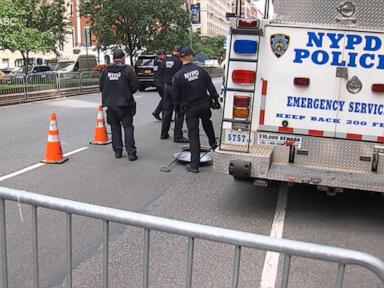
Subterranean municipal infrastructure represents a complex operational environment where public safety, civil engineering, and urban security intersect. The reported arrest of individuals within New York City sewer systems highlights a persistent vulnerability in metropolitan underground access control. Evaluating this incident requires examining the systemic architecture of municipal drainage networks, the mechanisms of unauthorized access, and the subsequent operational responses required from municipal authorities.
The Architecture of Subterranean Vulnerability
Municipal sewer and drainage networks are engineered primarily for hydraulic efficiency, fluid transport, and stormwater management, not high-security containment. Spanning thousands of miles of interconnecting conduits, interceptors, and regulator chambers, these networks require frequent human access for maintenance, sediment removal, and mechanical repairs. This functional necessity creates an inherent structural conflict between operational accessibility and physical security.
Access points are distributed across public thoroughfares via manholes, catch basins, regulator houses, and combined sewer overflow structures. While heavy iron lids secure standard manholes, their widespread distribution across urban geography precludes active electronic monitoring for every point of entry. Consequently, unauthorized infiltration relies on exploiting the physical ubiquity of these access points rather than breaching high-grade physical barriers.
The security deficit within subterranean infrastructure can be categorized through three primary structural challenges:
- Geographic Dispersion: Networks cover expansive urban footprints, making continuous perimeter surveillance cost-prohibitive and technically impractical.
- Legacy Infrastructure: Portions of metropolitan sewer systems date back over a century, constructed during eras when structural security against unauthorized human intrusion was not a primary design metric.
- Dual-Purpose Access: Maintenance shafts must remain accessible to municipal crews and emergency personnel, limiting the implementation of permanent physical lockouts.
Mechanics of Unauthorized Subterranean Infiltration
When unauthorized actors penetrate subterranean utility corridors, they interact with specific environmental and technical hazards. Understanding how these spaces are accessed and navigated clarifies the operational risks involved for both intruders and municipal responders.
Infiltration typically begins at standard surface-level access points. Specialized tools or mechanical leverage can remove heavy utility covers, or actors may utilize active construction sites, combined sewer outfalls opening into waterways, or damaged structural joints within interceptor chambers. Once inside, navigation is dictated by structural maps, slope gradients, and dry-weather flow levels.
Unlike controlled interior spaces, sewer environments present immediate, severe hazards:
- Atmospheric Composition: Confinement zones often accumulate hazardous gases such as methane, hydrogen sulfide, and carbon monoxide, alongside significant oxygen depletion.
- Hydraulic Volatility: Combined sewer systems experience rapid water level surges during precipitation events, transforming dry conduits into high-velocity hydraulic channels within minutes.
- Pathogen Exposure: The biological hazard profile includes high concentrations of waterborne pathogens, requiring specialized personal protective equipment to mitigate systemic infection risks.
The convergence of these factors means unauthorized entry is not merely a legal or security breach, but an acute life-safety emergency that frequently demands specialized rescue interventions by municipal emergency services.
Operational Response and System Hardening
Mitigating municipal subsurface vulnerabilities requires a transition from reactive enforcement to proactive infrastructure hardening. Urban authorities face the challenge of securing vast networks without disrupting essential municipal maintenance operations.
Modern asset management frameworks address this through targeted technological and procedural interventions:
Sensor Deployment and Intrusion Detection
Deploying discrete, low-power acoustic or optical sensors beneath critical access points provides real-time telemetry on unauthorized cover removal or internal movement. While monitoring every manhole is financially unfeasible, high-risk nodes—such as junctions beneath critical financial, transit, or governmental infrastructure—frequently warrant priority sensor coverage.
Access Control Engineering
Upgrading legacy infrastructure involves installing secondary internal security barriers within major interceptor chambers. Heavy-duty security grates, electronic locking mechanisms requiring credential authentication, and tamper-evident seals on primary regulator hatches restrict movement laterally through the network even if an initial surface access point is compromised.
Inter-Agency Coordination Protocols
Subsurface incidents require seamless communication between municipal sanitation departments, structural engineering divisions, and law enforcement agencies. Establishing standardized incident command protocols ensures that when unauthorized presence or structural tampering is detected, tactical response teams can safely isolate affected sectors, evaluate atmospheric hazards, and execute apprehension or rescue operations without risking personnel.
Future infrastructure planning must integrate subterranean security as a core civil engineering metric. As urban density increases and the interdependencies between physical utilities and digital control systems grow tighter, securing the municipal underbelly transitions from a secondary maintenance concern to a fundamental component of metropolitan resilience.