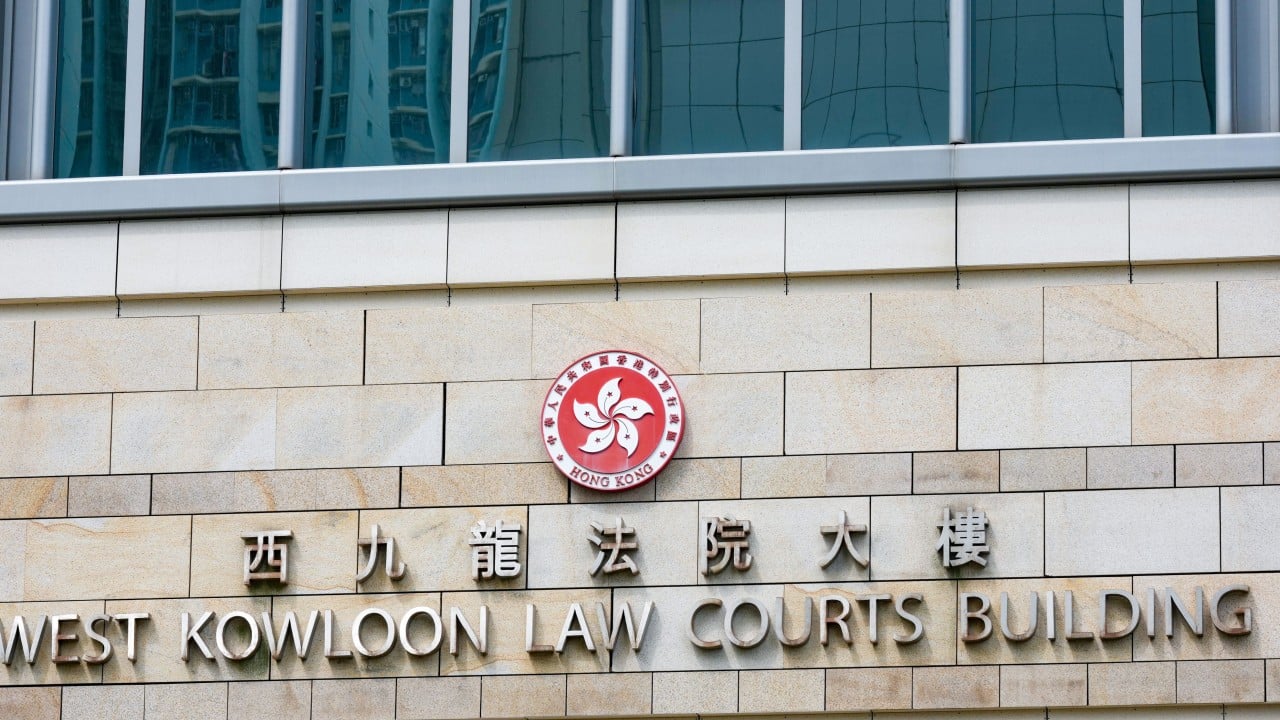
The arrest and subsequent court appearance of three individuals on charges of subversion—linked specifically to the conduct of unauthorized military drills—reveals a significant shift in the state's perception of domestic security threats. Subversion, by definition, is the attempt to transform the established social order and its structures of power, authority, and hierarchy. When these efforts manifest as paramilitary training, the state views the activity not merely as a localized disturbance, but as a direct challenge to the Monopoly on Legitimate Physical Force.
This analysis deconstructs the legal and strategic implications of the case, moving beyond the surface-level reporting of arrests to examine the underlying mechanics of how non-state actors organize, the legal frameworks governing domestic insurrection, and the specific risk vectors created by unregulated tactical training.
The Architecture of Subversion Charges
To understand why simple physical training escalates into a state-level subversion charge, one must analyze the intent and the organizational scale. Legal systems typically categorize these threats based on a three-tier risk assessment model:
- Intent of Replacement: The transition from private assembly to subversion occurs when the objective shifts from individual skill acquisition to the intent to replace or overthrow existing governance structures.
- Organizational Mimicry: The adoption of military hierarchies, rank structures, and specialized communications mimics the state's own defensive apparatus. This creates a "shadow" command and control (C2) structure.
- Capacity for Coordinated Violence: The threshold for subversion is often met when individuals possess the logistical ability to execute synchronized actions that disrupt critical infrastructure or government functions.
In the case of the three suspects, the court’s focus on "military drills" suggests that the prosecution is not targeting the act of exercise, but the acquisition of operational parity. If the suspects were practicing maneuvers designed to bypass state security protocols or seize specific geographic nodes, the legal classification shifts from simple conspiracy to an existential threat to the constitutional order.
The Variables of Illegal Paramilitary Organization
The state's prosecution strategy likely rests on proving that the drills were not recreational but functional. Analysts look for specific variables to quantify the threat level of non-state military activity:
- Tactical Specialization: Drills involving breach-and-clear maneuvers, convoy protection, or guerrilla tactics indicate a specific offensive or defensive utility that exceeds basic self-defense.
- Encrypted Communications Protocols: The use of proprietary or high-level encryption for coordinating drills suggests an attempt to create an information black hole, a primary indicator of subversive intent.
- Geographic Mapping: If training occurs in proximity to sensitive sites—government buildings, energy grids, or transport hubs—the state interprets the "drill" as a rehearsal for a specific kinetic event.
This creates a State Response Function. The higher the degree of organizational mimicry and tactical specialization, the more aggressive the state’s pre-emptive legal intervention becomes. The arrests in this case represent a "left-of-bang" intervention—arresting the threat during the preparation phase (the drills) before it transitions to the execution phase.
The Bottleneck of Resource Acquisition
Every subversive movement faces a critical bottleneck: the acquisition of specialized materiel without triggering state surveillance. In modern contexts, this involves a "dual-use" challenge. Suspects often utilize civilian-grade equipment that can be repurposed for military use.
The Material Risk Matrix
| Component | Civilian Application | Subversive Reapplication |
|---|---|---|
| Drones | Aerial Photography | Reconnaissance / Payload Delivery |
| Off-road Vehicles | Recreation | High-mobility Tactical Insertion |
| Body Armor | Personal Safety | Frontline Combat Durability |
| Radios | Hobbyist Comm | C2 Infrastructure |
The legal difficulty for the defense lies in the Convergence of Indicators. While owning a drone or a radio is legal, the simultaneous acquisition of these tools combined with organized, hierarchical training in remote locations creates a statistical profile that the state uses to justify subversion charges. The prosecution's task is to prove that the sum of these legal activities constitutes an illegal whole.
Information Warfare and the Digital Footprint
Subversion in the 21st century is rarely confined to the physical field. The "drills" referenced in the court proceedings likely included a digital component. The state monitors "Signatures of Radicalization" which often precede or accompany physical training. These signatures include the dissemination of instructional material on improvised explosives, the bypass of digital surveillance, and the recruitment of individuals with specialized technical or military backgrounds.
The court must weigh the suspects' right to assembly against the Precautionary Principle of National Security. This principle dictates that when an activity poses a risk of catastrophic harm (such as an armed insurrection), the lack of full scientific or intelligence certainty should not be used as a reason for postponing preventive measures.
The Institutional Stress Test
The appearance of these suspects in court serves as a stress test for the judicial system. It forces a public definition of the boundary between political dissent and armed subversion.
- The Evidentiary Threshold: The prosecution must present specific evidence that the drills were aimed at "subverting state power." This usually requires internal communications, manifestos, or testimony from informants that link the physical acts to a broader political objective.
- The Deterrence Effect: High-profile arrests for subversion are intended to increase the perceived cost of participation for other potential members of similar movements.
- The Precedent Factor: This case will likely set the standard for how "military-style training" is defined in future domestic security cases.
Operational Limitations of State Intervention
While the state has the advantage of legal and physical resources, its intervention strategy has inherent limitations.
- The Martyrdom Risk: Aggressive prosecution can inadvertently validate the suspects' claims of state tyranny, fueling further recruitment in underground circles.
- Intelligence Blind Spots: Prosecuting the visible leaders or members of a movement may push more sophisticated elements deeper into encrypted or decentralized cells that are harder to track.
- The "Lone Wolf" Transition: By dismantling organized groups, the state may inadvertently force individuals to act independently. Decentralized threats are often more difficult to predict and neutralize than organized, hierarchical ones.
Strategic Forecast
The movement of this case through the court system indicates a hardening of the state's domestic security posture. Expect a surge in legislative efforts to more clearly define "unauthorized military activity." This will likely lead to a tightening of regulations surrounding tactical training facilities, the sale of certain classes of protective gear, and the monitoring of groups that utilize military-style organizational charts.
The primary strategic move for state actors will be the integration of Financial Intelligence (FININT) with traditional surveillance. By tracking the funding of these "drills"—from travel expenses to equipment procurement—the state can map the broader network supporting the suspects. For the suspects, the legal path depends entirely on decoupling their physical actions from a demonstrable intent to dismantle the state. If the prosecution can prove that the drills were a dress rehearsal for a functional disruption of government, the subversion charges will likely result in maximum sentencing to ensure total organizational decapitation.
The immediate tactical play for security agencies is to exploit the "signal noise" generated by this court appearance to identify secondary and tertiary nodes in the suspects' network who may now be attempting to purge evidence or relocate assets. This is the period of highest vulnerability for any remaining members of the organization.

:max_bytes(150000):strip_icc():focal(819x186:821x188)/Murdaugh-Family-e90854a716884d608fb6fd925e18d840.jpg)
