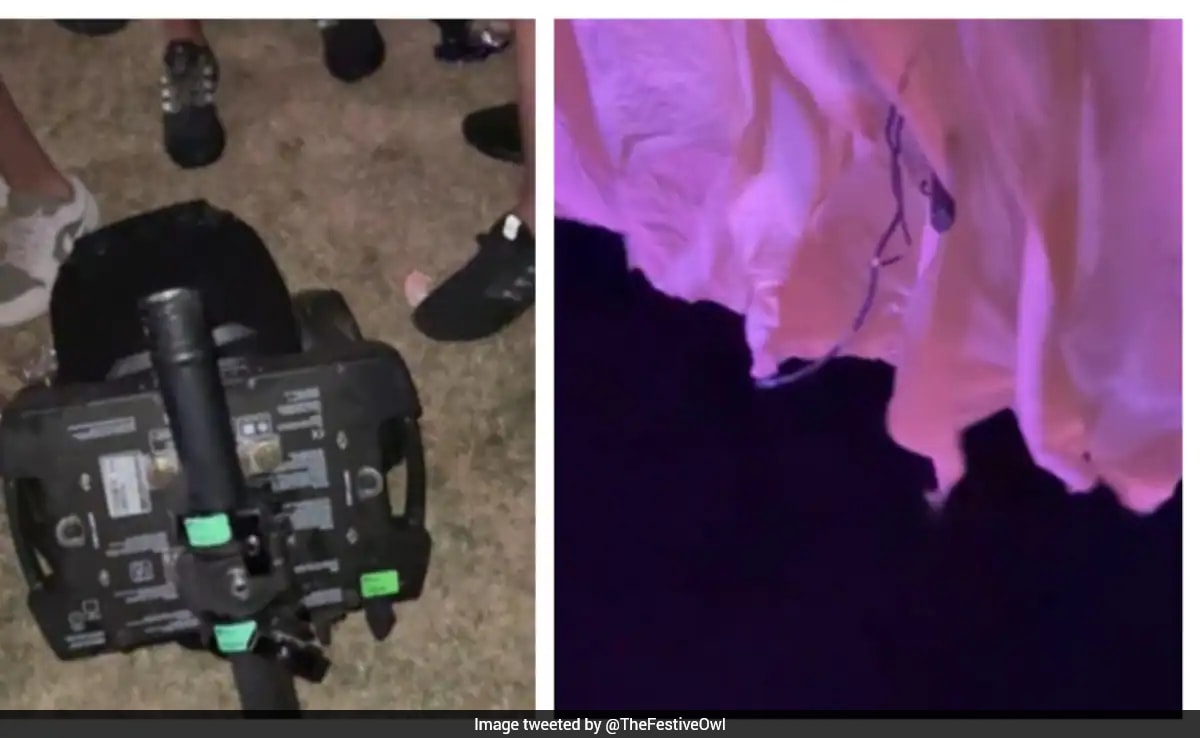
The flashing lights and desert heat of Coachella masks a brutal reality regarding the safety of large-scale event production. When a lighting fixture detached and fell into the crowd during a high-profile set, it wasn’t just a freak accident. It was a failure of oversight. One woman suffered head injuries, sparking a wave of panic that briefly halted the performance and sent shockwaves through the live event industry. While initial reports focused on the chaos of the moment, the true story lies in the increasingly compressed setup windows and the deregulation of stage rigging standards that prioritize profit over the physical safety of thousands of attendees.
Events like Coachella operate on razor-thin schedules. Load-ins that used to take a week are now squeezed into seventy-two hours. This pressure creates a dangerous environment where "good enough" becomes the standard for securing overhead equipment. When a heavy piece of lighting hardware breaks loose and plunges toward the floor, it represents a breakdown in the chain of command—from the head rigger to the safety inspectors who are often rushing to sign off on builds before the gates open.
The Invisible Gravity of Rigging Failures
Rigging is the silent engine of any major concert. Thousands of pounds of steel, glass, and wiring hang directly above the heads of fans who have paid hundreds of dollars for the privilege of being there. The physics of a falling fixture are unforgiving. Even a small ten-pound light, falling from a height of thirty feet, gains enough kinetic energy to cause permanent neurological damage or death.
Safety protocols require secondary "safety cables"—steel loops that act as a backup should the primary clamp fail. In the Coachella incident, either the safety cable was never installed, or it was installed incorrectly. This is a recurring theme in the high-stakes world of festival production. Crews are exhausted. They work eighteen-hour shifts in the California sun. When fatigue sets in, the simple act of double-checking a carabiner or a steel sling becomes a task that gets skipped to keep the schedule on track.
The industry relies on a "black box" of internal standards. Unlike the construction industry, which faces rigorous, independent government inspections at every phase of a build, concert rigging is largely self-regulated. The promoters hire the production company, and the production company hires the riggers. This creates a conflict of interest where speed is rewarded and whistleblowing on safety shortcuts is often seen as a hindrance to the bottom line.
The Cost of the Festival Industrial Complex
We are currently living through a period of "festival bloat." Every weekend from April to October is packed with massive multi-day events that demand the same pool of specialized labor and high-end equipment. This demand has outstripped the supply of truly qualified, master-level riggers.
To fill the gaps, production companies often hire "local hands" with minimal experience to assist with complex overhead tasks. While these workers are essential, they require a level of supervision that the current pace of festivals doesn't allow. When you have three stages being built simultaneously and only one lead rigger to oversee them all, mistakes are inevitable.
- Compressed Timelines: Promoters save money by renting venues for fewer days, forcing crews to work faster.
- Labor Shortages: A lack of certified ETCP (Entertainment Technician Certification Program) riggers means less-experienced staff are handling critical loads.
- Equipment Fatigue: Gear is being trucked from one desert to another with little time for maintenance or structural integrity checks.
The Coachella injury is a symptom of a broader rot. It is the result of a system that assumes everything will work because it worked the last time. But gear wears down. Bolts strip. Aluminum trusses develop hairline fractures that are invisible to the naked eye during a midnight load-in. Without a mandatory, third-party inspection mandate for every overhead element at a festival, we are simply waiting for the next, more tragic failure.
Why Technical Oversight is Shrinking
In the past, major artists brought their own entire rigs and teams who knew the gear inside out. Today, festivals provide a "house rig" that every artist uses. This means the equipment stays up for two weekends straight, exposed to high winds, dust, and the constant vibration of massive subwoofers.
Vibration is the enemy of a secure rig. The constant low-frequency energy from a Coachella mainstage is enough to slowly loosen clamps that aren't properly torqued. If a rigging team isn't performing daily "nut and bolt" checks—physically touching every connection point every morning—the risk of a fixture shaking loose increases every hour the music plays.
Most fans don't realize that the ground they stand on at Coachella is also a variable. The shifting sands and temporary flooring can lead to minute shifts in the stage structure itself. If the base moves, the tension in the overhead cables changes. This requires a level of constant monitoring that many festivals simply do not budget for. They pay for the "build" and the "strike," but the "maintenance" during the show is often treated as an afterthought.
Insurance and the Price of Silence
The aftermath of a festival injury usually follows a predictable pattern: a quick settlement, a non-disclosure agreement, and a PR statement about "the safety of our fans being our top priority." This prevents the public from ever seeing the actual inspection logs or the names of the companies responsible for the failure.
Insurance companies are beginning to take note. The premiums for insuring a major music festival are skyrocketing, not because of the music, but because of the structural risks. However, even these rising costs haven't yet forced a shift in how stages are built. It is currently cheaper for a promoter to pay an occasional settlement than it is to add two extra days of safety inspections and hire twenty more master riggers.
The victim at Coachella is not an outlier; she is a warning. The trend toward more complex, heavier, and more "immersive" lighting designs means more weight is being suspended over audiences than ever before. We are hanging LED walls that weigh several tons and lighting pods that move on automated motors during the show. Every moving part is a potential point of failure.
The Myth of the Freak Accident
Promoters love the term "freak accident." It implies that nothing could have been done to prevent it. It suggests that the laws of physics took a day off and something happened that was beyond human control.
This is a lie.
In the world of structural engineering and professional rigging, there are no freak accidents. There are only failures of hardware, failures of procedure, or failures of oversight. A lighting fixture does not simply "fall." It falls because a clamp snapped, a safety cable was missing, or the truss it was attached to was overloaded. Each of these has a clear, identifiable human cause.
To prevent the next collapse, the industry must move away from the "the show must go on" mentality that rewards cutting corners. This starts with transparency. If a fixture falls, the production company's safety record should be public. The inspection logs for that specific stage should be available for review. Until there is real accountability, the desert wind won't be the only thing fans have to worry about.
The Engineering Reality
The math of a concert stage is complex. A standard festival stage might support 100,000 pounds of equipment. This load is distributed across points that are tensioned to specific tolerances.
$$F = ma$$
When a fixture begins to fall, gravity ($9.8 m/s^2$) takes over instantly. The force it exerts upon impact is a product of its mass and the acceleration of its fall. There is no "slow" fall in rigging. There is only the sound of metal hitting metal, and then the impact.
Rigging companies often use software to calculate these loads, but software is only as good as the data entered into it. If a rigger tells the program they are using a certain grade of steel but actually uses a cheaper substitute to save time, the software's "safe" rating is a hallucination. The desert environment complicates this further. Heat causes metal to expand; cold nights cause it to contract. This constant expansion and contraction can fatigue metal much faster than in an indoor arena setting.
Demanding a New Standard of Care
The solution isn't more flashing lights or better VIP areas. It is a fundamental shift in how the "bones" of a festival are treated. We need a standardized "Black Box" for stage rigging—a digital log that records every weight, every motor move, and every inspection signature in real-time, stored on a server that cannot be altered by the promoter.
This level of transparency would allow for a forensic analysis of why a fixture fell. Was it the wind? Was it a motor malfunction? Or was it a human being who was too tired to clip a safety cable?
Attendees have the right to know that the heavy machinery dangling above them has been vetted by someone whose paycheck doesn't depend on how fast the stage is built. The industry has spent decades perfecting the "experience" of the festival. It is time they spent as much effort on the engineering that keeps that experience from becoming a tragedy.
Stop looking at the stage and start looking at the steel. The next "freak accident" is already being built on a compressed timeline by an exhausted crew somewhere in the world. The only way to stop it is to demand that the safety of the structure is as important as the fame of the person standing on it.
Hire more riggers. Pay for more days. Inspect every bolt.