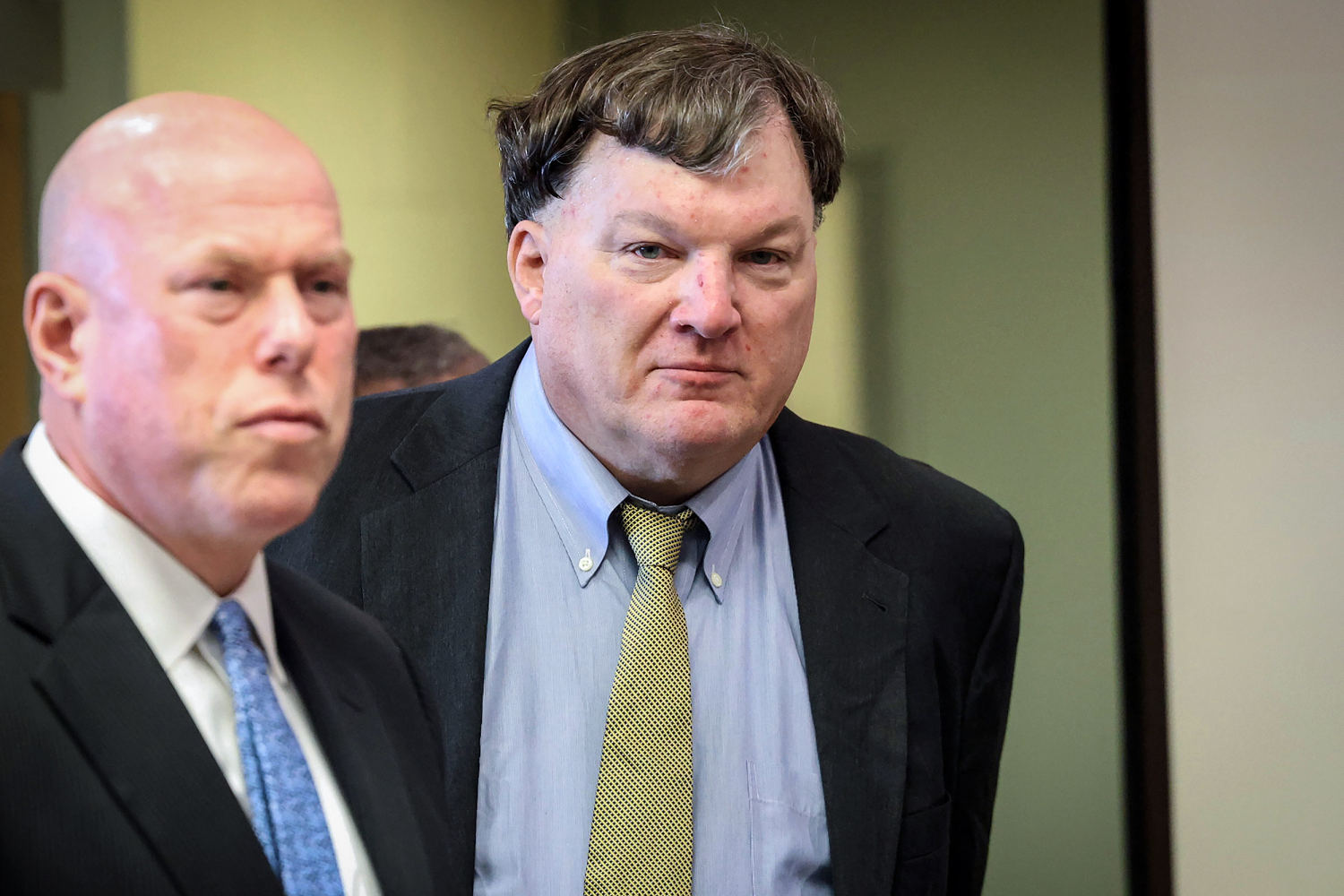
The shift from a multi-year capital litigation to a potential guilty plea in the Rex Heuermann case represents a pivot from evidentiary discovery to risk mitigation for both the Suffolk County District Attorney’s Office and the defense. This transition is not a mere admission of guilt; it is the culmination of a calculated pressure campaign built on high-density forensic data. When a suspect in a high-profile serial homicide investigation moves toward a plea, the legal landscape shifts from "proving the act" to "securing the legacy of the evidence."
The logic of a plea in this context is driven by the Irreducible Evidence Threshold. This threshold is reached when the volume of DNA sequencing, geolocation data, and physical forensics creates a mathematical impossibility for a defense to overcome in a jury setting. For Heuermann, the calculus involves weighing the certainty of a life sentence through a plea against the high probability of the same outcome through a trial that would publicly broadcast every forensic detail of the crimes.
The Forensic Triangulation Model
The strength of the prosecution's position relies on three independent but intersecting data streams. The convergence of these streams is what typically triggers a plea negotiation before the trial phase begins.
- Nuclear and Mitochondrial DNA Sequencing: Modern investigative genetic genealogy (IGG) moved the needle from "potential matches" to "statistical certainty." By utilizing SNP (Single Nucleotide Polymorphism) profiling on hair samples found at the crime scenes—specifically those linked to Megan Waterman and Amber Lynn Costello—the prosecution established a biological link that traditional STR (Short Tandem Repeat) testing could not confirm decades ago. The use of a discarded pizza crust to obtain a comparative sample provided the final link in the chain of custody.
- The Digital Breadcrumb Constraint: The prosecution mapped "burner" phone activity against Heuermann’s professional and personal movements. This creates a temporal bottleneck. When a suspect’s billing records, cell tower pings, and internet search history align within the same 500-meter radius of a victim's disappearance on multiple occasions, the "coincidence" defense loses all statistical viability.
- The Chevrolet Avalanche Variable: The physical link of a specific vehicle model, witnessed by a contemporary of the victims and later tied to the suspect's household, serves as the anchor for the circumstantial case. In serial homicide, the vehicle is often the mobile crime scene. The recovery and forensic processing of this vehicle provide the physical bridge between the digital data and the biological evidence.
The Prosecution’s Strategic Incentive
While the public often views a plea as "taking the easy way out," for a District Attorney, it is a tool for Total Case Closure. A trial, no matter how strong the evidence, introduces "The Litigation Lottery"—the 1% chance of a hung jury or a procedural error that could lead to an overturned conviction.
The prosecution leverages the plea to achieve:
- Victim Certainty: Securing a conviction for all identified victims (Maureen Brainard-Barnes, Melissa Barthelemy, Megan Waterman, Amber Lynn Costello, Jessica Taylor, and Sandra Costilla) without the trauma of a decade of appeals.
- Resource Allocation: Capital cases of this magnitude cost the taxpayer millions. A plea allows the state to redirect these forensic and legal resources toward other cold cases in the Long Island area, of which several remain unsolved.
- The Information Trade: The most valuable currency the defense holds is information regarding unidentified victims or the location of remains. A plea agreement often includes a "full disclosure" clause, where the defendant must provide a truthful account of all crimes to the authorities in exchange for specific housing conditions or the removal of the death penalty (where applicable, though New York has no active death penalty, the threat of federal charges often looms).
The Defense’s Risk Mitigation Framework
For Rex Heuermann’s legal team, the objective has shifted from acquittal to Damage Control. The strategy at this stage is to analyze the "Quality of Life" variables for a defendant who will likely spend the remainder of his natural life in a maximum-security facility.
The defense's negotiation pivots on:
- The Prevention of Federal Intervention: If the state case concludes with a plea, it may reduce the appetite for federal prosecutors to step in with charges that could carry more severe federal sentencing guidelines or different jurisdictional pressures.
- Protective Custody Agreements: High-profile serial killers are targets in general population. A plea can be used to negotiate specific safety protocols or placement in facilities that are better equipped to handle a high-risk inmate.
- Legacy and Family Protection: By pleading, a defendant can sometimes prevent the further public dissection of their family’s lives, which often occurs during the testimony phase of a trial.
The Mechanics of the Plea Hearing
A plea in a case of this magnitude follows a rigid procedural sequence designed to be "appeal-proof." The court will engage in a Judicial Inquiry of Voluntariness. This is a specific dialogue where the judge ensures the defendant is not under duress and fully understands the waiver of their constitutional rights, including the right to confront witnesses and the right against self-incrimination.
The Allocution—the defendant’s formal statement of his crimes—is the most critical component. For the Gilgo Beach victims’ families, the allocution serves as the first time the "How" and "Why" are addressed directly by the perpetrator. The court requires a factual basis for the plea; Heuermann cannot simply say "guilty." He must describe the actions he took that satisfy the elements of first-degree and second-degree murder. This record becomes the definitive historical account of the Gilgo Beach murders.
Analysis of the Remaining Case Volatility
Despite the move toward a plea, two primary bottlenecks remain that could disrupt the proceedings:
- The Discovery of Additional Remains: If new evidence links the suspect to victims outside the current indictment, the plea agreement must be broad enough to cover those instances, or specific enough to exclude them. If the District Attorney believes they can prove more murders, they may hold out for a more comprehensive "global settlement."
- Psychiatric Competency: Any indication that the defendant is not of sound mind could derail a plea. However, the methodical nature of the alleged crimes and Heuermann’s professional background as an architect suggest a level of cognitive function that makes a "lack of capacity" argument difficult to sustain.
The shift toward a guilty plea suggests that the defense has reviewed the "unprecedented" amount of discovery—reportedly spanning terabytes of data—and concluded that the forensic wall is impenetrable. The tactical play now is not to win, but to control the terms of the inevitable.
Authorities and legal observers must now monitor the specific language of the upcoming court appearances. The focus should be on whether the plea is "open" (leaving sentencing to the judge) or "negotiated" (with a specific term of years or life without parole agreed upon). In New York, for multiple counts of first-degree murder, the outcome is functionally identical: the defendant will never leave the correctional system. The strategic end-state is the permanent removal of a predator from the ecosystem while providing a definitive, legally binding resolution to a decade-long mystery.
The final strategic move involves the "Clearing of the Docket." Once the plea is entered, the Gilgo Beach Task Force will likely transition into a secondary phase: cross-referencing Heuermann’s travel history and property ownership against national databases of missing persons. The plea is not the end of the investigation; it is the solidification of the foundation upon which all future related investigations will be built.