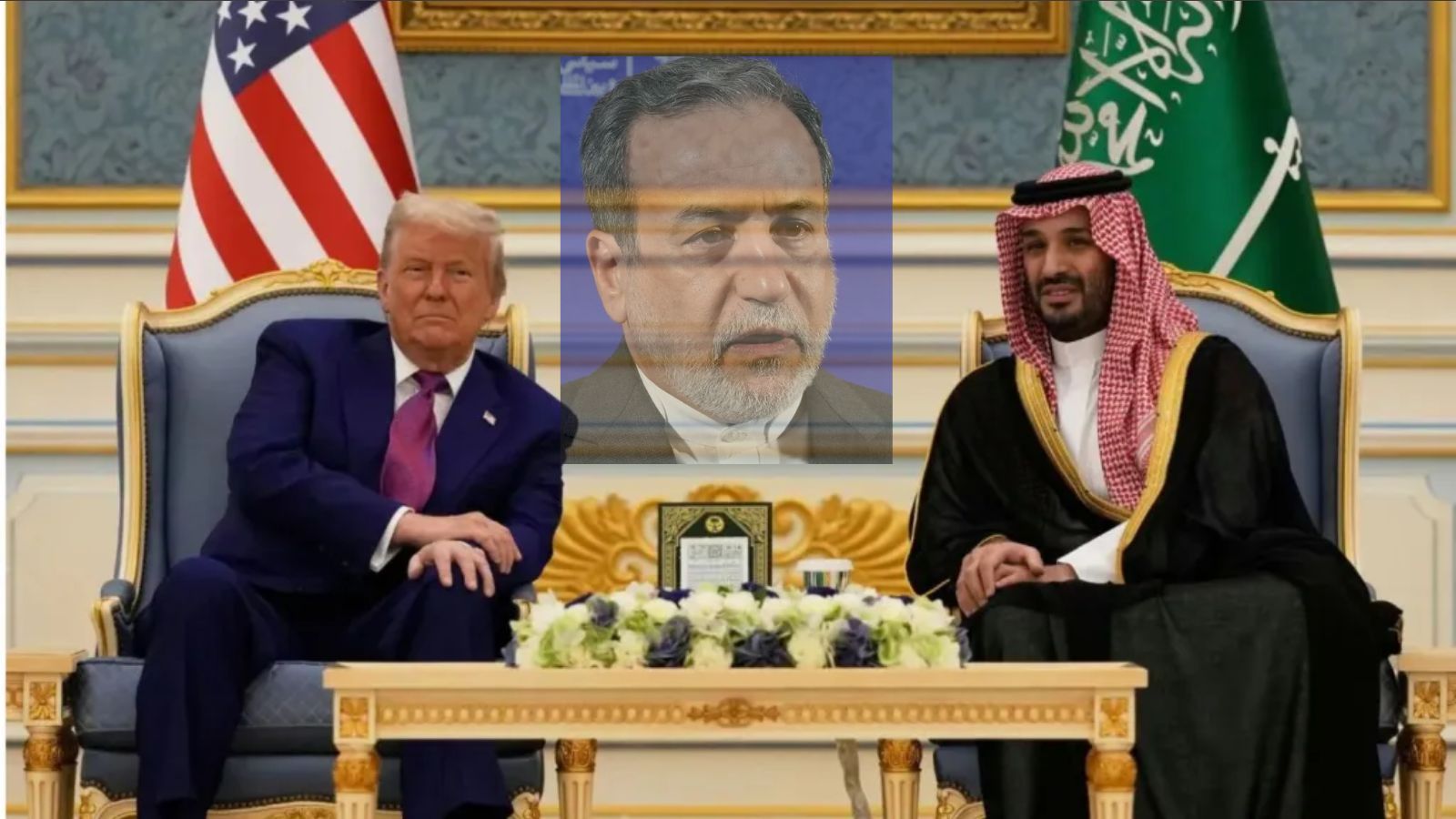
Geopolitical crises rarely follow stochastic paths; instead, they operate through predictable structural incentives, risk asymmetries, and institutional constraints. The diplomatic and military friction between Washington and Tehran, compounded by Riyadh’s security calculus, is governed by a measurable set of economic vulnerabilities and military deterrence thresholds. Understanding this dynamic requires stripping away rhetorical posturing to examine the underlying calculus driving state behavior.
The Deterrence Threshold And The Cost Function Of Conflict
Military escalation between the United States and Iran is bounded by a rigid cost-benefit matrix. Neither state seeks a protracted conventional war, yet both operate under security dilemmas that penalize perceived weakness.
The Iranian state functions under severe structural constraints imposed by international sanctions, currency depreciation, and domestic socioeconomic pressure. Tehran’s primary strategic asset is its asymmetric deterrence network, spanning proxy groups across the Levant and the Arabian Peninsula. This network functions as an offensive-defense mechanism designed to raise the cost of direct military engagement for external powers.
When Washington signals willingness to deploy hard power or impose maximum pressure, it activates a response function calculated by Tehran to maximize regional instability without triggering total war. The primary mechanism of this response is energy market disruption. The Strait of Hormuz handles roughly a fifth of global petroleum consumption. Any kinetic disruption in this corridor imposes an immediate tax on the global economy, forcing Washington to weigh the localized objectives of containment against the systemic costs of inflation and energy shocks.
Strategic risk assessment reveals that deterrence breaks down when one actor miscalculates the other’s domestic tolerance for pain. Tehran views its nuclear development and ballistic missile programs as existential insurance policies. Consequently, diplomatic deals that demand total dismantlement without offering verifiable, long-term economic integration are structurally doomed to fail. A rational actor will not trade a definitive, asymmetric deterrent for probabilistic, easily reversible economic relief.
Saudi Security Calculations And The Hedging Strategy
Riyadh occupies a precarious position at the intersection of US security guarantees and Iranian proximity. For decades, Saudi Arabia relied on the traditional security umbrella provided by Washington. However, the shifting priorities of US foreign policy, characterized by a pivot toward domestic economic resilience and competition in the Indo-Pacific, forced Riyadh to adopt a structural hedging strategy.
This hedging manifests through diplomatic re-engagement and economic diversification. The kingdom recognizes that kinetic conflict on the Arabian Peninsula threatens Vision 2030, its long-term macroeconomic overhaul. Mega-projects requiring foreign direct investment and stable tourism revenues are fundamentally incompatible with regional war.
Riyadh’s primary concerns regarding US-Iran negotiations center on containment verification. A deal that lifts sanctions on Tehran without restricting proxy funding leaves the kingdom exposed to asymmetric attacks on critical energy infrastructure, such as the 2019 Abqaiq-Khurais drone strikes. Therefore, Saudi diplomacy operates on a dual track: maintaining baseline deterrence through advanced military procurement from Western and Asian partners while simultaneously pursuing diplomatic normalization channels with regional rivals to lower the baseline temperature.
This behavior aligns with classical balance-of-power theory. Secondary powers facing an ambiguous superpower commitment will prioritize regional autonomy. Riyadh cannot outsource its fundamental security to a distant partner whose domestic political winds shift every four years. Consequently, Saudi engagement with Iran is not an abandonment of the Western alliance, but a rational risk mitigation maneuver designed to prevent the kingdom from becoming the primary battlefield in a proxy war.
Economic Coercion And The Limits Of Maximum Pressure
Economic statecraft relies on the asymmetry of interdependence. Washington’s leverage over Tehran stems from the global dominance of the US financial system and the secondary sanctions regime that punishes third-party entities trading with Iran.
Yet, economic coercion exhibits diminishing marginal returns over time. When an economy is subjected to totalizing sanctions for extended periods, it undergoes forced structural adaptation. Tehran has systematically worked to insulate its fiscal baselines by pivoting toward bilateral non-dollar trade agreements, expanding barter arrangements, and deepening economic integration with non-Western powers.
The structural limitation of maximum pressure is that it alters state behavior only if the target government believes compliance will lead to the complete removal of punitive measures. If the target perceives that the demands are open-ended or designed to effect regime change regardless of policy compliance, the rational incentive shifts toward defiance and underground economic resilience.
Furthermore, sanctions enforcement creates administrative friction and market distortion without necessarily achieving strategic rollback. Black-market petroleum exports, routed through complex maritime shell companies and opaque ship-to-ship transfers, generate sufficient liquidity to sustain the security apparatus. The civilian population bears the brunt of the welfare loss, while the ruling elite consolidates control over the remaining economic rents. This dynamic reinforces regime survival strategies rather than compelling structural capitulation.
The Regional Signaling Architecture
Diplomatic communication between hostile states rarely occurs through direct, transparent channels. Instead, it relies on a complex architecture of signaling, third-party mediation, and kinetic messaging.
When Tehran issues warnings regarding US military posture or regional interventions, these statements serve dual audiences. Domestically, they reinforce regime legitimacy by projecting strength against external threats. Internationally, they establish clear red lines intended to prevent strategic surprises.
The danger within this signaling architecture is the risk of misinterpretation. In high-tempo operational environments, tactical maneuvers are frequently misread as strategic preparations for offensive action. Without robust de-escalation hotlines or reliable diplomatic backchannels, a localized maritime incident in the Persian Gulf can rapidly cascade into an unintended wider conflict.
Managing this risk requires institutionalized crisis management frameworks that neither Washington nor Tehran currently possesses in a functional state. Traditional diplomatic missions are absent or severely degraded, forcing reliance on intermediary states such as Oman, Qatar, or Switzerland to transmit vital intelligence and clarify intent. This reliance introduces latency into the communication loop, increasing the probability of escalation before diplomatic corrections can be applied.
Strategic Realignment And Operational Execution
The ongoing friction between the United States, Iran, and Saudi Arabia is not a temporary anomaly resolvable through a single diplomatic accord. It is a permanent structural competition defined by conflicting sovereignty claims, security requirements, and energy dynamics.
Policymakers seeking stability must abandon the illusion of permanent containment or total victory. Effective statecraft in this theater requires the establishment of durable containment floors, clear operational boundaries for asymmetric actors, and institutionalized mechanisms to absorb inevitable kinetic friction.
Washington must calibrate its diplomatic offers to match verifiable, incremental security benchmarks rather than demanding comprehensive capitulation upfront. Riyadh must continue diversifying its security matrix while reinforcing localized deterrence architectures. Tehran faces the imperative of recognizing that economic integration requires verifiable constraints on regional destabilization.
Long-term stability will not be born from a single grand bargain, but from the tedious, continuous management of risk, the enforcement of clear red lines, and the acknowledgment that absolute security for one state constitutes absolute insecurity for another. The strategic objective for regional stakeholders is therefore not the elimination of conflict, but its containment within tolerable economic and military thresholds.