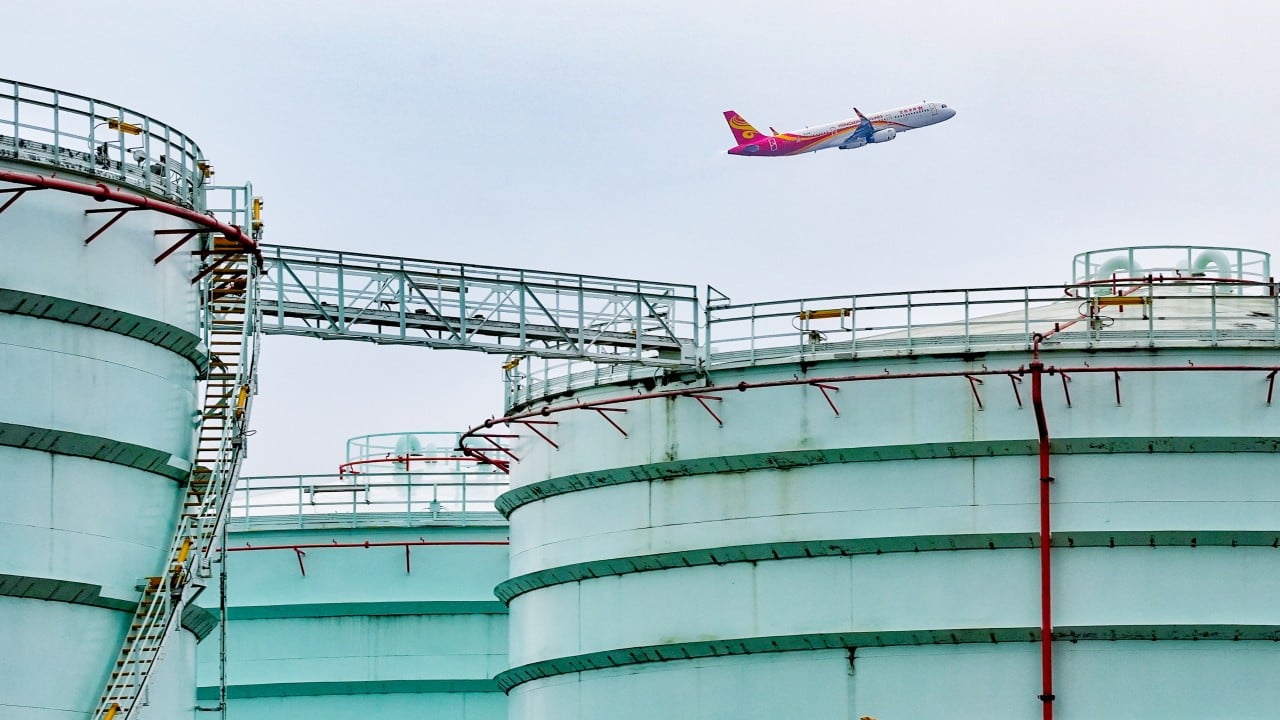
International aviation hubs face a structural obsolescence risk driven by environmental compliance rather than traditional market competition. As major jurisdictions across Europe and North America enforce mandatory sustainable aviation fuel uptake thresholds, airports lacking verified, scalable green fuel supply chains confront severe route degradation. For Hong Kong, safeguarding its status as an international aviation nexus requires moving beyond voluntary aspirational targets toward binding regulatory frameworks, regional feedstock integration, and capital mobilization.
The Regulatory Friction Point
The contemporary aviation economy operates under an escalating regime of compliance. Major aviation markets have transitioned past voluntary carbon offset schemes into mandatory blending quotas. The European Union and the United Kingdom enforce active mandates requiring carriers to source specified percentages of their total fuel uplift from certified low-carbon alternatives.
Hong Kong's policy architecture has historically relied on voluntary adoption frameworks through initiatives like the Hong Kong Sustainable Aviation Fuel Coalition. However, a voluntary market creates a structural misalignment between airline operational costs and decarbonization imperatives. Without a statutory mandate, capital formation for regional production facilities lags. A voluntary target attracts interest, but a mandate attracts capital.
The policy horizon centers on the planned study for a local mandate, establishing a trajectory toward binding blending requirements. The core vulnerability for local carriers such as Cathay Pacific is not immediate operational shutdown, but the compounding cost of non-compliance on long-haul routes terminating in regulated jurisdictions. Hubs that fail to provide certified uplift leave airlines exposed to foreign regulatory penalties and higher purchasing friction.
The Cost Function and Supply Chain Asymmetry
Integrating sustainable aviation fuel introduces a severe economic penalty. Conventional jet fuel trades at a fraction of the cost of certified green alternatives, with price differentials often exceeding a factor of two or three depending on the feedstock and processing pathway.
This creates a complex cost transmission mechanism along the supply chain:
- Production Capital Expenditure: Facilities converting waste oils or agricultural residues require massive upfront capital outlays, constrained by regional feedstock availability.
- Procurement Hedging: Airlines operating out of Hong Kong must secure long-term offtake agreements to insulate themselves against spot-market volatility.
- Pass-Through Dynamics: Carriers absorb or pass on cost premiums based on route elasticity and direct competitive pressures from rival Asian hubs.
The geographic constraints of Hong Kong proper prevent large-scale biofuel refinery construction. Consequently, the operational strategy relies on Greater Bay Area integration. Industrial partnerships, such as processing infrastructure developments in neighboring manufacturing centers like Dongguan, establish a regional supply corridor. This cross-border model maps refining capacity where land and industrial feedstock are accessible, while positioning Hong Kong as the financial, testing, and bunkering terminus.
Certification and Verification Bottlenecks
Securing physical fuel molecules is insufficient without internationally recognized verification protocols. Global airline alliances and destination regulators demand rigorous lifecycle carbon accounting. If fuel sourced through regional corridors lacks certification under recognized schemes such as CORSIA or ISCC, it cannot be credited toward mandatory reduction targets in Europe or North America.
This imposes an institutional requirement on Hong Kong. The territory must develop local accreditation bodies and testing infrastructure capable of auditing supply chain provenance from feedstock collection to aircraft wingtip. Without verifiable certification, local bunkering operations risk exclusion from global compliance frameworks, rendering the physical fuel economically invisible to international carriers seeking regulatory relief.
Strategic Execution
To insulate its aviation ecosystem against structural erosion, the priority sequence requires the following operational milestones:
- Finalize the parameters of the upcoming regulatory mandate to provide long-term demand visibility for infrastructure developers.
- Codify cross-border supply agreements within the Greater Bay Area to secure predictable volumes of waste-based feedstock inputs.
- Establish institutional verification frameworks aligned with international carbon accounting standards to ensure local bunkering satisfies overseas compliance requirements.