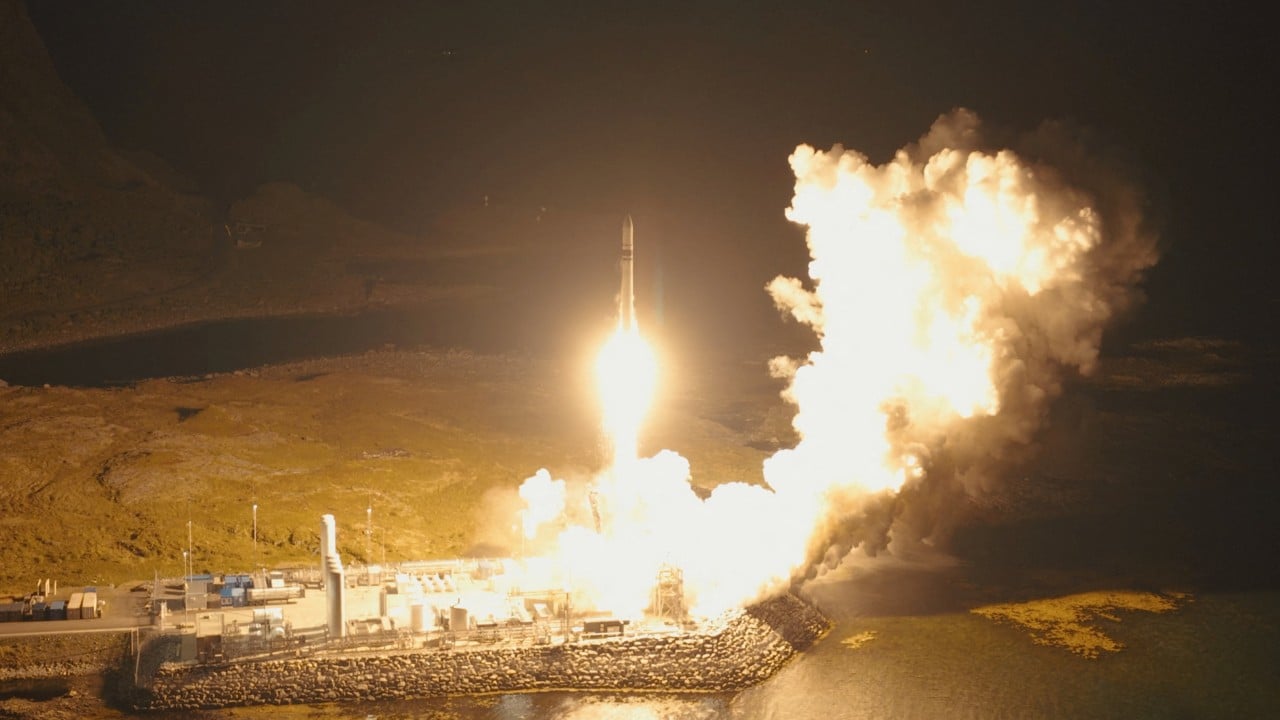
Sovereign access to orbit determines geopolitical leverage in the modern satellite economy. When Isar Aerospace successfully drove its uncrewed Spectrum rocket from the Andøya Spaceport in Arctic Norway into low Earth orbit, the event marked more than a corporate milestone for a Bavarian startup. It exposed the structural shift required to rebuild Europe's orbital supply chain. For decades, the continent relied on legacy heavy-lift architectures and foreign launch providers, creating a systemic bottleneck for small and medium satellite deployment. Solving this bottleneck requires an analytical deconstruction of the new micro-launcher economics, supply chain localization, and regulatory friction that define the current race for European space independence.
The Micro-Launcher Economic Model
Traditional launch markets prioritized scale via heavy expendable boosters, optimized for massive institutional payloads. The proliferation of constellations in low Earth orbit inverted this financial equation. The economic viability of a commercial launch provider now rests on three specific cost variables: manufacturing scalability, propellant efficiency, and fixed-cost amortization across high flight frequencies. Meanwhile, you can explore related events here: Why the Fear of Rogue AI Misses the Real Danger We Face Today.
The Spectrum vehicle utilizes a two-stage, liquid-fueled architecture designed to place roughly one thousand kilograms into low Earth orbit. Achieving this capacity at a competitive price per kilogram mandates a departure from traditional aerospace aerospace craftsmanship. Instead of low-rate initial production built on bespoke components, firms targeting commercial viability must internalize manufacturing. Isar Aerospace maintains vertical integration by manufacturing the vast majority of its vehicle structures internally, leveraging the industrial and technological density of the Munich manufacturing ecosystem.
Cost reduction in this tier does not come from reusability alone, which introduces heavy thermal protection and structural weight penalties unsuited for smaller rockets. Rather, it stems from simplified avionics, automated welding, and commercial-off-the-shelf components that bypass defense-grade pricing tiers. The operational target of scaling production lines to dozens of vehicles annually transforms the launcher from a custom artifact into a repeatable industrial asset. To understand the complete picture, we recommend the excellent article by Engadget.
Geographic Constraints and the Northern Launch Corridor
Geography dictates orbital mechanics. Equatorial launches maximize Earth rotational velocity, providing a free kinetic boost toward geostationary or low inclination orbits. However, the commercial demand profile has shifted decisively toward polar and sun-synchronous orbits, which require high-latitude launch sites.
Continental Europe historically lacked viable domestic launch real estate due to population density and maritime traffic safety corridors. Launching east from central Europe means flying over populated landmasses, an unacceptable risk profile for expendable or early-stage test vehicles. This structural limitation forced the utilization of peripheral nodes:
- The Guiana Space Centre in French Guiana serves equatorial missions but involves expensive transatlantic shipping logistics and complex institutional oversight.
- Arctic sites, such as the Andøya Spaceport in Norway, offer clear trajectories over open ocean toward polar and sun-synchronous inclinations.
- Emerging options in the United Kingdom and Sweden provide similar high-latitude advantages while diversifying the continental launch matrix.
Operating in high-latitude environments introduces distinct operational hurdles. Weather volatility, high wind speeds, maritime traffic coordination, and severe thermal cycles compress launch windows. The 18-month timeline between Isar's initial test flight anomaly—caused by an unexpected vent valve opening—and its subsequent successful orbital qualification reflects the iterative failure loop inherent in hardware-rich development strategies. Ground test campaigns and component redesigns must account for environmental variables unique to sub-Arctic launch infrastructure.
Institutional Capital Allocation and Security Pressures
The European space sector operates under a hybrid economic model where private venture capital intersects with massive public-sector subsidization. Access to space is increasingly viewed by policymakers not merely as a commercial utility, but as a core pillar of continental security. Dual-use technology—satellites handling Earth observation, secure communications, and maritime domain awareness—links commercial micro-launchers directly to defense readiness.
Public funding mechanisms have adjusted to reflect this urgency. Substantial capital injections, such as multi-million-euro grants from the European Space Agency under initiatives like the Boost! program, act as risk-mitigation instruments for early-stage structural development. These funds subsidize the heavy capital expenditure required for test stands, launch pads, and pad integration facilities.
However, public capital brings regulatory compliance burdens and geopolitical conditionalities. Startups navigating this landscape must balance agile engineering practices with rigorous institutional oversight. The involvement of state actors ensures demand stability, but commercial survival ultimately depends on capturing private constellation contracts. Market diversification—illustrated by commercial agreements to deploy active debris removal missions and technology demonstrators—provides the recurring revenue streams necessary to sustain high-cadence manufacturing facilities.
Supply Chain Resilience and Component Integration
Relying on specialized aerospace suppliers creates systemic vulnerability to single-point failures. A leak in a composite overwrapped pressure vessel or an off-nominal behavior in fluid systems can cascade into multi-month launch delays, as observed during the pre-flight testing window of the Spectrum vehicle.
To mitigate these bottlenecks, modern micro-launcher developers treat the supply chain as an integrated network rather than a transactional marketplace. Internalizing subassembly fabrication for fluid systems, tanks, and structural shells reduces lead times and tightens feedback loops between engineering design and manufacturing floors. When anomalies occur during qualification campaigns, the proximity of production facilities to test stands allows rapid root-cause analysis and immediate hardware iteration.
The strategic priority for new entrants involves establishing geographic redundancy in launch infrastructure. Developing secondary launch sites, such as prospective operations in North America, shields commercial pipelines from regional regulatory shifts, environmental permit bottlenecks, or geopolitical friction in Europe's northern corridors.
Execute structural diversification of launch service agreements across multiple orbital inclinations, prioritizing dedicated micro-launcher capacity over shared rideshare availability to insulate payload delivery schedules from primary manifest delays.