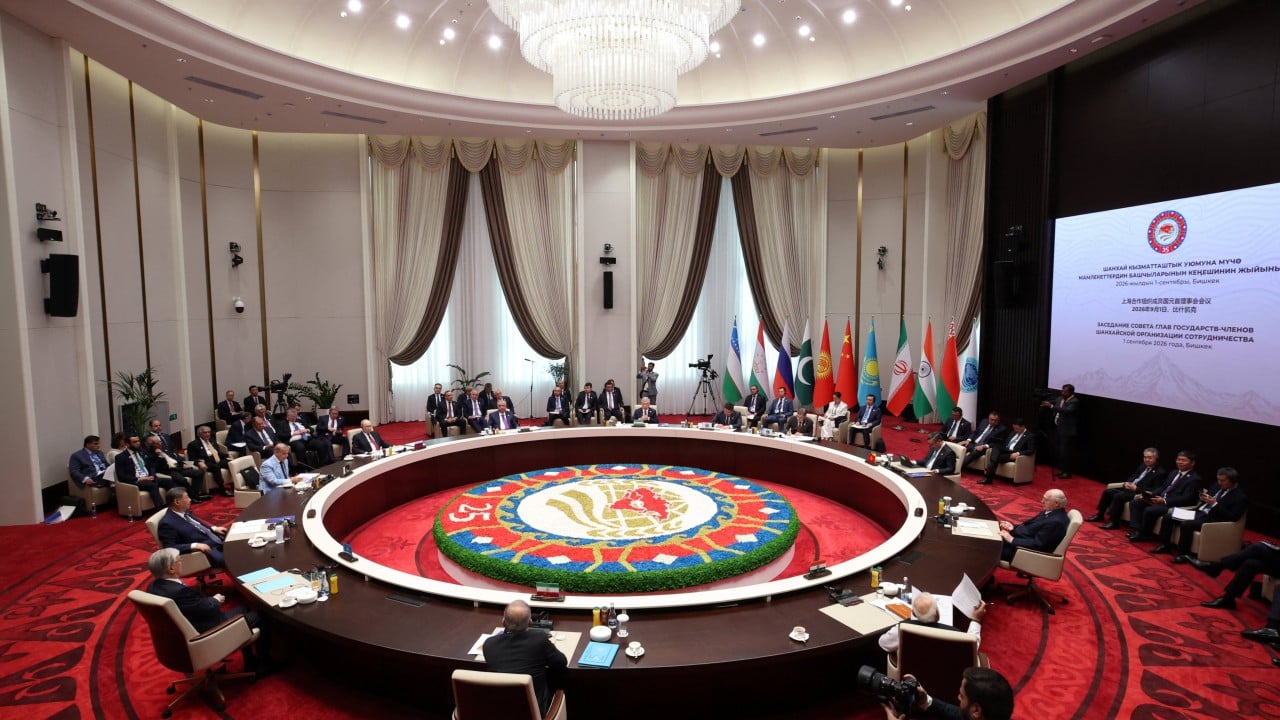
High-stakes bilateral diplomacy operates less on personal rapport and more on structural constraints, marginal gains, and domestic economic pressures. When leadership itineraries accelerate—marked by intensive diplomatic circuits culminating in a high-profile White House engagement—observers often misinterpret movement for momentum. Diplomatic exchanges between the United States and China are governed by fixed systemic variables: industrial overcapacity, technological bifurcation, and strategic security red lines.
The Cost Function of State Visits
Evaluating the utility of top-level state meetings requires dissecting the transaction costs versus the strategic yield. For Beijing, the decision to dispatch leadership to Washington involves significant diplomatic capital. The itinerary structure—specifically bypassing multilateral platforms such as the United Nations General Assembly in New York to focus exclusively on a singular bilateral day at the White House—reveals a calculated operational preference.
Multilateral forums introduce too many uncontrolled variables, multi-party signaling problems, and third-party friction. A bilateral summit isolates the variables. It allows both administrations to manage domestic constituencies by projecting control while quietly negotiating narrow concessions.
The primary driver forcing these interactions is macroeconomic friction. China faces a sustained structural shift caused by capital misallocation. Decades of state-directed investment channeled heavily into advanced manufacturing, electric vehicles, batteries, and semiconductors have generated severe industrial overcapacity. Because domestic consumption cannot absorb this output without sweeping structural reforms, the excess must find external markets.
This export dependency collides directly with Western tariff barriers and national security restrictions. The structural tension between China's export-led survival model and America's protectionist industrial policy creates a continuous baseline of friction that routine bureaucratic talks fail to resolve. Heads of state must step in not to eliminate the friction, but to manage its ceiling.
The Mechanics of Technological Bifurcation
The upcoming negotiations at the White House occur against a backdrop of deep technological decoupling. Semiconductor controls, artificial intelligence guardrails, and biotechnology oversight are no longer negotiable items in the traditional trade sense; they are treated as sovereign security perimeters.
When analyzing how both sides approach these talks, three distinct strategic components emerge:
- Defensive Guardrails: Export controls and investment screening mechanisms designed by Washington to restrict Beijing's access to foundational computing architectures.
- Offensive Industrial Policy: Beijing's state-backed push toward domestic technological self-reliance, intended to insulate its economy from external supply chain shocks.
- Transactional Bargaining Zones: Areas like agricultural purchasing pledges or targeted supply chain adjustments where minor concessions can be traded to signal cooperation without altering core systemic postures.
The fundamental asymmetry in these talks lies in leverage. While the United States utilizes legislative and executive tools to restrict access to markets and technology, China deploys supply chain dominance in critical minerals and industrial inputs as a counterweight. Neither side possesses absolute dominance, which forces a reluctant equilibrium. The leadership summit functions as a pressure-release valve to prevent targeted measures from escalating into systemic trade shocks.
Security Red Lines and Regional Containment
Beyond commerce and technology, bilateral stability remains anchored by hard security parameters. Chief among these is the structural divergence over the Taiwan Strait and regional maritime security.
In previous high-level engagements, such as the Beijing meetings earlier in the cycle, security positions were explicitly mapped. Beijing views sovereignty claims as a non-negotiable core interest, while Washington maintains a posture of strategic ambiguity coupled with regional alliance reinforcement.
Diplomatic engagement does not resolve these core contradictions. Instead, the objective of the White House summit is risk mitigation. Establishing reliable communication channels between military commands prevents tactical miscalculations in contested maritime zones from spiraling into open conflict. The structural logic dictates that while economic competition will intensify, both capitals share a rational interest in establishing hard guardrails against kinetic escalation.
Strategic Execution
Do not look to joint communiqués or public statements for signs of success. Measure the efficacy of the upcoming summit by monitoring subsequent adjustments in regulatory enforcement, the cadence of working-level military dialogues, and the specific thresholds applied to cross-border technology investments over the subsequent two quarters.