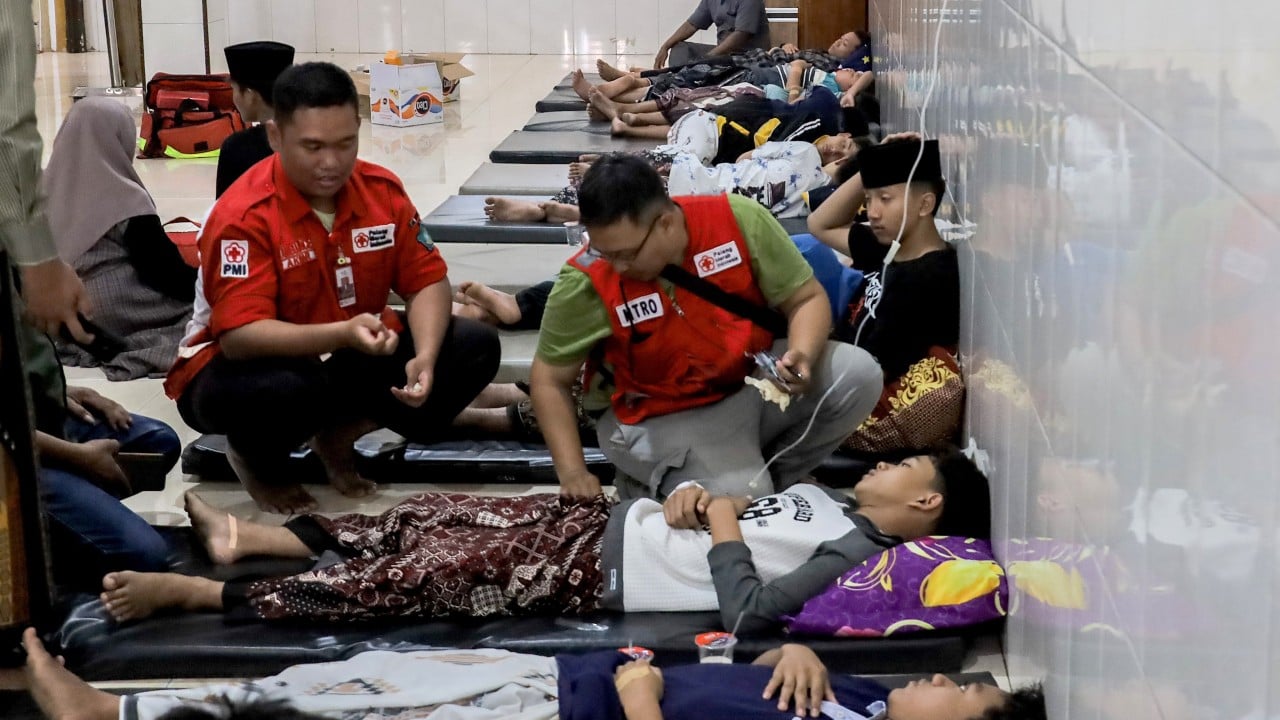
Large-scale public nutrition interventions fail not because of malicious intent, but because the underlying supply chain architecture cannot withstand decentralized execution. When over 1,700 individuals succumb to mass food poisoning following the consumption of state-issued provisions—such as the widespread incidents documented in Indonesia's free nutritional meal initiative—the event is routinely diagnosed as a localized hygiene failure. This diagnosis is fundamentally incomplete. Mass illness events in subsidized feeding programs represent systemic bottlenecks where procurement velocity overrides quality control, and where cold chain integrity collapses under the weight of political distribution quotas.
Evaluating these operational breakdowns requires shifting from moral outrage to institutional mechanics. Public feeding initiatives operate under a distinct set of economic and logistical pressures that commercial food service providers rarely face. By mapping the lifecycle of a state-funded meal from treasury allocation to the end consumer, the vulnerability points become mathematically predictable.
The Logistics of Scale Versus Safety
Public nutrition programs are usually bound by a high-velocity mandate. Proponents measure success by volume metrics: millions of plates served daily, schools reached, and budgetary execution rates met. This focus creates a perverse incentive structure within the contractor ecosystem. When local vendors and catering kitchens are selected based on lowest-cost bidding to satisfy macro-targets, safety margins are the first variable to be compressed.
The primary variable driving foodborne illness in mass catering is temperature abuse within the critical danger zone between five degrees Celsius and sixty degrees Celsius. In decentralized preparation models, meals are often cooked hours before consumption to accommodate staggered school schedules or regional delivery routes. Without standardized blast-chilling infrastructure and temperature-logged transport vehicles, food sits in ambient tropical conditions for extended periods. Bacterial proliferation, particularly of pathogens like Bacillus cereus, Salmonella, or Staphylococcus aureus, accelerates exponentially under these parameters.
Procurement Friction and Quality Degradation
Centralized financing interacting with fragmented local sourcing introduces severe informational asymmetries. State programs often mandate procurement from small-to-medium enterprises or local agricultural cooperatives to stimulate regional economies. While politically advantageous, this approach fragments quality assurance.
Large industrial food processors operate under strict Hazard Analysis Critical Control Point protocols, utilizing automated sensors, traceable batch testing, and certified sanitation regimes. Conversely, decentralized community kitchens often lack the capital expenditure budget for continuous microbial testing or industrial sanitation equipment.
The Three Operational Failures
- Velocity Over Validation: Pushing distribution quotas higher forces preparation kitchens to skip essential cooling and resting phases, leading to hot-packing errors where food is sealed while still warm, creating an incubator for spore-forming bacteria.
- Cold Chain Fracture: Transporting meals across geographically diverse regions without active refrigeration breaks the cold chain, turning delivery trucks into vector vessels for microbial growth.
- Traceability Void: When outbreaks occur, the lack of serialized batch tracking prevents immediate quarantine of unaffected lots, forcing a broad and delayed reactive shutdown rather than surgical containment.
Regulatory Oversight and the Enforcement Gap
A persistent vulnerability in state-sponsored food initiatives is the regulatory vacuum between national policy design and municipal execution. National bodies set caloric and nutritional targets—protein counts, carbohydrate ratios, and micronutrient densities—while local health agencies are tasked with oversight.
Municipal health inspectors are routinely overburdened, facing high inspection-to-facility ratios that make preventative auditing impossible. Consequently, oversight shifts from proactive inspection to reactive investigation after an outbreak has materialized. This reactive posture guarantees that the cost of failure is borne entirely by the end consumer, usually school-aged children or vulnerable populations who have no agency to refuse the provision.
Systemic Remedies for Mass Nutrition Logistics
Correcting structural failures in public feeding requires a redesign of the operational architecture rather than mere admonitions for better hygiene.
First, procurement contracts must mandate digital temperature logs for every batch leaving a kitchen facility. If temperature continuity cannot be verified through cryptographic or automated sensor logs, the batch must be flagged and rejected prior to dispatch.
Second, the distribution radius must be strictly capped based on transport time rather than administrative boundaries. Centralized mega-kitchens that attempt to supply rural or distant urban peripheries invite logistical degradation. Decentralized preparation must be matched with localized, high-tier sanitation hubs that service multiple small kitchens, pooling resources for industrial dishwashing, flash-freezing, and quality testing.
Third, liability structures must be realigned. Contractors must face severe financial penalties tied directly to microbial safety compliance, shifting the risk profile away from the state and back to the operators executing the supply chain.
Until state feeding programs abandon the illusion that high-volume distribution can bypass the laws of thermodynamics and microbiology, mass contamination events will remain an inevitable mathematical output of the current operating model. The solution is not to abandon public nutritional support, but to subject its execution to the same rigorous tolerances demanded by industrial supply chains.
Establish real-time biometric and microbiological surveillance loops at the point of consumption, linked directly to automated payment freezes for suppliers whose batch error rates breach pre-defined statistical thresholds.