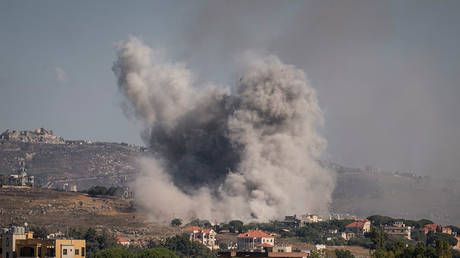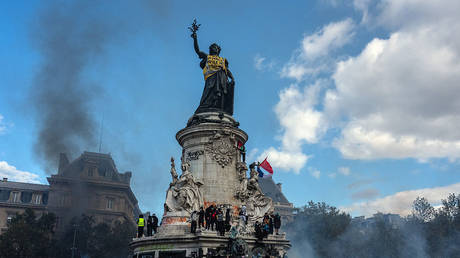
Sirens. That is the first thing you hear before you ever see smoke.
A low, wailing ribbon of sound cuts through the humid twilight of a housing estate outside a major French city, bouncing off concrete towers that went up in the 1960s and 1970s like hasty promises. Windows rattle. A dog barks once, sharp and anxious, then goes quiet. Inside a fourth-floor apartment, a teenager presses his forehead against the cool glass of the living room pane, watching blue and red light paint the wet asphalt three stories down while a municipal loudspeaker crackles a command that half the block cannot quite make out.
Curfew. Again.
When a headline reduces a moment like this to a cold wire dispatch—France imposes curfews as riots spiral—it gives you the geometry of power without the weight of a single heartbeat. It tells you a decree was signed. It tells you how many hours are left until going outside becomes a misdemeanor or worse. What it cannot easily convey is how a locked door feels when you are sixteen, innocent, and walking home from a friend’s house because your cousin’s scooter broke down and the last bus already skipped your stop.
I have stood on sidewalks like that after dusk in places where tension hums in the air like a live wire before a storm. You smell damp concrete, cheap tobacco, burnt rubber from a bin fire two blocks over, and the sharp metallic tang of panic that arrives long before any tear gas canister does. Your chest tightens for no reason you can name. Even if you came out only to buy bread or check on an elderly neighbor, the street suddenly feels like a trapdoor waiting to drop.
Let’s be honest about what makes this subject so hard to talk about cleanly. It is scary. It is confusing. Watching glass shatter on a television screen or reading a terse prefecture order on a phone leaves plenty of room for anger, fear, and snap judgments. When a government reaches for a curfew, people on both sides of the barricade often feel they are fighting for survival—one side defending order and property before things spin out of control, the other feeling cornered by years of neglect, suspicion, and heavy-handed policing. Anyone claiming this dynamic has a simple villain or a neat five-point fix is selling certainty where only hard trade-offs live.
To see what is actually at stake when curfews drop over spiraling unrest, it helps to step away from the wire copy and look at the lives caught inside the perimeter.
The Night a Routine Becomes an Offense
Consider a hypothetical family—let’s call them the Lefevres, living in a high-rise development on the edge of Lyon or Marseille, places that know all too well how quickly a spark turns into a blaze. This family and their specific evening are hypothetical, constructed to show how official decrees land on ordinary households.
Nadia works the afternoon shift at a hospital laundry. Her hands smell of bleach and hot cotton when she steps off the tram at 9:15 p.m. Usually, the walk back past the corner bakery and the small playground takes twelve minutes. Tonight, the bakery’s metal shutter is already pulled halfway down. Two municipal police vans sit idling near the roundabout, engines rumbling, headlights off except for amber parking lights.
Her eighteen-year-old son, Tariq, is supposed to be at home studying for an electrical apprenticeship exam. He is not rioting. He does not own a stone, a firework, or a mask. Yet he is twenty minutes late because he stayed behind at a community center to help a younger kid fix a flat bicycle tire—a small, decent act that happens every day in neighborhoods that rarely get credit for decency.
At 9:30 p.m., the local prefecture’s curfew takes effect for minors, or perhaps for everyone after ten. A text alert pings on Nadia’s phone. Neighbors lean over balconies, voices low and edgy. Down below, a cluster of young men in dark hoodies is arguing with officers near the bus shelter. Someone shouts. A bottle arcs through the air and shatters against the pavement.
Nadia’s stomach drops. In her mind, Tariq is suddenly walking straight into a funnel.
To understand why curfews feel so electric—and so volatile—in moments like this, picture a pressure cooker with a broken steam valve. This is a metaphor for civic strain under sudden restriction, not a literal description of crowd mechanics. Turning up the heat without fixing the valve does not cool the water; it makes the lid rattle harder. A curfew is an attempt to clamp the lid shut fast so nothing boils over onto the stove. Sometimes that buys breathing room for exhausted firefighters and police. Other times, trapping thousands of people indoors—many of them bored, furious, or already feeling targeted—turns every doorway and stairwell into a flashpoint.
What Cold Headlines Leave in the Dark
Standard news reports love clean nouns: riots, curfews, clashes, protests, deployments. Those words are useful shorthand when an editor has three hundred words before deadline. They are terrible when you are trying to understand why unrest keeps returning to the same neighborhoods across decades.
History gives us a sobering mirror here. France has seen waves of urban unrest—from the rodéos of the early 1980s to the nationwide disturbances of autumn 2005 and the intense nights of anger in summer 2023—each triggered by a specific flashpoint, each quickly exposing deeper fault lines. Over and over, the same pattern repeats: economic exclusion concentrated in outer-ring housing estates, strained relationships between young residents and law enforcement, housing that isolates rather than integrates, and a political reflex that reaches for emergency measures when normal tools look overwhelmed.
When unrest spirals, the damage is never evenly distributed. That is one of the quietest cruelties of street violence and blanket restrictions alike.
Think about who pays the highest price when buses stop running early, shops board up their windows, and curfews clear the streets. It is rarely the people sitting in comfortable apartments miles away debating policy on cable panels. It is the delivery driver whose shift gets cut in half. The single mother who cannot get late-night medicine without risking a fine or a tense stop. The small grocer whose family savings sit inside a storefront that gets looted by opportunists riding the wave of chaos. And it is the young people who already feel like suspects in their own zip code—now given another reason to distrust authority, or another excuse for someone with a grudge to test the line.
Even law enforcement officers operate inside a grinder during these nights. Many are pulled away from their families for grueling hours, pelted with projectiles, caught between orders to restore calm and intense scrutiny over every use of force. When trust is already thin, every encounter carries extra weight. A routine identity check can feel like humiliation to one person and necessary control to another. One bad split-second decision can turn a quiet street into a front page by dawn.
Beyond the Barricade: The Invisible Stakes
Why does a curfew feel so personal, even to people who never throw a brick or wear a badge?
Because freedom of movement is one of the most basic ways we feel like adults and citizens. When the state says, From this hour until morning, you stay inside, it changes the texture of time itself. The evening stops belonging to you. A walk to clear your head becomes a calculation of risk.
Consider another character, purely hypothetical to illustrate an everyday dilemma: Moussa, a fifty-two-year-old night security guard whose mother lives alone across town. Moussa has a clean record, a worn work badge, and a bad knee. When a curfew is announced on short notice, rules about "essential work" or "legitimate exemptions" can sound crystal clear on paper and murky at midnight on a dimly lit avenue. Will the officer at the checkpoint accept his employer’s letter? Will he be delayed thirty minutes, or an hour? What if his mother falls while he is stuck waiting?
Those invisible stakes—missed shifts, frayed nerves, lost sleep, deepened resentments—rarely show up in the first round of breaking news. Yet they shape what happens the next day.
If a curfew is paired with genuine de-escalation, clear communication, support for local merchants, and real follow-through from community leaders and social workers, it can act like a pause button—a brief quiet that lets tempers cool and emergency crews catch their breath. When it is treated as a substitute for listening, or enforced in a way that feels arbitrary, it often just pushes resentment behind closed doors until the next match is struck.
There is a hard truth here that neither side likes to admit. Order without trust is brittle. Trust without order can leave neighborhoods at the mercy of chaos.
You cannot build a lasting peace out of sirens alone, any more than you can protect a corner shop with good intentions when bricks are flying. Real stability takes years of unglamorous work: schools that give kids a real shot, policing that earns respect instead of fear, local economies that don’t hollow out, and leaders who speak plainly without fanning flames for political points. Curfews, at best, are a blunt instrument for an acute fever. They do not cure the infection.
What Lingers After the Sirens Fade
Morning usually comes gently to places that spent the night on edge.
Pale light creeps over wet rooftops. The air smells faintly of ash and exhaust. Somewhere, a street sweeper hums along the curb, gathering glass and scattered debris while shutters slowly creak upward one by one.
People step outside cautiously, testing the quiet, looking for signs of whether the storm really passed or merely caught its breath. A neighbor nods from across the street—a small, silent check-in that says I’m still here, are you okay?
That quiet nod is where the real story lives. Not in the decree signed behind closed doors, and not in the sharpest soundbite on the evening news, but in whether the people living under the same sky can still look at one another tomorrow morning without flinching.