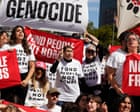
Every September, Manhattan turns into a high-production theater of moral posturing. Thousands flood the avenues around the United Nations, chanting slogans, waving banners, and demanding an end to suffering halfway across the world. When Benjamin Netanyahu takes the podium to speak, the volume outside hits a crescendo. Megaphones blare, traffic locks up, and social media feeds fill with righteous indignation.
The lazy consensus says this is grassroots power in action. Activists tell themselves that mass mobilization alters geopolitical outcomes, that street noise penetrates thick bulletproof glass and changes the calculus of heads of state.
It is a comforting illusion. It is also entirely false.
Street protests outside diplomatic summits do not alter foreign policy, deter military campaigns, or shift the balance of power in active conflict zones. They are an emotional release valve for people who feel powerless, packaged as political resistance. Worse, they serve as a convenient pressure release for the very institutions being protested, allowing global bodies to point to civil unrest as proof of a functioning democracy while changing precisely nothing about their operational apathy.
Diplomacy is not a shouting match. It is governed by cold leverage, domestic political survival, and structural incentives. When protesters scream slogans at concrete barricades, they are speaking a language that foreign ministries do not translate into policy. Real power operates behind closed doors, through arms supply contracts, intelligence-sharing agreements, and economic sanctions. If you want to understand why a military campaign continues or halts, look at bank wire transfers and logistical supply lines, not poster boards in Dag Hammarskjold Plaza.
The core misconception at the heart of these demonstrations is the belief that awareness equals leverage. Everyone already knows Gaza is suffering. The satellite imagery is universal. The casualty statistics are broadcast in real time to billions of devices. Nobody in power requires a march down Second Avenue to be informed that war is destructive. Pretending that the primary bottleneck is a lack of public awareness is a category error that infantilizes international relations.
When you examine the mechanics of how diplomatic pressure actually works, the inadequacy of street theater becomes stark. Real leverage requires inflicting tangible costs on decision-makers. It means disrupting domestic political coalitions, choking off financial flows, or threatening critical trade partnerships. Marching past a row of bored NYPD officers on a Tuesday afternoon imposes zero cost on the leadership in Jerusalem, Washington, or Gaza. It is an act of self-soothing disguised as strategy.
Consider the historical track record. Millions marched globally against the Iraq War in 2003, constituting one of the largest coordinated protests in human history. It did not stop the invasion by a single afternoon. The policy machinery ground forward regardless because the structural motivations of the administration outweighed the public spectacle outside. Conversely, historical shifts that actually altered state behavior—such as the dismantling of South African apartheid—succeeded only when they combined moral outrage with targeted economic divestment, corporate boycotts, and structural trade isolation.
Activists hate hearing this because it strips away the immediate dopamine hit of collective solidarity. Standing in a crowd chanting in unison feels productive. It creates a temporary community of the righteous. But political efficacy is not measured by how good it feels to express your anger; it is measured by whether you changed the outcome.
If energy spent on organizing permit-approved marches and printing placards were channeled into sustained, institutional pressure—such as legal challenges to arms export licenses, corporate shareholder resolutions targeting defense contractors, or meticulous investigative journalism exposing bureaucratic complicity—the needle might actually move. But those methods require tedious, unglamorous labor. They do not look good on Instagram.
Stop confusing performance with power. As long as opposition to state violence remains confined to weekend blockades and recycled rhetoric, leaders will continue their speeches, ignore the noise outside, and execute their strategies without missing a beat.