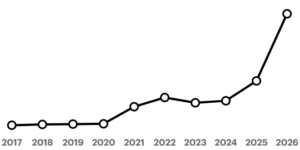
The failure of the Edmonton Expo Centre to achieve operational self-sufficiency has fundamentally compromised the original 2021 Exhibition Lands Master Plan. When a core anchor tenant—representing millions in sunk capital—cannot demonstrate a path to fiscal neutrality, the surrounding 160-acre development must be recalibrated from a "supportive ecosystem" to a "stand-alone economic engine." The City of Edmonton’s decision to rework these plans is not merely a bureaucratic shift; it is a defensive maneuver to prevent a localized real estate development from becoming a permanent drain on the municipal tax base.
The viability gap at the Expo Centre creates a structural deficit that ripples through the entire project site. In urban planning, the success of large-scale redevelopments often hinges on "Value Capture," where the increase in property values and economic activity pays for the initial infrastructure. If the Expo Centre remains a liability, the residential and commercial components of the Exhibition Lands must overperform to compensate for that drag.
The Tri-Node Failure Risk in the Expo Centre Model
The current crisis stems from a mismatch between facility scale and market demand. To understand why the city is forced to pivot, we must analyze the three specific pressure points currently crushing the Expo Centre’s viability:
- Utilization-Cost Asymmetry: Large-scale convention centers operate with high fixed costs (utilities, maintenance, staffing, debt servicing). When bookings fall below a critical threshold, the per-event operational cost exceeds the revenue generated, creating a negative feedback loop.
- Market Over-Saturation: The Edmonton market competes with itself across multiple venues. Without a distinct competitive advantage—such as a specialized industry cluster—the Expo Centre struggles to justify its square footage against newer or more specialized facilities.
- Connectivity Disconnect: Despite being adjacent to the LRT, the Expo Centre operates as an island. The current physical layout discourages the "sticky" economic behavior required for success, where visitors spend money in the surrounding neighborhood rather than simply entering and exiting the venue.
The reworking of the Exhibition Lands plan must solve for these nodes by densifying the surrounding area to create a built-in audience, thereby reducing the facility's reliance on external, intermittent events.
Revenue-to-Service Ratios and Infrastructure Burden
A critical oversight in early-stage urban redevelopments is the failure to calculate the long-term maintenance costs of new infrastructure against projected tax revenue. Edmonton’s Exhibition Lands represent a massive inventory of "under-performing asphalt."
The city is currently managing an infrastructure gap where the cost to maintain roads, sewers, and transit lines exceeds the tax revenue generated per hectare. To reach a break-even point, the new plan must shift toward high-intensity land use. This involves a transition from low-density residential or park-heavy designs to mid-rise and high-rise mixed-use developments.
The economic mechanism at play here is the Yield per Acre. A standard suburban residential development often yields a low tax return relative to the cost of the services it requires. Conversely, a dense urban core style development on the Exhibition Lands would provide the capital necessary to subsidize the Expo Centre’s ongoing deficits while eventually turning the entire district into a net contributor to the city's general fund.
The LRT Utility Paradox
The proximity of the Coliseum and Expo LRT stations is often cited as a primary asset, but transit proximity alone does not guarantee economic success. This is the "Utility Paradox": infrastructure that is present but under-utilized becomes a liability because the city must still pay for its operation and upkeep.
To maximize the LRT's value, the revised plan must adopt a Transit-Oriented Development (TOD) 2.0 framework. This moves beyond simply building apartments near a train station. It requires:
- Micro-Mobility Integration: Solving the "last mile" problem between the LRT platforms and the farthest corners of the 160-acre site.
- Vertical Integration: Placing commercial offices and essential services directly atop or adjacent to transit hubs to ensure constant foot traffic, not just "peak hour" spikes.
- Reduced Parking Mandates: Eliminating the requirement for massive surface parking lots, which are the least productive use of urban land. Every square meter of parking is a square meter that isn't generating property tax or housing residents.
Analyzing the Opportunity Cost of Stagnation
Every year the Exhibition Lands remain in their current state, the city incurs an opportunity cost equivalent to the potential tax revenue minus the current maintenance expense. When the city "reworks" the plan, they are essentially acknowledging that the previous strategy was path-dependent on an outdated version of the Expo Centre's success.
The pivot toward "Exhibition Lands 2.0" must address the following variables in its cost function:
- $C_{dem}$ (Demolition Costs): The price of clearing the Coliseum and aging infrastructure.
- $I_{new}$ (Infrastructure Investment): The capital required for new roads, utilities, and green spaces.
- $R_{tax}$ (Projected Tax Revenue): The annual return from new residents and businesses.
- $S_{sub}$ (Operating Subsidy): The ongoing cost to keep the Expo Centre afloat.
A successful plan ensures that $R_{tax} > (I_{new} + S_{sub})$ over a 20-year horizon. If the rework does not prioritize high-density tax generation, the project fails the basic test of municipal solvency.
Risk Mitigation in a Post-Pandemic Reality
The initial 2021 plan was drafted before the full impact of remote work and the shift in convention behavior was understood. Large-scale indoor gatherings have not returned to their 2019 trajectories in a linear fashion. The "Viability Concerns" raised by city officials likely stem from a realization that the Expo Centre cannot rely on the old "trade show" model.
The strategy must now shift toward Adaptive Reuse and Modular Programming. The Expo Centre needs the flexibility to pivot from a convention hall to a tech hub, a community recreation center, or an educational satellite campus within the same fiscal year. This reduces the risk of catastrophic vacancy.
Strategic Realignment and the Path Forward
The City of Edmonton must stop viewing the Exhibition Lands as a "park with some buildings" and start viewing it as a "high-performance economic district." The rework should prioritize the following structural shifts:
- Eliminate the "Master Plan" Rigidity: Shift to a "Framework" approach that allows the city to adjust density and land use based on market absorption rates. If high-density residential sells faster than commercial, the land use should be fluid enough to accommodate that demand without requiring a three-year plan amendment.
- Anchor with Institutional Partners: Actively recruit a post-secondary institution or a major healthcare provider to take a significant footprint. Institutional tenants provide "recessional-proof" foot traffic and a stable employment base that supports local retail.
- Aggressive Coliseum Demolition: The physical presence of the derelict Coliseum acts as a psychological and economic barrier to investment. It signals decay. Clearing the site immediately, even before a final plan is inked, increases the "option value" of the land and signals to the private sector that the city is serious about transformation.
- Decouple Expo Centre Debt: The city should consider ring-fencing the Expo Centre’s debt and operational losses. By separating the venue's financials from the development of the Exhibition Lands, the city can attract private developers who might otherwise be spooked by the "taint" of a failing municipal facility.
The ultimate goal of the rework is to create a district that is resilient to the fluctuations of the events industry. By densifying the residential population and diversifying the commercial use, the city can insulate its tax base from the specific failures of the Expo Centre. The current "viability concerns" are a symptom of a plan that was too dependent on a single, fragile anchor. The cure is a diversified, high-density urban core that treats the Expo Centre as a secondary amenity rather than a primary driver.
The City of Edmonton’s next move should be the immediate solicitation of "Expressions of Interest" from Tier-1 developers for high-density parcels, bypassing the slow-moving master-planning process in favor of market-driven development pockets. This creates immediate momentum and provides real-world data on what the market is actually willing to build, rather than what a consultant's report suggests might be possible.