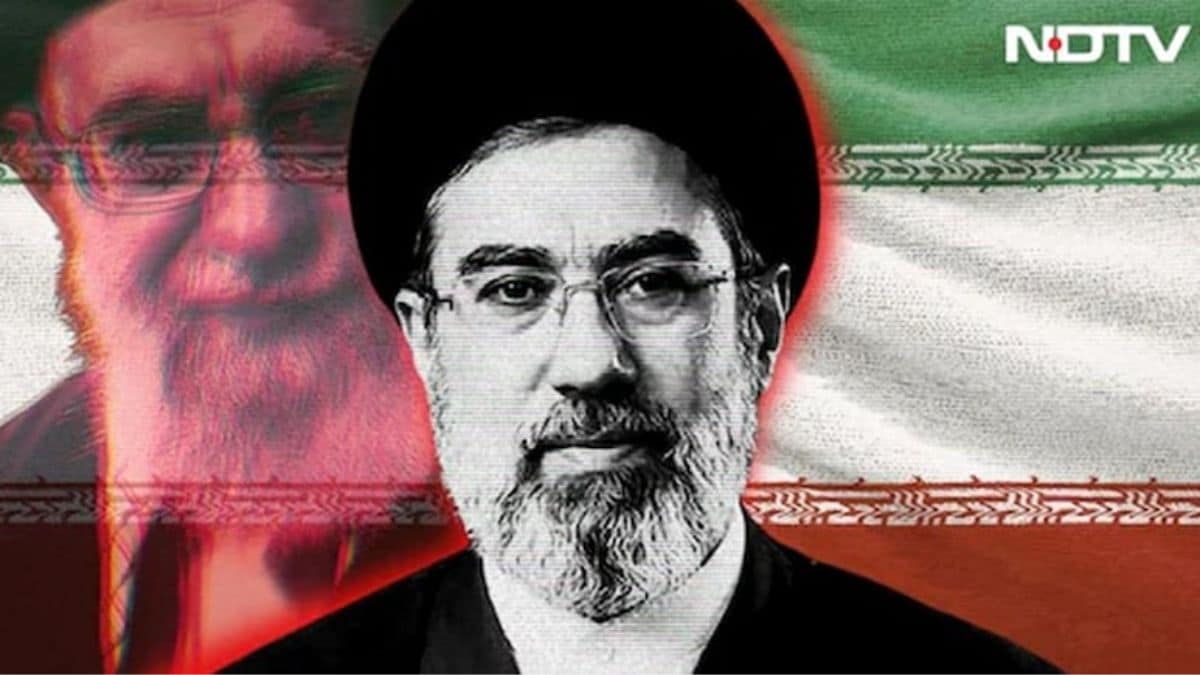
The Strait of Hormuz functions as the singular most critical chokepoint in the global energy supply chain, facilitating the transit of approximately 21 million barrels of oil per day. Recent rhetoric from Iranian officials, specifically Mojtaba Khamenei, regarding the perceived failure of American regional strategy under the Trump administration, signals a shift in the operational risk profile of this corridor. This transition is not merely a matter of political theater; it represents a calculated recalibration of Iranian maritime doctrine based on the degradation of traditional Western deterrence. By analyzing the structural mechanics of the "Maximum Pressure" campaign and its subsequent outcomes, we can map the current escalation patterns and the resulting power vacuum now being filled by asymmetric naval strategies.
The Failure of Maximum Pressure as a Kinetic Deterrent
The "Maximum Pressure" campaign initiated between 2018 and 2021 sought to leverage economic exhaustion to force a renegotiation of the JCPOA. However, the strategy suffered from a fundamental misalignment between economic intent and security execution. In strategic theory, deterrence requires three components: capability, credibility, and communication. While the United States maintained overwhelming capability, the credibility of its kinetic response was undermined by a reluctance to engage in sustained conflict, a gap the Iranian Revolutionary Guard Corps (IRGC) exploited through "gray zone" tactics.
The logic of the Iranian position rests on the observation that the U.S. failed to protect regional assets and partners during high-visibility escalations. Specifically:
- The 2019 Abqaiq-Khurais attack: The lack of a direct kinetic U.S. response to the strike on Saudi oil infrastructure signaled to Tehran that the "security umbrella" was conditional and porous.
- The Downing of the RQ-4A Global Hawk: The decision to abort a retaliatory strike minutes before execution created a "deterrence deficit." In the view of Iranian strategists, this confirmed that the risk of high-intensity conflict was lower than previously assessed.
- The Tanker War 2.0: The seizure of the Stena Impero and other vessels demonstrated that Iran could impose a "transit tax" on global shipping with minimal physical repercussions, effectively turning the Strait of Hormuz into a tool of leveraged diplomacy.
The Asymmetric Equilibrium of the Strait
The geography of the Strait of Hormuz dictates the tactical advantage. At its narrowest point, the shipping lanes are only two miles wide, flanked by Iranian territory and islands such as Abu Musa and the Tunbs. This creates a "kill zone" where high-value, slow-moving commercial tankers are vulnerable to low-cost, high-volume threats.
The IRGC Navy (IRGCN) has moved away from traditional blue-water naval aspirations, focusing instead on a "swarm and saturate" doctrine. This doctrine utilizes three specific hardware clusters to negate U.S. carrier strike group advantages:
The Fast Attack Craft (FAC) Saturation Model
Rather than engaging in ship-to-ship combat, the IRGCN employs hundreds of small, fast-moving boats equipped with short-range missiles or acting as suicide drones. The cost-to-kill ratio favors the insurgent; a $50,000 explosive motorboat can theoretically disable a billion-dollar destroyer if it penetrates the defensive perimeter during a saturated attack.
Sub-Surface Denial
The use of midget submarines (Ghadir-class) and sophisticated naval mines in the shallow, turbulent waters of the Strait creates an environment where sonar effectiveness is significantly reduced. The threat of a "closed" Strait is often more effective than the act of closing it, as insurance premiums for maritime transport spike based on the mere presence of these assets.
Land-Based Anti-Ship Cruise Missiles (ASCM)
Iran has hardened its coastline with mobile ASCM batteries. This "A2/AD" (Anti-Access/Area Denial) umbrella ensures that any attempt by a foreign navy to clear the Strait would require a massive, sustained air campaign against mainland Iranian targets, an escalation that most global powers are unwilling to initiate for fear of a broader regional conflagration.
The Economic Leverage of Maritime Friction
The rhetoric regarding a "New Chapter" in Hormuz points to a shift from reactive defense to proactive leverage. For Iran, the Strait is no longer just a border; it is a valve for global inflation. By modulating the perceived security of the Strait, Tehran can influence global oil prices, thereby exerting pressure on Western political cycles.
This creates a "Friction Loop":
- Phase 1: Diplomatic or economic pressure is applied to Iran.
- Phase 2: Iran increases "harassment" incidents in the Strait (bridge-to-bridge threats, drone overflights).
- Phase 3: Global maritime insurance (Lloyd’s Market Association) increases war risk premiums.
- Phase 4: Increased shipping costs translate to higher landed costs for crude oil, putting domestic pressure on Western leaders to de-escalate.
The perceived "shameful failure" cited by Mojtaba Khamenei refers to the reality that the U.S. presence did not prevent Iran from executing this loop. Instead, the U.S. was forced to choose between ignoring the provocations (eroding deterrence) or responding with force (risking a global energy shock).
Strategic Constraints of the United States
The U.S. Navy faces a structural bottleneck in its attempt to secure the Strait. The pivot to the Indo-Pacific has reduced the permanent presence of carrier strike groups in the Fifth Fleet's area of responsibility. This "presence gap" is being met by increased reliance on unmanned systems and Task Force 59, which utilizes AI-driven surface drones to maintain situational awareness.
However, surveillance is not the same as enforcement. The bottleneck remains a legal and kinetic one. International law (UNCLOS) provides for "transit passage" through international straits, but Iran—not being a party to the specific UNCLOS provisions on transit passage—applies "innocent passage" rules, which allow for more restrictive interpretations of what foreign vessels can do. This legal ambiguity provides a pretext for seizures that the U.S. finds difficult to counter without initiating a hot war.
The Internal Political Dimension of the "New Chapter"
The timing of these statements is critical. As Iran navigates a period of potential leadership transition, the narrative of "standing up to the Great Satan" serves as essential internal glue. By framing the Trump administration’s exit and the current regional landscape as a victory for Iranian "Strategic Patience," the hardline factions solidify their control over the national security apparatus.
This internal logic assumes that the West has lost the appetite for "forever wars" in the Middle East. The withdrawal from Afghanistan and the focus on Ukraine and Taiwan are viewed by Tehran not as strategic pivots, but as retreats. This perception emboldens the IRGC to push the boundaries of maritime harassment, testing the limits of the "red lines" established by the current U.S. administration.
Probability of Closure vs. Perpetual Instability
While the total closure of the Strait of Hormuz is often cited as a "doomsday scenario," it remains a low-probability, high-impact event. Iran relies on the Strait for its own limited exports and the import of refined goods. Total closure would be an act of economic suicide.
The more likely trajectory—the "New Chapter"—is one of Managed Instability.
In this model, the Strait remains open but "volatile." Iran maintains a permanent state of high-readiness, frequently conducting "drills" that disrupt shipping lanes. This ensures that the cost of doing business in the Gulf remains high, and the threat of closure remains a viable diplomatic bargaining chip.
The strategic play for regional players and global energy consumers is no longer about "winning" the Strait of Hormuz, but about bypassing it. This explains the massive investments by Saudi Arabia and the UAE in East-West pipelines to the Red Sea and the Gulf of Oman. However, the capacity of these pipelines currently only accounts for about 40% of the total volume passing through Hormuz. The structural dependency on the Strait remains the primary vulnerability of the global economy.
The most effective counter-strategy involves a shift from a U.S.-centric security model to a multilateral maritime coalition (such as the International Maritime Security Construct). By internationalizing the response to harassment, the U.S. forces Iran to confront not just one "adversary," but the collective economic interests of the global community, including China—Iran's largest oil customer. Until the "deterrence deficit" created during the 2019-2021 period is closed through consistent, proportional, and multilateral responses, the Strait of Hormuz will remain a theater of Iranian leverage, where rhetoric and reality are increasingly indistinguishable.