Geopolitical fractures rarely occur in isolation; they expand outward through systemic feedback loops where local power struggles intersect with global supply chain vulnerabilities. The renewed military mobilization in Yemen represents a textbook case of escalation contagion, where domestic non-state actors utilize maritime chokepoints to alter regional power balances. With hundreds of thousands of civilians displaced across the western coast and southern governorates, the friction between the Houthi movement, the Saudi-led coalition, and regional security architectures has transitioned from a localized civil conflict into an active vector of international economic instability.
The Operational Logic of the Maritime Blockade
To understand the current displacement crisis, one must analyze the strategic calculus driving the Houthi military command. Rather than focusing strictly on internal territorial consolidation, the movement instituted a maritime interdiction strategy directed at Saudi-linked commercial shipping through the Bab al-Mandeb Strait. This maneuver, framed by rebel leadership under a tit-for-tat retaliation doctrine, weaponizes geography.
The Bab al-Mandeb Strait handles a critical percentage of global maritime trade and energy shipments. By imposing an operational blockade on commercial traffic utilizing Saudi ports, the Houthi command achieved two distinct objectives. First, it exerted direct economic pressure on the Kingdom, forcing coalition responses. Second, it synchronized its domestic military campaigns with broader regional axes of confrontation.
This strategy converts local tactical maneuvers into strategic advantage. When the internationally recognized government and coalition forces attempt to push back along the Red Sea coast, the resulting kinetic friction triggers immediate population displacement. Families residing in contested zones face direct artillery shelling, missile strikes, and drone activity, creating rapid humanitarian outflows toward urban centers like Taiz or makeshift coastal camps in Khokha.
The military mechanism relies on dispersed coastal batteries, fast attack craft, and loitering munitions that make complete suppression difficult for conventional naval forces. Even when coalition airstrikes target naval infrastructure on islands such as Kamaran or near Ras Issa, the decentralized nature of the Houthi logistics network ensures rapid reconstitution of launch capabilities. This operational persistence forces commercial shipping operators to factor continuous risk into route planning, permanently altering freight dynamics in the southern Red Sea.
The Economics of Attrition and Supply Chain Vulnerability
The modern state system relies heavily on the uninterrupted flow of commodities through maritime corridors. When regional actors target energy infrastructure and commercial carriers, the cost function shifts across multiple tiers. Marine war risk insurance premiums for vessels transiting the Red Sea spike immediately following each attack cycle. Shipping lines alter routes around the African continent when risk thresholds are breached, extending transit times by weeks and inflating fuel costs globally.
Inside Yemen, the economic toll manifests as extreme scarcity. The infrastructure supporting basic human survival—potable water distribution, localized agricultural supply chains, and medical logistics—collapses under the weight of active combat. Displaced households confront compounded vulnerabilities. Families fleeing frontlines on foot across mountainous terrain or arid coastal plains arrive in receiving communities with zero capital.
Macro-level economic isolation exacerbates micro-level destitution. With banking systems fragmented, currency depreciation accelerating, and humanitarian aid distribution choked by front-line instability, populations trapped in displacement camps rely entirely on sporadic assistance. The financial burden shifts onto extended family networks already stretched to operational limits, resulting in a systemic degradation of community resilience. Local food markets experience severe inflationary shocks as transport routes are mined or contested, pricing basic staples out of reach for daily-wage laborers.
Asymmetric Warfare Dynamics and State Fragility
Conventional military doctrine assumes a clear demarcation between state military forces and civilian populations, operating within hierarchical command structures. The Yemeni theater defies this model. The Houthi military apparatus operates as an entrenched asymmetric force capable of absorbing conventional airstrikes while maintaining offensive momentum across multiple contested frontlines.
The internationally recognized government, propped up by coalition support, remains politically fragmented and structurally weak. Ground offensives led by regional formations, such as the Southern Giants Brigades along the western coast, achieve localized territorial gains but fail to alter the strategic equilibrium. The structural asymmetry lies in resource expenditure: asymmetric actors sustain operations on minimal relative economic input, whereas state-backed coalitions face high financial and political costs for prolonged military engagement.
Bureaucratic inertia within the coalition contrasts sharply with the agile, ideologically driven command structure of the rebel movement. Air campaigns targeting naval infrastructure, military installations, and coastal missile batteries generate short-term disruption but rarely dismantle decentralized supply lines or hidden underground assembly nodes. Consequently, military actions trigger retaliatory cross-border strikes against southern Saudi infrastructure, perpetuating a perpetual loop of calibrated hostility that strains regional defense systems.
Humanitarian Tectonic Shifts and Displacement Metrics
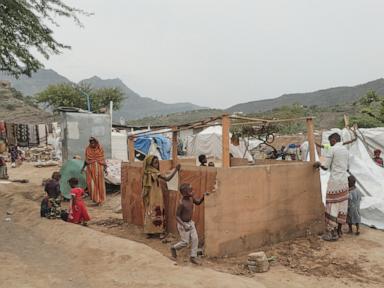
The human cost of this renewed escalation is defined by speed and scale. United Nations agencies and international organizations report that over 300,000 individuals have been driven from their homes since hostilities intensified, compounding a pre-existing humanitarian catastrophe where millions already depended on aid for survival.
The displacement vectors follow specific geographic corridors. Families flee coastal villages under artillery fire, seeking refuge in overcrowded camps where basic sanitation and healthcare are virtually nonexistent. Pregnant women, children, and individuals suffering from chronic illnesses bear the brunt of this logistical failure. Medical access collapses as clinics are repurposed, damaged, or starved of pharmaceutical supplies. Outbreaks of waterborne diseases in overcrowded camps present an acute public health hazard, exacerbated by the near-total lack of clean water infrastructure.
This rapid population movement places intense strain on municipal infrastructure in host cities. Schools are converted into temporary shelters, disrupting education for tens of thousands of children. Municipal waste systems fail, and local labor markets saturate, driving wages down while food prices surge. The demographic impact alters the socio-economic fabric of Yemen for generations, locking rural communities into cyclical poverty and displacement while draining the productive capacity of the domestic workforce.
Deterrence Failure and the Threshold of Uncontained Conflict
The central variable governing the trajectory of the Yemeni theater is the stability of deterrence thresholds between regional adversaries. For months, the confrontation has operated within managed boundaries—exchanging calibrated airstrikes and maritime missile volleys without triggering a total regional war. However, the margin for miscalculation shrinks with every escalation cycle.
When maritime blockades provoke direct kinetic retaliation against energy installations, the risk profile changes from localized containment to systemic expansion. International actors attempting to mediate face severe structural limitations. Diplomatic appeals often founder because local belligerents calculate that continued military pressure yields superior bargaining positioning at future negotiation tables compared to immediate de-escalation.
Strategic actors monitoring this theater must anticipate that localized frontlines will remain volatile as long as the underlying regional confrontation remains unresolved. The operational reality dictates that any sustainable resolution requires decoupling localized humanitarian truces from broader geopolitical power struggles—a task complicated by deep-seated distrust, competing sovereignty claims, and incompatible end-states among the primary belligerents. Diplomatic frameworks that treat the Yemeni crisis merely as a symptom of broader regional friction will continue to fail, as long as domestic actors retain independent military capacity and distinct ideological objectives.