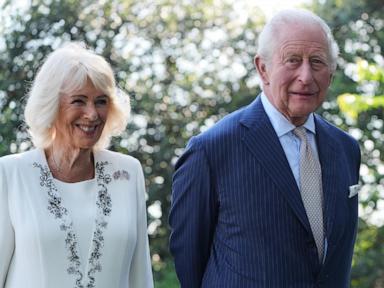
The arrival of King Charles III and Queen Camilla at the 9/11 Memorial in New York City represents more than a ceremonial gesture; it is a calculated deployment of "Soft Power Asset Management." While media narratives focus on the visual pageantry of the visit, a structural analysis reveals a complex diplomatic mechanism designed to reinforce the "Special Relationship" through high-leverage symbolic capital. This visit operates on three distinct levels of utility: historical continuity, economic signaling, and the reinforcement of shared security frameworks.
The Tri-Lens Framework of Royal Diplomacy
To understand why a constitutional monarch without legislative power remains a potent tool for the United Kingdom, one must categorize the royal visit into three functional pillars.
1. The Continuity Factor
In an era of volatile political cycles, the British Monarchy serves as a fixed point in geopolitical relations. Presidential administrations in the United States fluctuate every four to eight years, often resulting in shifts in trade priorities or defense postures. The Monarchy, however, functions as a permanent diplomatic bridge. By visiting the 9/11 Memorial—a site representing the most significant collective trauma in modern American history—the King reinforces a multi-generational alliance that supersedes the current occupants of 10 Downing Street or the White House.
2. Symbolic Reciprocity
The visit to Ground Zero is a high-stakes exercise in symbolic reciprocity. It acknowledges the 67 British citizens who lost their lives in the attacks, the largest loss of life for the UK in a single terrorist event. This specific data point transforms the visit from a foreign dignitary's courtesy call into a shared act of mourning, effectively tightening the "security of sentiment" between the two nations.
3. Economic Soft Power and Trade Priming
Royal visits are rarely decoupled from trade interests. The New York itinerary serves as a backdrop for quiet networking between British trade envoys and Wall Street leadership. The presence of the Sovereign provides a "prestige halo" that facilitates high-level access for British business interests in the world's primary financial hub.
The Logistics of Statecraft: Security and Protocol as Signaling
The technical execution of the visit involves a massive coordination of the Metropolitan Police Department (NYPD), the State Department’s Bureau of Diplomatic Security, and the Royal Protection Command. This logistical integration is itself a demonstration of bilateral capability.
- Interoperability: The seamless fusion of UK and US security protocols serves as a live-fire exercise in intelligence sharing and tactical cooperation.
- Optics Management: Every movement, from the wreath-laying at the 9/11 Memorial to the meetings at the United Nations, is choreographed to project stability. This is particularly vital for a King who is still in the early years of his reign, establishing his own brand of "Stability Projection" following the long tenure of Elizabeth II.
The Mechanism of the "Living Archive"
King Charles III occupies a unique role as a living archive of British-American relations. Having met every U.S. President since Eisenhower (with the exception of Lyndon B. Johnson), his presence in New York City acts as a physical reminder of historical depth. This depth is a strategic advantage in a global landscape where emerging powers lack comparable long-term institutional relationships with the United States.
The King’s visit to other New York landmarks, including green initiatives or urban development projects, aligns with his long-standing focus on "Sustainable Urbanism." This isn't merely a personal hobby; it is a strategic alignment with the "Green Transition" economy. By touring sites that highlight environmental resilience, the King positions British expertise in sustainability at the forefront of the American consciousness, potentially opening doors for UK-based ESG (Environmental, Social, and Governance) consultancy and technology.
Quantifying the Royal Impact
While the "ROI" of a royal visit is difficult to calculate in immediate GDP growth, it can be measured through "access metrics."
- Media Saturation Value: The visit generates thousands of hours of global coverage, rebranding the UK as a relevant, modern, yet historically grounded partner. The cost to purchase this level of positive brand exposure via traditional marketing would be astronomical.
- Diplomatic Fast-Tracking: A royal visit often serves as the "capstone" to years of lower-level diplomatic work, providing the final impetus for signing bilateral agreements or memorandums of understanding (MoUs).
- Public Diplomacy Reach: By engaging with the 9/11 Memorial, the King communicates directly with the American public, bypassing political filters and strengthening the grassroots perception of the UK as the most reliable US ally.
Challenges to the Framework
The effectiveness of this soft power deployment is not without limitations. The modern critic argues that the cost of royal security and travel is a friction point during periods of domestic economic tightening in the UK. Furthermore, the relevance of the Monarchy in a post-colonial world is under constant scrutiny. To maintain the utility of these visits, the Crown must evolve its messaging from "Imperial Heritage" to "Collaborative Partnership."
The New York trip highlights this transition. The focus is no longer on the British Empire’s historical weight but on shared future challenges: global security, climate change, and economic stability. If the King fails to make this pivot, the royal visit risks becoming a relic of "Diplomatic Nostalgia" rather than a tool for "Strategic Advancement."
The Security-Prosperity Loop
The relationship between the UK and the US is often defined by the "Security-Prosperity Loop." High-level security cooperation leads to stable markets, which in turn foster deeper trade ties. The King’s visit acts as a lubricant for this loop.
- Intelligence Sharing: The 9/11 Memorial visit reinforces the "Five Eyes" intelligence alliance, reminding both nations of the shared risks that necessitate deep integration.
- Cultural Export: The presence of the Queen Consort at cultural institutions highlights the UK's massive "Creative Economy" exports, from theater to film, which remain a multi-billion dollar component of the bilateral trade balance.
Strategic Recommendation for the UK Foreign Office
To maximize the impact of the King’s US tour, the Foreign, Commonwealth & Development Office (FCDO) must transition from "Event Management" to "Impact Tracking." The visit should be followed by a secondary wave of mid-level trade missions that specifically target the sectors highlighted during the King's New York stops—specifically green tech and financial services.
The primary risk is "Atmospheric Dissipation"—where the positive sentiment generated by the visit evaporates because it isn't anchored by follow-up policy or commercial deal-flow. The visit must be treated as the "Launch Phase" of a multi-year engagement strategy rather than a standalone PR event.
The 9/11 Memorial visit succeeds because it taps into a fundamental human element: shared memory. However, the survival of the UK-US Special Relationship depends on the King’s ability to translate that shared memory into shared future value. The transition from "The King as a Symbol" to "The King as a Diplomatic Catalyst" is the essential evolution required for the British Monarchy to remain a viable asset in the 21st century.