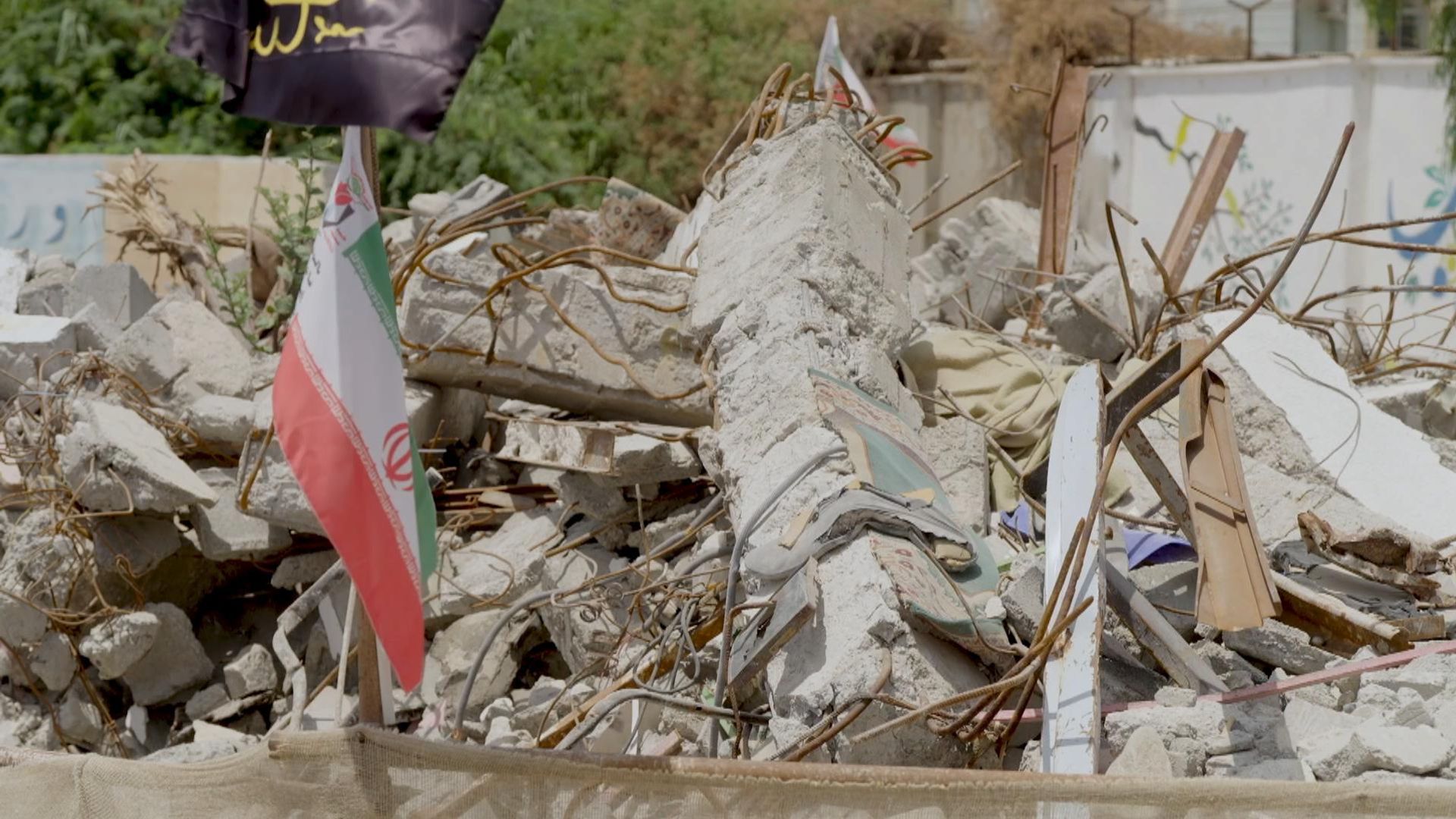
"Nobody did that on purpose."
That was Donald Trump's blunt assessment at the G7 summit in Evian-les-Bains, France, when pressed by reporters about the catastrophic missile strike on an Iranian girls' school. It is a classic Trump rhetorical pivot. Shrug the shoulders, call war "nasty," and dismiss a massive civilian tragedy as an unfortunate clerical error.
But brushing off the February 28 disaster in Minab as just another mistake ignores a much deeper, more troubling reality about modern warfare. It downplays the systemic failures that lead to these catastrophic errors in the first place. When a Tomahawk cruise missile slams into an active elementary school during class hours, killing over 150 children and teachers, simply stating it wasn't intentional doesn't clear the air. It raises a massive red flag about military intelligence, targeting protocols, and international accountability.
The tragedy in southern Iran has evolved into the most volatile flashpoint of the current conflict involving the United States, Israel, and Iran. While the White House tries to manage the fallout with casual press conference deflections, the facts on the ground tell a far more complicated story.
The Reality Behind the Minab Tragedy
The initial messaging out of Washington was messy. Trump first suggested without any hard evidence that Iran might have been responsible due to a misfired weapon. That narrative fell apart almost immediately. Independent open-source investigators and weapons experts quickly identified the wreckage and video footage as a US Navy Tomahawk cruise missile.
The strike hit the Shajareh Tayyebeh girls' primary school on the very first day of the joint US-Israeli military campaign. Iranian state media recently revised the grim breakdown of the casualties. The numbers are staggering. Out of 155 confirmed dead, the victims include 47 girls, 73 boys, 26 teachers, several parents, a bus driver, and a local medical worker.
It didn't take long for internal pressure to build. A preliminary internal US military investigation, first reported by Reuters, conceded that American forces were indeed likely responsible for wiping out the school. That forced the Pentagon to elevate the probe to a formal, high-level inquiry led by a general outside the immediate chain of command.
The core of the defense relies entirely on geography and bad data. Admiral Brad Cooper, head of US Central Command, told lawmakers that the investigation is highly complex because the school sat immediately adjacent to an active Iranian cruise missile facility operated by the Islamic Revolutionary Guard Corps (IRGC).
But here is where the official narrative starts to crack. Open-source investigators noted that while the school building was originally part of a naval brigade base a long time ago, the property was walled off and converted entirely to civilian educational use over a decade ago. Intelligence officers creating the targeting packages apparently relied on deeply outdated Defense Intelligence Agency data. They mistook a decades-old map for a live military target.
Intention vs. Reckless Disregard
International humanitarian law is pretty explicit about these scenarios. Under the rules of armed conflict, civilian objects like schools and hospitals enjoy strict protections. You cannot legally target them unless they are actively being used for military purposes at that exact moment.
The administration’s defense hinges on the absence of intent. Officials like Secretary of State Marco Rubio and Defense Secretary Pete Hegseth keep repeating that the US would never deliberately target a school. Senator John Kennedy even chimed in to say that other countries do this stuff intentionally, but "we would never do that."
That line of reasoning completely misses the legal threshold for war crimes.
To face accountability under international law, a strike doesn't have to be fueled by a cartoonish desire to hurt children. It just requires recklessness. If targeting teams failed to take all feasible precautions to verify the objective, or if they pushed through strikes using stale data without checking basic open-source realities, that constitutes an indiscriminate attack.
Failing to double-check whether a building is still an IRGC base or a primary school isn't just a minor clerical hiccup. It represents a systemic failure to protect civilian life. Calling war "nasty" doesn't change the fact that launching high-yield explosives into a walled compound next to a school during morning classes shows a reckless disregard for human life.
The Fallout on the International Stage
The diplomatic blowback from the Minab strike is intensifying, and it is reshaping how the broader conflict is perceived globally. Iran has seized on the tragedy to rally international condemnation, with Foreign Ministry officials explicitly labeling the strike a crime against humanity at the UN Human Rights Council.
Inside Iran, the tragedy has transformed into a powerful national symbol of resistance. The Iranian men's national football team even adopted the name "Minab 168" during their World Cup campaign, wearing symbolic gold pins and carrying pink schoolbags during pre-tournament activities to keep the memory of the victims alive on the global stage.
The immediate next steps require total transparency from the Pentagon. The high-level military inquiry needs to release its full findings to the public rather than burying them behind a wall of classification. Military planners must overhaul the verification pipeline for high-value targets, ensuring that live satellite imagery and current ground intelligence take precedence over outdated database profiles.
Relying on old spreadsheets to drop bombs is an unacceptable way to run a modern military campaign. If the US wants to maintain any shred of moral authority on the global stage, it has to stop hiding behind the excuse of accidental chaos and address the severe intelligence failures that caused this disaster.