The iron gates at 88th Street and East End Avenue do not squeak. They are oiled, heavy, and built to keep the noise of the FDR Drive from disturbing the lawns of Gracie Mansion. For decades, those gates have separated the messy, shouting street politics of New York City from the quiet rooms where deals actually get cut.
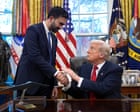
When Donald Trump walked through them to meet Zohran Mamdani, the cameras outside expected fireworks. They expected the familiar choreography of modern American politics—a tight jaw, a cold handshake, a scripted statement about "irreconcilable differences."
Instead, they got smiles.
Two men who represent the absolute outer edges of the American political spectrum emerged from a "wide-ranging" meeting looking remarkably like old acquaintances who had just split a pot of coffee. On paper, this makes no sense. Trump, the billionaire populist who built a movement on nationalist grievance and deregulatory fervor, sitting across from Mamdani, the democratic socialist assemblyman from Queens who ran on taxing the ultra-wealthy, freezing rents, and dismantling the very economic orthodoxy Trump champions.
Yet there they were. Friendly. Relaxed. Unbothered by the ideological chasm separating their bases.
To understand why that image sent a tremor through political commentators from Astoria to Washington, you have to stop watching the cable news chyrons and start looking at the geometry of power.
The Theater of the Absurd
I remember standing outside City Hall during the budget battles of the late 2010s, watching two lawmakers scream at each other on the steps for the benefit of local news crews. Their faces were red. Veins bulged. Twenty minutes later, I saw the exact same pair laughing together over pastrami sandwiches at a deli two blocks away.
It was my first real lesson in how politics actually breathes. Public rage is a currency spent on the street; private pragmatism is the currency spent behind closed doors.
Still, the Gracie Mansion summit felt different. This wasn't two career moderates haggling over sewer infrastructure. This was a collision of worldviews. If you are a working-class voter in Queens—let's call him Mateo, a hypothetical delivery driver watching his rent climb while his grocery bill doubles—you are told every single day that these two men are mortal enemies. You are told that Trump wants to crush the social safety net you rely on, and that Mamdani wants to upend the economic engine that keeps the city running.
So when Mateo sees them grinning together on the lawn of the mayor's residence, a quiet, unsettling question forms in his mind.
If they aren't fighting each other, who are they fighting?
What Happens When Extremes Meet
Political scientists have a name for the phenomenon where the far left and the far right suddenly find themselves nodding in agreement. They call it horseshoe theory. Picture a standard political line, straight as a ruler, with the left on one end and the right on the other. Now bend that ruler until the two ends nearly touch.
At the tips of the horseshoe, a strange magnetic pull takes over. Both sides despise the entrenched establishment. Both sides view the traditional corporate class, the legacy media, and the centrist political machine as the real villains.
Consider what happens when two populist disruptors sit in a room without cameras. They don't talk about abstract theory. They talk about leverage. They talk about enemies they share.
For Mamdani, whose political rise has been fueled by relentless grassroots organizing around housing affordability, transit, and the cost of living, federal power isn't an abstract concept—it is a spigot. New York City cannot build public housing, fund mass transit, or stabilize its municipal budget without billions in federal allocations, tax credits, and regulatory waivers. Ideology does not pour concrete. Federal dollars do.
For Trump, New York is never just another city on a map. It is home turf. It is the skyline that made him famous, the real estate market where he cut his teeth, and the ultimate stage for proving he can bend even the bluest stronghold in America to his will. Dealing directly with a rising standard-bearer of the progressive left allows him to bypass the traditional Democratic establishment entirely—the governors, the senators, the party bosses he has spent years sparring with.
It is a classic transactional tango. One man holds the purse strings in Washington; the other holds the megaphone on the streets of New York.
The Invisible Stakes Behind the Smiles
The phrase "wide-ranging" is diplomatic shorthand. In the vocabulary of political press releases, it means the conversation covered everything from infrastructure and federal funding to housing policy and public safety, without either side committing to a single binding promise on the record.
It is easy to dismiss this as empty pageantry. I want to be honest about my own skepticism here—when politicians emerge from closed-door meetings radiating warmth, my instinct is always to check my wallet. History is littered with "historic" handshakes that dissolved the moment the ink dried on the morning papers.
Think back to 1995, when Newt Gingrich and Bill Clinton shared a stage in New Hampshire, promising a new era of bipartisan cooperation on entitlement reform and campaign finance. The cameras loved it. The pundits swooned. Six months later, the federal government shut down twice in the most bitter budgetary standoff of the decade.
Or look closer to home, at the brief, surreal détente between Trump and former New York Mayor Bill de Blasio early in Trump's first term. Two outer-borough natives who understood each other's bravado, trading pleasantries at Trump Tower before spending the next four years locked in courtroom battles over sanctuary city laws and federal grants.
Warmth is not an alliance. It is an opening bid.
Yet dismissing the Gracie Mansion meeting as mere theater misses the deeper shift happening beneath the surface of American politics. The old party labels are rotting from the inside out. A voter in the Bronx who supported Alexandria Ocasio-Cortez and Zohran Mamdani might also have drifted toward Trump out of sheer exhaustion with rising prices and stagnant wages. The rigid ideological boxes that consultants rely on to segment the electorate are breaking down in real time.
The Architecture of a Deal
To understand what actually happens inside a room like Gracie Mansion, imagine a chessboard where neither player cares about the standard opening moves.
In a traditional meeting between a federal leader and a local progressive, the conversation dies within ten minutes. One side brings up border enforcement or corporate tax cuts; the other brings up tenant protections or green energy mandates. Both sides retreat to their talking points, issue statements blaming the other for intransigence, and go back to fundraising off the outrage.
A transactional meeting works differently. It operates like a merger between two rival shipping companies that realize they both need the same port.
- Identify the shared grievance. Both Trump and Mamdani have built careers attacking the status quo in New York—the bloated bureaucracy, the skyrocketing cost of doing business or simply surviving, the failure of legacy leadership to deliver tangible results.
- Isolate the deliverables. You leave the culture wars at the door. You focus strictly on hard assets: transit funding, federal housing vouchers, infrastructure permits, tax incentives for development.
- Control the narrative. By stepping out together looking cordial, both men deprive their critics of an easy headline. Progressives who might accuse Mamdani of capitulating are forced to wait and see what he brings home. Conservatives who expect Trump to wage total war on New York are reminded that he views himself as the ultimate dealmaker who can bring anyone to the table.
It is cold. It is calculated. And it is entirely rational.
The Risk of the Embrace
Still, there is a reason political operatives looked slightly nauseous watching the footage from East End Avenue. Proximity carries contagion.
For Mamdani, the danger is obvious. His political legitimacy rests on moral clarity—on being the uncompromising voice for tenants, working families, and communities that feel abandoned by corporate politics. Stepping into the frame with Donald Trump, even for the sake of securing resources for the city, tests the patience of a base that views Trump not merely as a policy opponent, but as an existential threat. If the meeting yields concrete wins—more federal money for public housing, fewer roadblocks for city initiatives—history will call him a master strategist. If it yields nothing, that photograph will haunt him in every primary debate for the next decade.
For Trump, the calculation is looser, yet no less revealing. By engaging warmly with a democratic socialist, he signals that ideological purity means far less to him than personal respect and willingness to deal. He has always preferred a fierce populist who looks him in the eye over a polished establishment figure who lectures him on norms. In Mamdani, he sees someone who knows how to command a crowd, how to frame a simple message, and how to fight without apologizing.
Respect between rivals is not affection. It is recognition.
What Happens When the Gates Close
Walk down to the edge of Carl Schurz Park, just south of the mansion, on a gray autumn morning. You can stand by the railing and watch the currents of the East River churn beneath the Triborough Bridge. On the surface, the water looks chaotic—swirling eddies pulling in opposite directions, colliding against the stone seawall.
Look deeper, though, and the entire river is moving in one direction, driven by the tide.
That is the reality of the meeting at Gracie Mansion. The surface politics of America—the cable panels, the viral clips, the shouted slogans—are designed to convince us that the country is frozen in permanent, unbridgeable warfare. We are conditioned to expect hatred as proof of authenticity.
Then the heavy iron gates swing shut. The cameras are left outside on the pavement. And inside a historic white clapboard house overlooking the river, two men from completely different worlds pull up chairs, lean across a table, and start talking about what it actually takes to run a city.