NASA wants to play hero again.
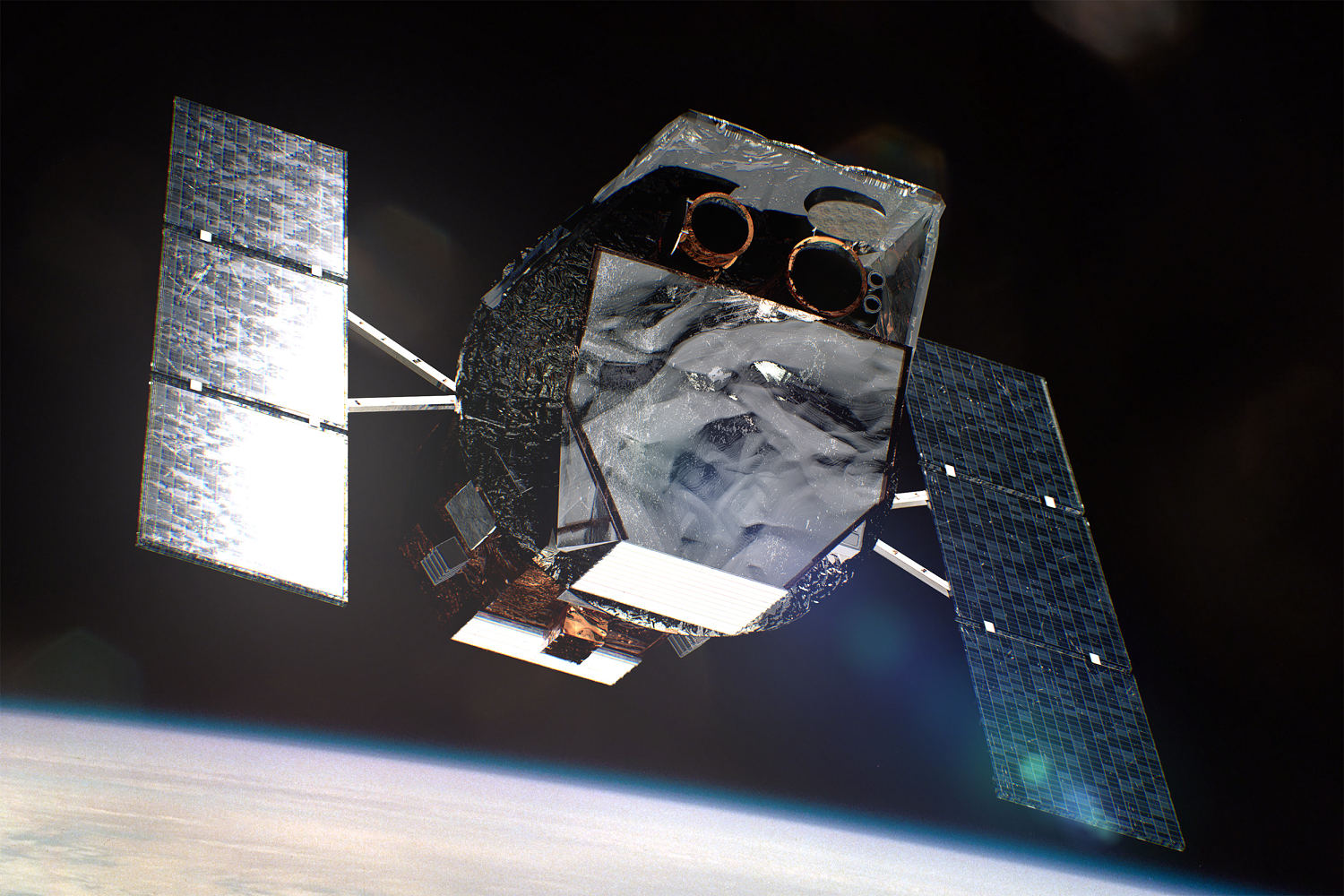
The latest narrative floating through the aerospace press paints a picture of orbital chivalry: a daring, robotic rendezvous to rescue a sinking, aging space telescope. It is the classic script that the public laps up. A multi-million-dollar instrument is sputtering, its orbit is decaying, and instead of letting it die, we are told that the only logical, responsible path forward is to spend millions more to patch it up in microgravity. Discover more on a related topic: this related article.
This is a profound misallocation of capital and engineering talent.
The romantic obsession with extending the lifespan of legacy space hardware is actively choking the life out of modern astronomy. We have built an aerospace culture that treats every piece of orbiting glass like a sacred relic. In doing so, we ignore a brutal, fundamental truth: in the modern era, hardware is cheap, launch costs are plummeting, and trying to revive a dying telescope is a vanity project that holds the entire scientific community back. Further journalism by CNET explores comparable views on this issue.
The Sunk Cost Fallacy at 17,500 Miles Per Hour
The argument for servicing missions always sounds reasonable on the surface. Proponents point to the telescope’s initial build cost—hundreds of millions of dollars—and claim that letting it burn up in the atmosphere is a waste of taxpayer money. They ask, "Why throw away a perfectly good primary mirror when a simple refueling or gyro replacement could buy us another five years of data?"
This logic is fundamentally broken. It ignores the compounding opportunity costs of maintaining obsolete tech.
When you look at the actual balance sheets of space science, the cost of an asset is not just its manufacturing price tag. It is the operational overhead. Legacy space telescopes require dedicated ground teams, specialized software maintenance for ancient onboard computers, and highly contested deep-space network time just to download data.
Worse, the data you get from a twenty-year-old sensor is vastly inferior to what a modern focal plane array can produce. By spending money to keep an old telescope on life support, you are actively denying funding to next-generation instruments that could observe the universe with ten times the efficiency and resolution.
I have watched aerospace programs burn through decades of budget reserves trying to sustain hardware that belongs in a museum. It is a slow, bureaucratic death by a thousand paper cuts. The moment a space asset requires a complex, uncrewed orbital intervention just to stay aloft, it is no longer an asset. It is a liability.
The Launch Revolution Changed the Math
The entire philosophy of space servicing was born in the era of the Space Shuttle. Back then, launching anything was an astronomical logistical nightmare. The Shuttle was a multi-billion-dollar machine built specifically to bring astronauts and cargo into low Earth Orbit to fix things. It made sense to repair Hubble because building and launching a replacement would have taken another fifteen years and billions of dollars.
That era is dead. The math has changed completely.
+--------------------------+------------------------+------------------------+
| Era                      | Launch Cost (per kg)   | Design Philosophy      |
+--------------------------+------------------------+------------------------+
| Shuttle Era (1990s)      | ~$54,500               | High Reliability,      |
|                          |                        | Maintenance-Heavy      |
+--------------------------+------------------------+------------------------+
| Modern Era (2020s)       | <$3,000                | Mass Production,       |
|                          |                        | Rapid Iteration        |
+--------------------------+------------------------+------------------------+
With commercial launch vehicles driving costs down to unprecedented lows, the economics tilt heavily toward disposable, iterative hardware. We can now launch three or four targeted, single-purpose space telescopes for the price of one bloated, over-engineered flagship mission.
Building a servicing vehicle—complete with advanced autonomous docking sensors, robotic arms, and specialized propellants—is not a cheap weekend project. It requires its own dedicated launch, its own R&D cycle, and its own massive risk profile. If the docking mechanism fails, or if the autonomous guidance software glitches, you risk creating a catastrophic orbital debris event. You are risking a brand-new, expensive piece of tech just to put a band-aid on a corpse.
The Hidden Cost of Design for Serviceability
The "lazy consensus" says we should design every new space telescope to be modular and repairable. It sounds smart. It sounds sustainable.
It is an engineering nightmare.
To make a space telescope serviceable, you must add docking rings, latches, modular grapple fixtures, and extra shielding. Every single one of those additions adds mass. In aerospace engineering, mass is the ultimate enemy. Every kilogram of structural steel or robotic interface you add to a telescope to make it "repairable" is a kilogram you stripped away from its scientific payload. You are shrinking the primary mirror, reducing the coolant supply, or cutting down on the onboard fuel just to accommodate a hypothetical repair crew that might never arrive.
Look at the James Webb Space Telescope. It was deliberately sent to the Second Lagrangian Point ($L_2$), a million miles from Earth, far beyond the reach of any current servicing vehicle. It was a massive gamble, but it forced engineers to focus entirely on absolute, uncompromising reliability and maximum scientific capability from day one. It didn't waste mass on docking rings. Every gram went toward pure science. That is the blueprint we need to follow.
Dismantling the "People Also Ask" Mythos
Whenever a high-profile space asset begins to fail, the same questions echo across public forums and congressional hearings. The premises of these questions are almost always fundamentally flawed.
"Why can't we just use a commercial satellite servicer to boost the orbit?"
Because space telescopes are not communication satellites. A standard geostationary comm-sat is a rigid box designed to take a beating from a standard docking clamp. A space telescope is a highly sensitive optical instrument. Its exterior is wrapped in delicate multi-layer insulation, exposed star trackers, and fragile solar arrays.
If a commercial tug attempts to grapple a telescope that was never explicitly designed for it, the thermal blankets will tear, the optics will be misaligned by the sheer mechanical stress of the burn, and you will end up with a perfectly boosted piece of space junk that can no longer see the stars.
"Isn't it better for the environment to repair telescopes rather than let them burn up?"
This is a false application of terrestrial environmentalism to orbital mechanics. When a satellite de-orbits and burns up in the upper atmosphere, it vaporizes completely. While there are legitimate, ongoing studies about the long-term impact of aluminum oxide deposition in the stratosphere from massive mega-constellations, a single, isolated space telescope re-entering every decade has a negligible environmental footprint.
What is bad for the orbital environment is leaving a failing, unresponsive satellite in a crowded orbit for years while you debate, fund, and build a rescue mission. A dead telescope with failing attitude control is a drifting target for space debris. Letting it controlled-deorbit cleanly is the most responsible thing you can do.
The Radical Alternative: Build for the Scrap Heap
The uncomfortable truth that the aerospace industry refuses to admit is that we need to start building space telescopes like we build consumer electronics: short lifespans, rapid iterations, and planned obsolescence.
Imagine a fleet of small, cheap, specialized space telescopes. Instead of building one massive $500 million instrument designed to last twenty years, you build five $100 million instruments designed to last four years each.
- Year 1: Launch Telescope A. It captures cutting-edge data using current state-of-the-art sensors.
- Year 3: Sensors on Earth advance. You integrate these new sensors into Telescope B.
- Year 4: Telescope A's orbit begins to decay. Instead of panicking, you command a controlled re-entry.
- Year 5: Launch Telescope B. The scientific community instantly gets access to better resolution, newer tech, and wider bandwidths without waiting decades for a flagship mission to retire.
The downside to this approach is obvious: it lacks the grand, cinematic narrative of a multi-decade space observatory. It doesn't generate the same emotional attachment from the public. It feels cold. It feels corporate.
But it works. It maximizes scientific output per dollar spent. It keeps the aerospace industrial base agile, constantly building and innovating rather than babysitting hardware designed during the Clinton administration.
Turn Off the Life Support
We have to stop letting sentimentality dictate our space exploration strategy. The competitor articles will continue to write glowing profiles of orbital rescue missions, treating every sputtering gyroscope like a medical emergency. They want the drama. They want the heroism.
But science doesn't care about heroism; it cares about data.
The telescope in question has served its purpose. It pushed the boundaries of human knowledge for years. Let it go. Let it burn. Take the hundreds of millions of dollars you would have spent designing, launching, and executing a convoluted robotic rescue mission and write a check to a team of young engineers ready to build the next generation of hardware.
Stop fixing the past. Build the future.