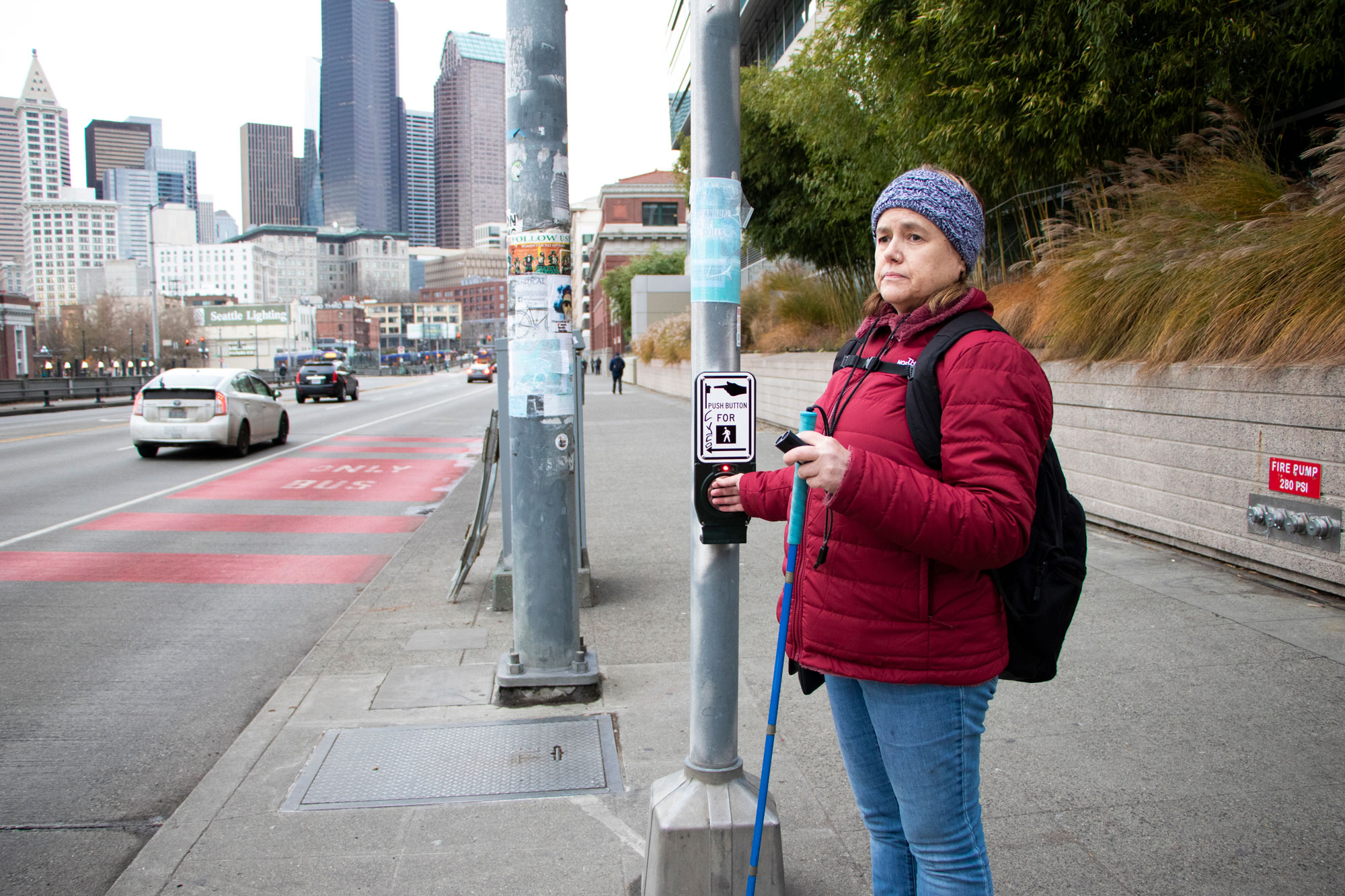
The travel industry treats blind explorers like charity cases or "inspirational" anomalies. Most articles on the subject read like a patronizing manual on how to "bravely" navigate a terminal without crashing into a luggage cart. They focus on the mechanics of the white cane or the logistics of a guide dog as if these are the highlights of the journey.
They are missing the point entirely.
Traveling without sight isn't about overcoming a deficit. It is about a radical shift in information density. While the average sighted tourist is busy staring at a smartphone or getting distracted by flashy billboards, the blind traveler is processing a high-fidelity, multi-sensory stream of data that the rest of us have become too lazy to perceive. We don't need to "help" them see our world; we need to figure out why we’ve stopped feeling it.
The Myth of the Visual Monopoly
The travel world is built on a lie: that a destination is defined by its "views." We’ve been conditioned to believe that if you didn’t see the Eiffel Tower, you weren't actually in Paris. This visual-first hierarchy is a product of lazy marketing, not actual human experience.
When a sighted person enters a Moroccan souk, they are immediately overwhelmed by visual clutter. They see colors, sure, but they miss the atmospheric pressure changes of the narrow alleys, the distinct thermal signature of a spice shop’s sun-drenched storefront, and the acoustic signature of different types of stone underfoot.
Blind travelers aren't "compensating" for a loss. They are utilizing echolocation and tactile mapping—skills that provide a level of spatial awareness that makes GPS look like a toy.
- Acoustic Shadows: A blind explorer can tell the size of a room or the proximity of a wall by how sound bounces. This isn't magic; it's physics.
- Haptic Feedback: The vibration of a train platform or the texture of a handrail provides a "read" on the age and maintenance of a city that a visual scan never catches.
Stop Obsessing Over Accessibility Logistics
The "lazy consensus" in travel journalism is that the biggest hurdle for visually impaired travelers is the infrastructure. While shitty sidewalk design is a real problem, the obsession with "tactile paving" and "audio announcements" ignores the real disruption happening in the field.
The most sophisticated travelers I know don't care about your braille menus—which are usually out of date anyway. They are using Computer Vision (CV) and Large Multimodal Models (LMMs) to bypass human intervention entirely.
If you think a blind traveler is waiting for a flight attendant to read them the gate number, you’re living in 1995. They are using tools like Be My AI or Lookout to scan the entire environment in real-time. These tools don't just "see" for them; they provide a raw data feed that is often more accurate than the confusing, poorly-lit signage found in most international hubs.
I’ve seen travelers navigate a busy Tokyo intersection using bone-conduction headphones and spatial audio cues that allow them to "hear" the map overlaid onto the physical world. This is Augmented Reality (AR) in its purest form, and it’s happening without a pair of clunky glasses.
The Problem with Compassion
Here is the cold, hard truth: the biggest barrier to travel for the blind isn't a flight of stairs or a lack of audio cues. It’s your pity.
When airlines and hotels treat blind guests as "special assistance" cases, they strip them of their agency. They force them into wheelchairs they don't need or lock them into "safe" itineraries that avoid the grit and unpredictability of real exploration.
True exploration is about friction. It’s about getting lost and finding your way back. By trying to "smooth out" the experience for visually impaired people, the industry effectively lobotomizes the trip.
Imagine a scenario where a blind traveler wants to hike the Inca Trail. The standard industry response is to highlight the "risks" and suggest a narrated bus tour instead. This is a fundamental misunderstanding of risk management. A person who navigates a major metropolitan area without sight has a risk assessment engine that is significantly more tuned than your average weekend warrior. They don't need a padded room; they need high-quality data.
The Superiority of the Non-Visual Itinerary
If you want to actually "disrupt" the travel industry, stop trying to make travel accessible and start making it tactile.
The most exclusive, high-end travel experiences are already moving in this direction. Think about it.
- Gastronomy: The blind traveler is the ultimate food critic. Without the "plating" bias, the evaluation of texture, temperature, and complex flavor profiles is clinical and honest.
- Adventure: White-water rafting or zip-lining? The thrill is almost entirely vestibular and kinetic. The "view" is secondary to the G-force and the roar of the water.
- Culture: A blind person "reads" a city through its soundscape. The rhythmic clatter of a specific tram line in Lisbon is a more authentic identifier of the city’s soul than a postcard of the same tram.
Rethinking the "People Also Ask" Nonsense
If you search for "how do blind people travel," you’ll find a list of tepid questions. Let’s answer them with some actual grit.
"Do blind people enjoy sightseeing?"
This is a stupid question based on a flawed premise. They enjoy experiencing. "Sightseeing" is a shallow, 2D activity. "Site-sensing" is 3D. They are getting 360 degrees of input while you are looking through a 6-inch screen.
"Is it safe for a blind person to travel alone?"
Is it safe for you to travel alone? Most sighted people are so glued to their phones they wouldn't notice a pickpocket if he announced his presence. A blind traveler’s situational awareness is often their primary survival tool. They are listening for the shift in foot traffic that signals a dangerous intersection or a change in the "vibe" of a neighborhood long before a visual cue would register.
"How do they know where they are?"
Spatial orientation isn't just about landmarks. It’s about dead reckoning. It’s about tracking turns, inclines, and time. If you took away your Google Maps, you’d be lost in twenty minutes. They wouldn't be.
The Tech Gap and the Real Opportunity
The real disruption isn't coming from better "disability" tech. It’s coming from the mainstreaming of sensory tech.
We are entering an era of Sensory Substitution Devices (SSDs). We’re talking about haptic vests that translate distance into pressure on the skin, or devices that turn light patterns into sound frequencies (The vOICe). This isn't just for the blind; this is the future of human-computer interaction for everyone.
The blind community are the early adopters. They are the beta testers for the next generation of human navigation. While we are waiting for Apple to make a lighter headset, they are already navigating the world using a fusion of AI, acoustics, and tactile intuition.
The Industry Needs a Reality Check
Hotels need to stop bragging about their braille elevator buttons and start fixing their atrocious acoustic design. A marble lobby might look "luxury" to a sighted designer, but it’s an acoustic nightmare for anyone trying to navigate by sound.
Airlines need to stop treating blind passengers like fragile cargo and start providing high-speed data access so they can use their own superior navigation tools.
We have spent decades trying to "fix" blindness in travel. We should have been fixing our own narrow, sight-obsessed definition of what it means to explore. The blind traveler isn't missing the view; you’re missing the world.
Stop looking. Start sensing.
Get out of the way. They’ve already figured it out.