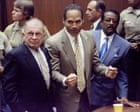
Every time a new documentary, investigative special, or archival deep-dive drops regarding the O.J. Simpson case, the public treats it like a cold-case breakthrough waiting to happen. The media machine grinds into motion, rehashing the white Ford Bronco chase, the bloody gloves, the Dream Team, and the catastrophic failures of the LAPD. Commentators act as if we are on the verge of uncovering some hidden cryptographic code that will finally explain the unexplainable.
It is a massive waste of intellectual capital.
The lazy consensus dominating cultural discourse suggests that the fascination with this trial persists because people are trying to solve a whodunit. That is entirely wrong. We are not obsessed with the murder trial because we do not know what happened. We are obsessed because the entire ordeal laid bare the absolute bankruptcy of institutional trust in America, and nobody wants to admit that the system functioned exactly as it was built to function.
Let us dispense with the amateur sleuthing right now. There is no hidden accomplice. There is no undiscovered second killer lurking in the shadows of Rockingham. The obsession with unearthing "more intrigue" is a comforting distraction. It allows armchair detectives to treat a double homicide and a catastrophic societal fracture like a weekend crossword puzzle.
The Fallacy of the Missing Smoking Gun
When outlets dig into fresh angles of the Simpson case, they invariably chase physical evidence or procedural minutiae. They want to talk about blood spatter angles, hair fibers, or unanalyzed knife fragments. This is fundamentally missing the forest for the trees.
I have spent decades watching legal systems bend, break, and shatter under the weight of high-profile media scrutiny, and I can tell you flatly: the evidence in the Simpson trial was secondary to the theater. When you hand a jury a mountain of forensic data processed by an agency with a documented history of systemic racism, falsified reporting, and blatant perjury, you do not have a pristine case. You have a contaminated crime scene wrapped in a constitutional crisis.
Mark Fuhrman did not just damage the prosecution's timeline; he handed the defense a skeleton key that unlocked every reasonable—and unreasonable—doubt a juror could harbor. The lazy narrative blames the jury for buying a conspiracy. The sharper, uncomfortable truth is that the LAPD handed them a shovel and told them to start digging. If an investigative unit cannot secure its own chain of custody without looking like a rogue syndicate, do not act shocked when a jury refuses to hand them a conviction.
The media loves to frame the verdict as an emotional outlier, a bizarre aberration in an otherwise pristine jurisprudential timeline. That is historical revisionism at its finest. High-stakes American justice has always been a game of resource allocation and narrative control. Johnnie Cochran did not invent legal jujitsu; he simply applied it with terrifying precision against an arrogant prosecution team that assumed their badge and their blue blood were enough.
The Cultural Amnesia of Domestic Violence
Let us talk about the real elephant in the room that every retrospective documentary dances around with clinical detachment: the normalization of domestic violence in 1990s America.
Before June 12, 1994, Nicole Brown Simpson called 911 multiple times. Officers showed up, took perfunctory notes, and left. O.J. Simpson received a slap on the wrist, a lecture, and a directive to attend counseling that he largely ignored. The cultural architecture of the era treated domestic abuse as a private family dispute rather than a public safety emergency or a precursor to lethal violence.
Yet, when the trial concluded, cultural pundits acted as though the domestic violence aspect was just another spicy detail for the tabloids. Even today, retrospective deep-dives treat the history of abuse as background noise to the celebrity glitz of Brentwood.
This is a moral failure of the highest order. The obsession with the car chase and the glove overshadowed a systemic epidemic that was killing thousands of women annually with the tacit permission of local law enforcement. When we parse the "intrigue" of the case, we are rubbernecking at the celebrity crash while ignoring the structural fire that preceded it. The true tragedy was not that a famous athlete got away with murder; it was that the state looked away while a woman was systematically terrorized for years leading up to it.
The Weaponization of Spectacle
We live in an era that treats true crime as a form of participatory entertainment. Podcasts, docuseries, and TikTok breakdowns parse every micro-expression of the principals involved, turning human suffering into high-engagement content. The O.J. Simpson trial was the Big Bang of this modern media ecosystem.
It was the first time a courtroom trial was broadcast as a 24-hour soap opera, complete with recurring characters, dramatic plot twists, and commercial breaks. It taught media executives a terrifying economic lesson: outrage and trauma sell better than nuance and facts.
When modern investigators trot out "new intrigue," they are simply feeding an addiction that was manufactured thirty years ago. They are recycling old bones because the public demands a constant drip of nostalgia-laced paranoia. Every time a network airs a special asking if someone else did it, they are insulting the intelligence of the viewer and cashing in on collective historical amnesia.
Stop Asking the Wrong Questions
If you want to understand why the O.J. Simpson case still casts a massive, ugly shadow over modern culture, stop asking who bought the knife or where the missing memorabilia went. Those are questions designed for voyeurs, not thinkers.
Instead, ask yourself how an entire justice system can become so profoundly distrusted that a community would rather watch a guilty man walk free than validate the integrity of the badge that arrested him. Ask yourself how a culture can watch a documented history of abuse play out in real-time and do nothing until it ends in a bloodbath on a suburban walkway.
Until we confront those uncomfortable realities, every new investigation, every unearthed interview, and every speculative documentary is just noise.
The mystery was solved the moment the verdict was read. The only thing left to figure out is why we keep pretending we do not know the answer.