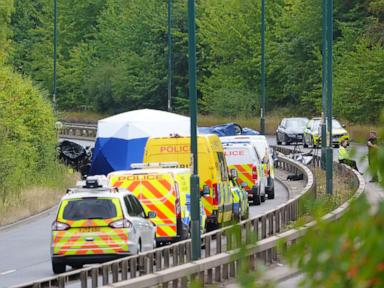
Seven bodies. Two police officers. A mangled Volkswagen Passat going the wrong way on the A66 near Middlesbrough, smashing head-on into a patrol car at nearly four in the morning.
The mainstream reports want you to bow your head, murmur platitudes about tragic timing, and accept the official narrative that this was just another freak occurrence born of midnight madness. Officials tell you to avoid speculation while they investigate themselves.
Let us drop the polite fiction.
This was not an isolated act of God. This was the entirely predictable result of high-speed pursuit doctrines that prioritize the adrenaline-fueled capture of moving targets over basic, physics-bound public safety. When a vehicle enters a dual carriageway traveling against traffic, the threat profile changes instantaneously. Continuing a high-speed tail at 3:30 AM does not contain a danger; it multiplies it exponentially, turning a lone erratic driver into a heat-seeking missile tracking whatever cruiser is stupid or stubborn enough to give chase.
The Lazy Consensus of Institutional Tragedy
Every single headline about the Middlesbrough crash follows the exact same script.
- The passive voice rules the text. Cars collide, people die, as if the metal folded itself.
- Local lawmakers demand respect for the investigative process.
- The public is fed the comfort food of institutional grief: flowers left at barriers, flags lowered, internal reviews promised by oversight bodies.
We have seen this script play out across transport corridors worldwide. Law enforcement agencies treat high-speed pursuits as an untouchable sacred cow. Question the value of chasing a wrong-way driver, and you are accused of undermining authority.
Yet traffic safety engineers and tactical risk analysts know a dirty little secret: high-speed pursuits in dense traffic or against flow generate far more carnage than they prevent.
Imagine a scenario where a police department implements an absolute termination policy for wrong-way pursuits, substituting tracking technology, airspace surveillance, and road-closure bottlenecks for tailgating at terminal velocity. The immediate pushback from traditionalists is always the same: suspects will escape.
Ask yourself a brutal question. Is a fleeing Volkswagen Passat getting away for thirty minutes a worse outcome than seven burnt and shattered corpses on a major highway? The institutional answer has historically chosen the body count over the damaged ego of an escaped suspect. That trade-off is morally bankrupt.
Dismantling the Pursuit Doctrine
Let us look at the mechanics of interdiction. Modern police cruisers are heavy, high-horsepower interceptors. When directed down a highway at triple-digit speeds in pitch darkness, response drivers operate on sensory overload. Tunnel vision sets in. Depth perception degrades.
When a target vehicle is already driving the wrong way, the closing speed during a pursuit becomes the sum of both velocities combined. A modest chase speed turns into a closure rate capable of obliterating kinetic energy dampeners in milliseconds.
The standard defense from precinct commanders is that officers must intercept dangerous drivers immediately to protect the public. But trace that logic to its operational endpoint. If the public is safe only when a cruiser matches the wrong-way driver's trajectory head-on, then the intervention itself becomes the primary vector of destruction.
The Middlesbrough crash proves that when you chase a wrong-way driver, you do not neutralize the hazard. You simply give the hazard a target.
The Metrics They Hide From You
Internal police reviews love to talk about apprehension rates. They rarely audit collateral damage metrics with the same rigor.
- The Closure Factor: Head-on kinetic energy multiplication ensures that high-speed intercept attempts convert minor traffic violations or erratic driving into catastrophic total-loss crashes.
- The Escalation Loop: Studies on pursuit dynamics repeatedly show that the intensity of police tailing directly correlates with the erratic maneuvers of the pursued. Drivers high on panic or intoxicants do not pull over because red lights flash behind them; they accelerate past the threshold of rational control.
- The Technology Gap: Relying on bumper-to-bumper car chases in an era of automated plate readers, regional camera grids, and drone deployment is an embarrassing tactical anachronism.
If a commercial airline operated with the same archaic, high-risk manual intervention methods used in street policing, the entire aviation sector would be grounded overnight. Ground transport safety deserves the same cold, analytical upgrade.
The Uncomfortable Reality of Accountability
Real reform requires abandoning the routine reflex of calling every deadly pursuit an unavoidable tragedy. It means holding commanders accountable for tactical directives that encourage reckless interception.
Until police leadership admits that chasing a wrong-way driver down a dual carriageway is a tactical failure of judgment rather than an act of heroic duty, the body bags will keep piling up.
Stop funding the illusion that more speed equals more safety. Change the rules of engagement before the next midnight intercept wipes out another generation on the tarmac.