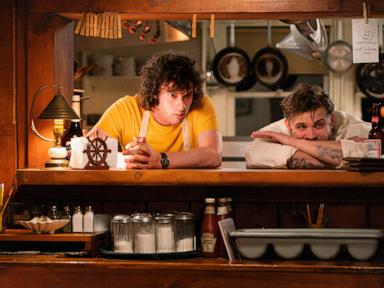
Hollywood wants to turn Anthony Bourdain into a tragic cinematic icon. They want the two-act arc, the rise from line cook obscurity, the messy glamour, the global triumph, and the inevitable, crushing slide into darkness. Reviewers are already whining that early biographical attempts are merely "an early nibble at a culinary giant," complaining that filmmakers aren't giving us the full meal.
They have it entirely backwards.
The worst thing you can do to the memory of Anthony Bourdain is treat him like a traditional biographical subject. Doing so sanitizes the man, flattens his jagged edges, and misses the entire point of what he actually did. Bourdain was not a standard-issue celebrity chef who happened to write a bestselling book. He was a brilliant, self-aware mythmaker who spent twenty years constructing, deconstructing, and weaponizing his own persona on television.
A standard biopic assumes there is a real, authentic person hiding underneath the public image waiting to be excavated by a sensitive screenwriter and a lead actor practicing a gravelly New York accent. With Bourdain, the performance was the person. The cynical punk rocker turned worldly traveler was a character he wrote, starred in, and directed in real time. Trying to capture that in a traditional two-hour movie is like trying to bottle smoke with a pair of kitchen tongs.
The Myth of the Reluctant Icon
Look at the standard critical complaint leveled against any new project touching his legacy. Critics claim we are only scratching the surface, that we need a deeper dive into his demons, his creative process, or his final days. This demand for a definitive, comprehensive portrait assumes that Bourdain can be solved.
I spent years in the documentary and television trenches watching networks try to package authentic counterculture figures into digestible 90-minute narrative arcs. I have seen production companies blow millions trying to reverse-engineer charisma that cannot be scripted.
Bourdain was the first person to tell you he was a fraud, and he did it so often that people stopped believing him. When Kitchen Confidential dropped in 2000, it exposed the brutal, sweaty, chemical-soaked underbelly of restaurant kitchens. It felt revolutionary because professional gastronomy had previously been presented as a pristine sanctuary of French copper pots and hushed reverence. Bourdain stripped away the white tablecloth and showed you the Adderall-fueled gremlins running the line.
Yet, almost immediately, the industry co-opted him. They turned the punk rock warning label into a VIP pass.
By the time he was flying around the world for No Reservations and Parts Unknown, he was no longer just a writer or a cook. He was an anthropological tourist, a living avatar of cultural curiosity. But notice what happened to the television: it stopped being strictly about food. Food became the excuse. The real subject was always Tony's internal monologue about belonging, loneliness, authenticity, and the quiet horror of middle-aged disillusionment.
You cannot dramatize that trajectory with a standard screenplay structure. Standard screenplays require a redemptive breakthrough or a clear moral lesson. Bourdain offered none of those comforts. He got richer, more famous, more critically adored, and simultaneously more miserable. That does not fit neatly into a three-act Hollywood template unless you turn it into cheap melodrama. And cheap melodrama is an insult to a man whose entire literary ethos was built on brutal, unvarnished honesty.
Why Biographical Cinema Fails Complex Antiheroes
Biopics love certainty. They need a clear villain, a motivating trauma, and a lesson learned.
Imagine a scenario where a major studio actually delivers the definitive, multi-million-dollar Anthony Bourdain cinematic treatment. What do you get? You get a sanitized montage of him smoking a cigarette in a dimly lit Tokyo alleyway, a dramatic recreation of him screaming at an incompetent sous chef in a mid-90s brasserie, and a swelling orchestral score playing over his final, tragic departure in a French hotel room.
It is voyeurism masquerading as art.
Bourdain despised pretension more than anything else. He loathed the corporate homogenization of travel, the tourist traps that promised local flavor while serving frozen garbage, and the self-serious foodies who used gastronomy as a status symbol. A Hollywood biopic about his life is the ultimate tourist trap. It takes a dangerous, messy, deeply complicated human being and turns him into a branded souvenir you can buy at the airport gift shop.
The critics calling for a bigger, deeper biopic are asking for the wrong thing because they are asking the wrong question. They want to know: How do we tell his complete story?
The correct question is: Why do we insist on reducing living, breathing contradictions into comforting cinematic mythologies?
Bourdain's brilliance lay in his contradictions. He was a recovering addict who spent his life surrounded by alcohol and stimulants. He was a misanthrope who made a career out of sitting down at crowded tables with strangers and listening to their stories. He was a multimillionaire media star who maintained the defensive posture of an insecure dishwasher from Jersey.
When you flatten those contradictions into a movie, you kill the friction that made him compelling in the first place.
The Real Legacy We Are Ignoring
If we actually care about honoring what Bourdain built, we should stop trying to dramatize his biography and start paying attention to the way he changed how we look at the world.
He did not teach us how to eat better. He taught us how to pay attention. He showed us that a bowl of plastic-stool street noodles in Hanoi or a plate of sheep testicles in the desert told you more about a culture's soul than a dozen history textbooks or state department briefings. He understood that breaking bread with people who want to kill your politicians is a lot harder to ignore once you see how they love their children and take pride in their local stews.
That is not cinematic material. That is a methodology.
The critics whining about early nibbles and wanting a full cinematic meal are suffering from narrative addiction. They want a neat little package with a bow on it so they can feel sad for two hours, grab a craft cocktail afterward, and talk about how much they miss Tony.
Tony would have hated them for it. He would have sat at the end of the bar, ordered a warm beer, and told them to shut up and go read a book written by someone who actually worked for a living.
Stop waiting for the definitive movie. Go watch Parts Unknown again, specifically the episodes where the cameras are rolling when things go wrong, when the local fixers are nervous, when the food is mediocre, and when Tony looks profoundly, irrecoverably tired of his own brand. That is the real performance. Everything else is just expensive fan fiction.