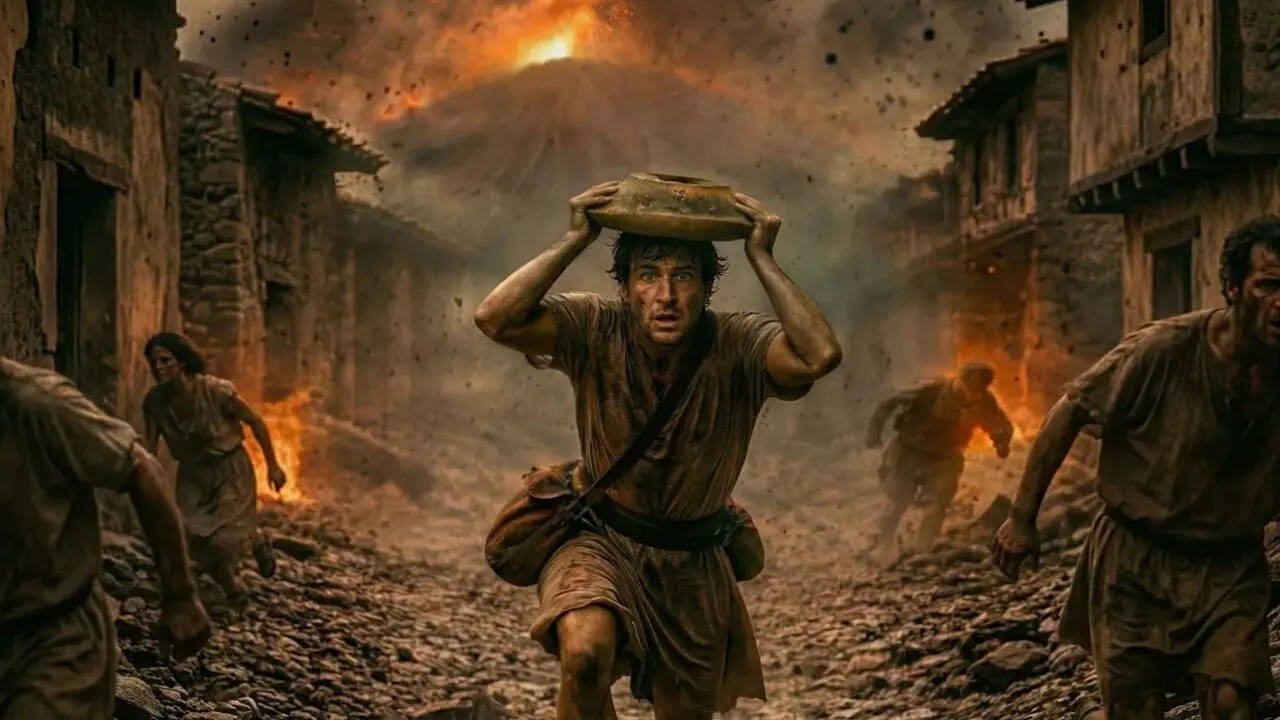
The recent viral "reconstruction" of a Pompeii victim’s face isn’t archaeology. It’s digital taxidermy fueled by a desperate need for clicks. While mainstream outlets gush over the "hauntingly realistic" eyes of a man who died nearly two thousand years ago, they are ignoring the fundamental failure of the technology involved. We aren’t seeing history. We are seeing a high-end filter applied to a skeleton, and it’s doing more to obscure the past than to reveal it.
I have spent years watching tech firms sell "reconstruction" software to cash-strapped museums. I’ve seen the back-end of these algorithms. They don’t find the truth; they find the average. By smoothing out the rugged, brutal reality of ancient life into a polished, modern-looking 3D render, we are committing a quiet act of historical revisionism.
The Algorithmic Bias of Beauty
The biggest lie in facial reconstruction is the "averaging" effect. Most AI models used for this purpose are trained on modern datasets—high-resolution photos of 21st-century humans with modern dental care, nutrition, and skincare. When you feed a skull from 79 AD into these systems, the software fills the gaps with what it knows.
What it knows is us.
When an AI "predicts" the thickness of tissue over a cheekbone or the curve of a lip, it isn’t performing a miracle. It is applying a statistical mean. If the victim had a unique facial deformity, a broken nose from a street brawl, or the asymmetrical sagging caused by a lifetime of labor, the AI often "corrects" it. We are effectively airbrushing the Roman Empire.
We aren’t looking at a resident of Pompeii. We are looking at a modern person wearing a toga-themed skin. This isn't just a technical glitch; it's a fundamental misunderstanding of what archaeology is supposed to do. Archaeology should highlight the "otherness" of the past. It should show us how different, how difficult, and how alien life was. Instead, these AI reconstructions make the past feel like a mirror.
The Myth of the "Haunting Gaze"
"Look into his eyes," the articles say. "Feel his fear."
This is emotional manipulation masquerading as science. The placement of the iris, the moisture on the tear duct, and the expression of the eyebrows are almost entirely speculative. In the case of the Pompeii victims, whose soft tissue was vaporized or rotted away centuries before the plaster casts were even poured, there is zero biological data to support the "haunting" expressions we see in these viral images.
Archaeologists like Mary Beard have long warned against the "Pompeii effect"—the tendency to treat the site as a frozen moment in time rather than a complex, layered ruin. By adding a digital face to a victim, we lock them into a singular narrative of tragedy. We stop asking how they lived and only focus on how they died. It’s cheap drama. It turns a human being into a mascot for a software update.
The Cost of the Digital Puppet Show
Why does this matter? Because funding is a zero-sum game.
Every dollar spent on a flashy 3D reconstruction for a press release is a dollar not spent on proteomics, stable isotope analysis, or paleopathology. These are the fields that actually tell us something.
- Stable Isotope Analysis: Tells us exactly what they ate and where they grew up.
- Proteomics: Can identify the specific diseases or parasites they carried.
- Paleopathology: Reveals the repetitive physical stresses that shaped their bones.
A 3D render tells us none of this. It gives us a pretty picture that satisfies a 30-second attention span on social media. I’ve seen heritage sites prioritize these "visual assets" over actual preservation because they need the engagement. We are trading the integrity of the record for the illusion of connection.
Stop Asking "What Did They Look Like?"
The premise of the question is flawed. "What did they look like?" is a question rooted in our own vanity. It assumes that if we can see their face, we can understand their soul.
The better questions—the ones that actually require intellectual rigor—are:
- How did the local economy of Pompeii manifest in the bone density of its lower class?
- What does the lead content in their remains tell us about Roman infrastructure?
- How did the migration patterns of the Mediterranean influence the genetic makeup of this specific neighborhood?
These answers don't come in a JPEG. They come in spreadsheets and chemical reports. But spreadsheets don't go viral.
The Ethics of the Uncanny Valley
There is a disturbing lack of consent in this digital necromancy. We are taking the remains of people who suffered a horrific death and turning them into puppets for technological display. If we did this with a victim of a 20th-century disaster, there would be an outcry about dignity and privacy. But because the victim is ancient, we treat their likeness as public domain.
We are creating "deepfakes" of the dead.
When you see these images, you should be skeptical. You should look for the seams. Notice how the skin texture looks suspiciously like a stock photo of a middle-aged man from a Mediterranean vacation brochure. Notice how the lighting is perfectly cinematic, designed to evoke a specific emotional response.
The Hard Truth for the Tech-Obsessed
AI is a tool for pattern recognition, not a time machine. When it is used to "reconstruct" the past, it is actually just projecting the present backward. It’s a feedback loop of our own biases.
The "haunting details" the media loves to talk about aren't from the Mount Vesuvius disaster. They are from a server farm in California or a workstation in London. They are the result of an artist’s choice and a machine’s average.
If you want to respect the victims of Pompeii, stop staring at these digital masks. Read the site reports. Look at the data on dental health and social stratification. Acknowledge that the past is a dark, distant place that we cannot—and should not—try to make "relatable" through a screen.
The skeleton is the truth. The 3D render is just a distraction.
Turn off the rendering engine and look at the bones.