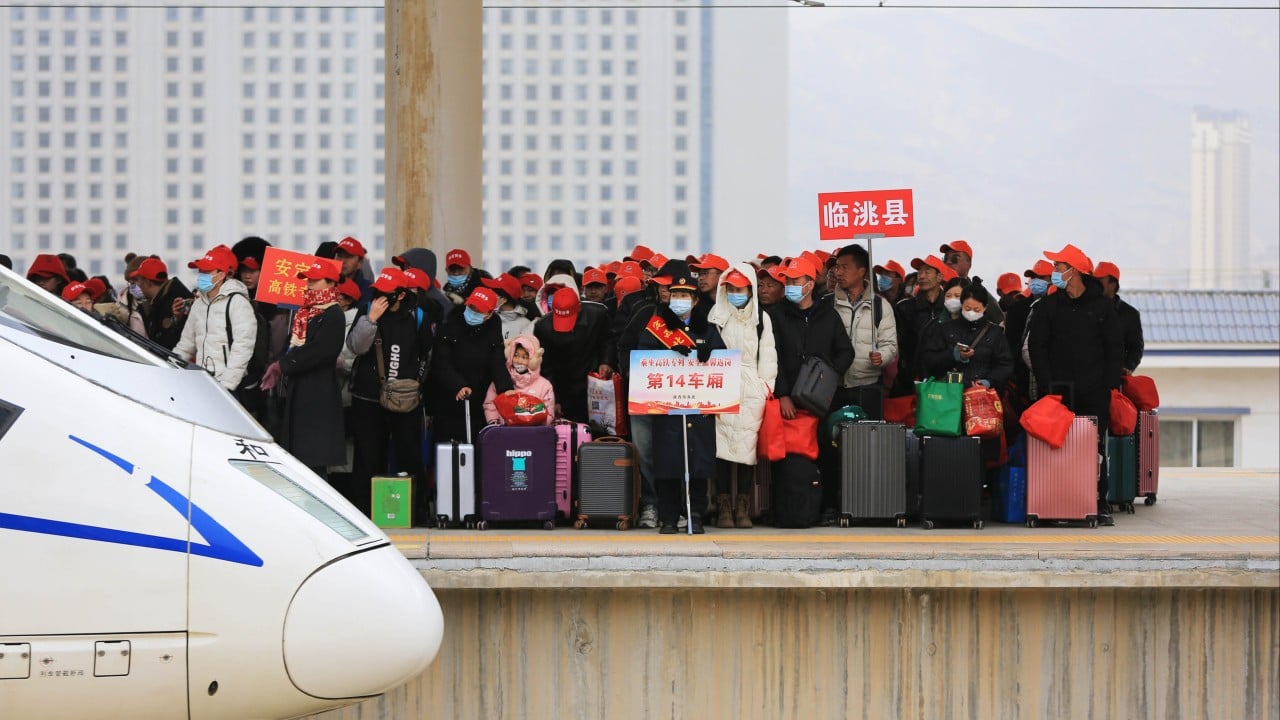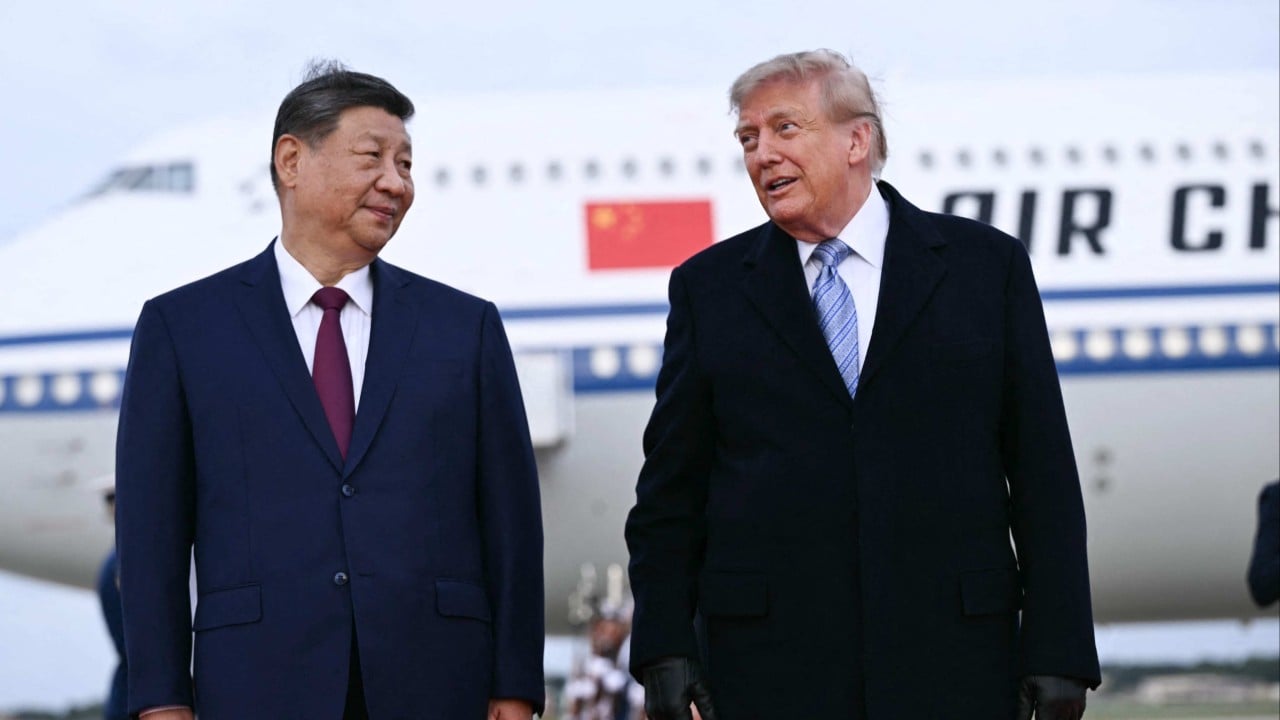
Handshakes on the tarmac mean nothing when the supply chains are already bleeding out.
The mainstream financial press is currently tripping over itself to applaud the warm welcome and extended trade truce surrounding Xi Jinping’s arrival in the United States. The consensus narrative is predictable, comforting, and completely detached from reality. Pundits want you to believe that smiling photo ops, suspended tariff hikes, and vague promises of renewed bilateral dialogue equal stability for global markets.
They are wrong. You are being sold a theater production while the stage is actively being dismantled underneath your feet.
Having spent the last decade advising multinational manufacturing executives and institutional capital allocators on cross-border supply chain risk, I have watched companies burn tens of millions of dollars betting on diplomatic headlines. Every single time Washington and Beijing announce a pause in hostilities, corporate boards breathe a sigh of relief, cancel their diversification budgets, and go back to business as usual. Six months later, they get blindsided by an export control list, a customs audit, or a sudden regulatory freeze that wipes out their quarterly margins.
A trade truce does not fix a structural divorce. It merely buys both sides time to sharpen their knives.
The Illusion of the Diplomatic Thaw
When journalists write about a "warm welcome" and an "extended truce," they are measuring the wrong variables. They are looking at headline tariff rates and diplomatic rhetoric—metrics designed specifically for public consumption.
If you want to understand what is actually happening between the world's two largest economies, stop watching the press conferences and start reading the Federal Register and the Ministry of Commerce regulatory filings.
Tariffs Are a Distraction
Tariffs are blunt, noisy instruments. They make great cable news graphics, and they are easily paused when a politician needs a short-term stock market bump or a quiet news cycle before an election. When Washington agrees to hold off on a new round of baseline tariffs, or Beijing agrees to buy a few extra shiploads of American soybeans, nothing fundamental has changed.
The real battleground is no longer customs duties at the port of Long Beach. It is non-tariff barriers, extraterritorial export controls, and industrial policy subsidies.
- Export Controls: The Bureau of Industry and Security (BIS) does not care about diplomatic handshakes. The Entity List keeps growing, restricting access to high-end semiconductors, lithography equipment, and foundational AI compute.
- Critical Mineral Chokeholds: While smiling for cameras, Beijing maintains tight licensing regimes over gallium, germanium, graphite, and rare earth processing technologies. A truce does not revoke those export licensing requirements; it simply leaves the trigger finger resting lightly on the button.
- Inbound and Outbound Investment Screening: CFIUS (the Committee on Foreign Investment in the United States) and newly established outbound investment rules are actively choking off the capital flows that built the modern Sino-American tech ecosystem.
Treating a tariff freeze as peace is like celebrating a ceasefire while both armies are actively mining the harbor.
Why Supply Chain Decoupling Is Actually Accelerating
The lazy consensus assumes that a quieter diplomatic tone will slow down "friend-shoring" and supply chain diversification. Supply chain data tells the exact opposite story.
Smart operators know that diplomatic truces are temporary anomalies in a multi-decade structural realignment. When a truce is announced, experienced chief procurement officers do not cancel their factory builds in Monterrey, Ho Chi Minh City, or Pune. Instead, they use the temporary calm to accelerate their exits before the next geopolitical shock traps their capital inside mainland China.
The Trap of the "China Plus One" Myth
Most mid-market companies think they are safe because they adopted a "China Plus One" strategy—moving final assembly to Vietnam or Malaysia while keeping their tier-two and tier-three component suppliers in Guangdong.
Let us be brutally honest about what that actually is. It is cosmetic compliance, and customs authorities know it.
When a product is assembled in Southeast Asia using 85 percent Chinese-made sub-components, it is still a Chinese product in the eyes of US Customs and Border Protection (CBP). Under the Uyghur Forced Labor Prevention Act (UFLPA) and tightening rules-of-origin enforcement, CBP has detained billions of dollars in goods shipped from third-party countries.
If your diversification strategy relies on rerouting shipping containers rather than rebuilding your bill of materials from the raw inputs up, a diplomatic truce will not save you. You are simply paying higher freight costs to maintain the exact same geopolitical vulnerability.
Dismantling the Common Myths Around the Summit
Whenever high-level talks occur, the same tired questions dominate financial media. Let us strip away the diplomatic polite fiction and answer them directly.
Does an extended trade truce lower inflation for American consumers?
No. A truce merely prevents a specific set of new taxes from taking effect on a predetermined date. The existing Section 301 tariffs—covering hundreds of billions of dollars in Chinese imports—remain firmly in place. Furthermore, the structural costs of building redundant supply chains across North America and Southeast Asia are inherently inflationary. Duplicating factories, training new workforces, and building new port infrastructure costs massive amounts of capital. Consumers will pay for that redundancy regardless of how warmly two leaders shake hands.
Will American tech companies regain unrestricted access to the Chinese market?
Never. That era is dead, and pretending otherwise is fiduciary negligence. National security hawks in Washington and self-reliance planners in Beijing have reached a rare, unspoken agreement: mutual technological dependence is an unacceptable vulnerability. Beijing’s "Document 79" and broader domestic substitution mandates explicitly require state-owned enterprises and critical sectors to purge foreign software and hardware. Even if Washington lifted every single sanction tomorrow, Beijing would still systematically replace American tech vendors with domestic champions.
Is China’s economic slowdown forcing Beijing into permanent concessions?
This is one of the most dangerous miscalculations made by Western analysts. The assumption goes like this: because China faces a massive property sector overhang, local government debt, and weak domestic consumption, Xi Jinping will inevitably cave to Western trade demands to revive export-led growth.
This completely misunderstands how Beijing operates. The Chinese leadership views economic pain as a tolerable price for political control and technological sovereignty. They are not going to dismantle their state-subsidized manufacturing model just to appease Wall Street or Washington. Instead, they are doubling down on industrial overcapacity—flooding global markets with electric vehicles, solar panels, and mature-node semiconductors to capture market share and bankrupt foreign competitors. A diplomatic truce does nothing to stop state-backed price dumping.
The Structural Reality of Trade Deficits and Capital Flows
To understand why these truces always collapse, look at the macro mechanics. Economist Michael Pettis has spent years explaining a basic accounting identity that politicians routinely ignore: trade imbalances are the direct result of domestic savings and investment imbalances.
China suppresses domestic household consumption to subsidize manufacturing production, generating massive trade surpluses that the rest of the world must absorb. The United States runs low domestic savings rates and massive fiscal deficits, acting as the consumer of last resort and absorbing those surpluses through trade deficits and capital inflows.
You cannot negotiate away a structural macroeconomic imbalance over a state dinner.
Unless Beijing radically restructures its domestic economy to transfer wealth from the state sector to Chinese households—a move that would undermine the political leverage of the state apparatus—China will continue to produce far more than it consumes. And unless Washington reins in fiscal spending and raises domestic savings, the United States will continue to run massive trade deficits.
When those two incompatible economic models collide, trade friction is not a policy choice. It is mathematical certainty. A truce simply pauses the tariff mechanism while the underlying pressure continues to build.
What Smart Operators Are Doing Right Now
If you run a business, manage capital, or oversee operations exposed to cross-border trade, you cannot afford to trade on diplomatic vibes. You have to build resilience for the reality beneath the headlines.
1. Audit Your Bill of Materials Down to Tier Four
Stop asking your tier-one suppliers where they manufacture. Ask them where their sub-suppliers source their processed metals, active pharmaceutical ingredients, printed circuit boards, and chemical precursors. Imagine a scenario where a sudden maritime blockade or a retaliatory export ban freezes shipments out of East Asian ports for ninety days. If you cannot map every single component in your core product line back to the mine or the refinery, you do not have a supply chain—you have a gamble.
2. Treat Diplomatic Calm as a Liquidation Window
When tariffs are paused and rhetoric softens, logistics capacity opens up and compliance panic subsides. Use this window aggressively. Move tooling, qualify alternative vendors in Latin America or India, and transfer intellectual property into insulated jurisdictions while the regulatory environment is temporarily predictable. Waiting until the next crisis hits means competing with every panicked competitor for the same scarce factory space and freight capacity.
3. Ring-Fence Your China Operations
If you sell into the Chinese domestic market, stop operating it as an integrated arm of your global business. Adopt a strict "in China, for China" operational architecture. Localize your data servers, separate your IT infrastructure, localize your R&D, and fund your local operations using domestic renminbi cash flows rather than cross-border capital injections. If the geopolitical firewall slams shut, your Chinese subsidiary must be able to survive independently without dragging down your global balance sheet.
4. Price Geopolitical Risk Into Every Contract
Stop signing multi-year fixed-price supply agreements that assume stable customs duties and uninterrupted transit. Every commercial contract touching cross-border manufacturing needs explicit force majeure definitions covering export controls, sanctions designations, and sudden tariff escalations, alongside pre-negotiated cost-sharing triggers.
The Honest Downside of This Strategy
Taking a hard-nosed, contrarian view of diplomatic truces is not free. Building redundant supply chains, qualifying secondary suppliers, and ring-fencing regional operations will crush your short-term capital efficiency.
Your CFO will hate it. Your gross margins will take an immediate hit from higher unit costs, duplicated compliance teams, and idle reserve capacity. If the truce holds for two or three years, your competitors who stayed all-in on centralized Chinese manufacturing will temporarily undercut you on price and boast higher quarterly earnings.
You have to be willing to look inefficient during calm weather so you do not go bankrupt during the storm. In an era of weaponized interdependence, efficiency is fragility.
Stop Watching the Tarmac
The next time you see headlines celebrating a breakthrough in bilateral talks, a warm reception at the airport, or another ninety-day extension on tariff deadlines, ignore the applause. Look at the semiconductor export rules. Look at the rare earth licensing tables. Look at the naval deployments in the Western Pacific and the industrial subsidies pouring into strategic sectors on both sides of the ocean.
Diplomats are paid to smile and buy time. Capital allocators and operators are paid to survive reality.
The cold economic war between Washington and Beijing is not ending—it is simply moving out of sight, off the front pages, and deep into the regulatory plumbing of global commerce. Plan accordingly, or get crushed when the truce inevitably expires.