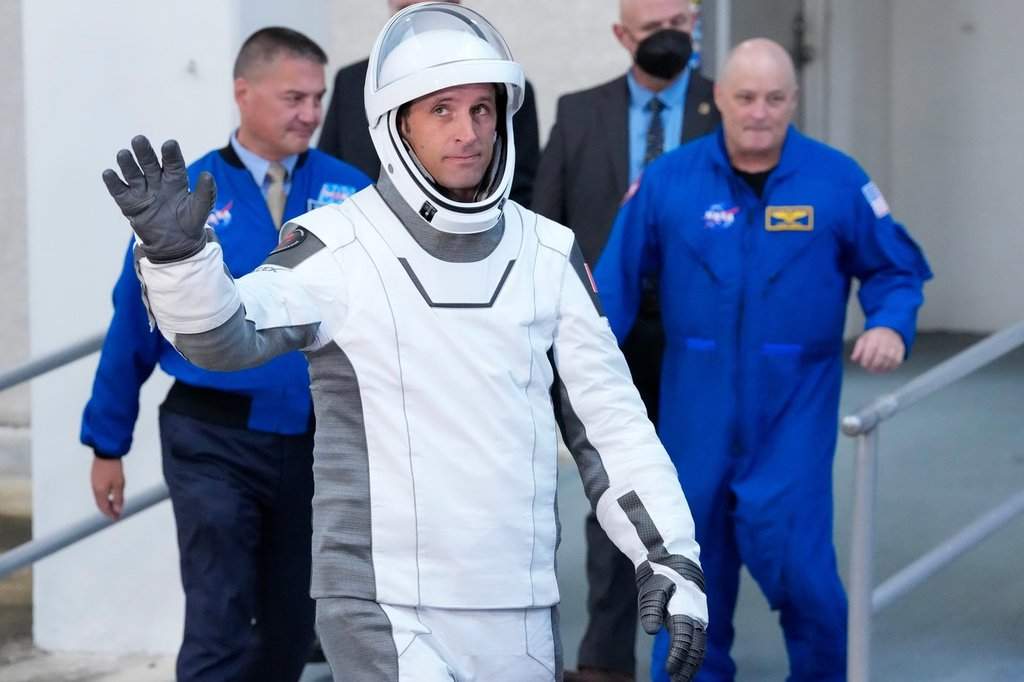
Every major newsroom recently rushed to applaud yet another routine commute to low Earth orbit. Headlines framed a Canadian astronaut stepping onto the International Space Station for a standard six-month stint as a monumental stride for humankind.
Let us stop the applause.
Circling 400 kilometers above the planet inside a metal tube that has been orbiting since 1998 is not exploration. It is orbital housekeeping. Treating a commercial crew rotation as a heroic planetary leap exposes a deep intellectual laziness in modern science journalism. We are mistaking a glorified bus stop for the frontier.
The Comfort Trap of Low Earth Orbit
The lazy consensus in aerospace reporting is that any human presence in microgravity equates to forward momentum in space program capabilities. The data tells a starkly different story. For decades, budgets that should have funded autonomous deep-space prospecting, nuclear thermal propulsion development, and actual lunar habitation infrastructure have been funneled into maintaining a high-maintenance laboratory stuck in humanity’s backyard.
Imagine a scenario where a maritime nation spent fifty years financing coastal rowboats instead of building transoceanic cargo ships. That is modern crewed low Earth orbit policy.
The International Space Station requires billions in annual upkeep, absorbing capital that could automate science at scale. Human bodies in low Earth orbit spend hours managing waste, fixing clogged water filtration units, and changing air scrubbers. Astronauts are expensive, carbon-heavy biological life support systems doing work that cheaper robotic payloads can execute with fewer safety protocols and zero risk of decompression sickness.
The Robotics Fallacy
National space agencies love to lean on national pride regarding robotic manipulation arms. When domestic payloads feature specialized manipulators, politicians gather at launch sites to talk about high-tech sovereignty and job creation.
I have seen aerospace contractors pitch redundant mechanical systems that inflate project costs by orders of magnitude simply because public relations teams need a domestic logo to slap on a press release. Building a robotic arm to plug into a station built in the previous century is engineering theater. It satisfies political funding formulas while starving actual innovation in artificial intelligence-driven autonomy.
If we want to build a permanent base on the Moon or send uncrewed probes to the outer ice moons, human beings do not need to spend half a year testing protein crystal growth inside Earth's magnetic shield.
The Real Cost of Cosmic Nostalgia
Defenders of the status quo argue that these six-month missions yield medical data on bone density loss and radiation exposure. Let us be precise. We already mapped those physiological degradations decades ago during the Mir and early station eras. Repeating identical biological assays with new crew members every six months is redundant data collection disguised as discovery.
The private sector has already shifted the paradigm on launch economics through reusable rocketry. Yet institutional space programs remain anchored to a bureaucratic model designed in the Cold War.
Stop treating a routine capsule docking as an epic odyssey. Until national space agencies stop treating low Earth orbit as the destination and start treating it as a parking lot we should have left behind years ago, every headline celebrating a six-month mission is just public relations masking a lack of ambition.
Cancel the stationary laboratory subsidies. Fund deep-space autonomy.