Every political desk in Kuala Lumpur is running the exact same lazy script. They frame the Melaka state election as an epic heavyweight bout between Anwar Ibrahim’s Pakatan Harapan and a resurgent Umno. They call it a "tide." They call it a "bellwether." They treat voters like passive spectators watching two political titans battle for the soul of the nation.
They are completely missing the point. For a deeper dive into this area, we suggest: this related article.
Having spent decades watching Malaysian political campaigns burn through millions of ringgit on faulty polling and outdated ceramah circuits, I can tell you the secret party war rooms refuse to admit: the Melaka election is not a story about Umno’s strength or Pakatan Harapan’s survival. It is a forensic autopsy of voter apathy, multi-cornered mathematical traps, and a political elite entirely disconnected from the kitchen-table economics of rural and semi-urban Malaysia.
If you are reading mainstream coverage to figure out who "won" the momentum in Melaka, you are asking the wrong question. The real story is why the entire electoral math of Peninsular Malaysia just broke—and why both coalitions are celebrating victories they did not actually earn. For broader background on the matter, in-depth reporting is available on NPR.
The Myth of the "Umno Tide"
Let’s dismantle the biggest fabrication in Malaysian political commentary: the idea that Umno is experiencing a massive, organic groundswell of popular support.
Look at the raw mechanics of the first-past-the-post electoral system. When analysts talk about a "tide," they imply a massive shift in voter sentiment—hundreds of thousands of citizens suddenly falling back in love with the old guard. That is fiction. What actually happens in state polls like Melaka is voter demobilization, not conversion.
In a high-turnout environment, like the historic 2018 general election, urban and semi-urban Malay and non-Malay voters flooded polling stations. That surge drowned out Umno’s traditional vote bank. Fast forward to state-level snap elections triggered by party-hopping melodramas, and the dynamic flips. Exhausted, cynical voters stay home.
When turnout drops from 85 percent to around 65 percent, you do not need a single new convert to win a landslide. You simply rely on your hardcore base—the party machinery, the civil service dependents, the rural networks—showing up at 8:00 AM while the opposition’s disillusioned base sleeps in.
Political scientists like Bridget Welsh and Wong Chin Huat have repeatedly pointed out this exact distortion in Malaysian electoral data. A coalition can win a two-thirds supermajority of seats in a state assembly while losing or stagnating in total popular vote share. Calling that a "tide" is like claiming a football team dominated the match because the other squad got stuck in traffic.
Pakatan Harapan’s Fatal Misreading of the Ground
On the other side of the aisle, the narrative that Anwar Ibrahim’s Pakatan Harapan is bravely "stemming" this tide is equally delusional. You cannot stem a flood when you are the one drilling holes in the boat.
For years, Pakatan Harapan operated on a simple, arrogant assumption: that non-Malay voters had nowhere else to go, and that urban Malay voters would automatically reward anti-corruption rhetoric over immediate economic relief. Both assumptions are dead.
1. The "Katak" Miscalculation
Nothing kills progressive voter enthusiasm faster than moral compromise. When Pakatan Harapan decided to accept defectors—the very politicians who helped collapse their own state government—under their banner, they committed electoral suicide.
Mainstream pundits framed this as "pragmatic politics." In reality, it destroyed the coalition's sole unique selling proposition: moral authority. If your entire brand is built on institutional reform and fighting political opportunism, you cannot put opportunists on your ballot and expect volunteers to knock on doors in the pouring rain for you. Voters do not punish betrayal by voting for the enemy; they punish it by staying home.
2. The Language of Kuala Lumpur vs. The Reality of Alor Gajah
Walk into a coffee shop in Masjid Tanah or Jasin and talk about "institutional reform" or "parliamentary select committees." People will stare at you blankly before asking why cooking oil and chicken prices are eating half their paycheck.
Pakatan Harapan’s messaging machine is overwhelmingly urban, English-educated, and obsessed with macro-political drama. Meanwhile, Umno’s machinery speaks the hyper-local language of immediate patronage, mosque committees, and village-level problem solving. When a monsoon drain clogs in a rural kampung, nobody cares about constitutional amendments. They care about whose phone number actually works.
The Silent Spoiler Nobody Wants to Analyze
If you want to understand why the Melaka election looks like a blowout on paper, stop looking at Umno and Pakatan Harapan, and look at the third wheel: Perikatan Nasional.
The introduction of a viable, well-funded third coalition shattered the binary math that defined Malaysian politics for sixty years. In a two-way fight between Barisan Nasional and Pakatan Harapan, anti-establishment votes consolidated naturally. In a three-cornered fight, those anti-establishment votes split down the middle.
Imagine a scenario where 10,000 voters in a semi-urban seat want change. In 2018, 6,000 of them voted for Pakatan Harapan, defeating Umno’s 4,000 loyalists. Now introduce Perikatan Nasional. Suddenly, those 6,000 change-seekers split: 3,200 go to Pakatan Harapan, and 2,800 go to Perikatan Nasional. Umno’s 4,000 loyalists do not budge.
Result? Umno wins the seat easily, despite 60 percent of the electorate voting against them.
This is the mathematical reality behind the headlines. Umno did not conquer Melaka; their opponents divided the battlefield into pieces small enough for Umno’s fixed base to swallow whole.
Why "People Also Ask" Misses the Real Threat
If you look at what ordinary voters and casual observers are searching for during these state polls, the questions reveal a deep confusion about how Malaysian democracy actually functions. Let’s tear down the three most common misconceptions.
"Does the Melaka election predict who wins the next General Election?"
No. State elections held in isolation are terrible predictors of national general elections, and treating them as crystal balls is a rookie mistake.
During a isolated state poll, national parties pour 100 percent of their cash, logistics, and top leaders into 28 tiny constituencies. Every village gets flooded with campaign workers from across the country. In a full-blown General Election, those resources are stretched thin across 222 parliamentary seats and hundreds of state seats simultaneously. Furthermore, outstation voters—who work in Kuala Lumpur, Johor Bahru, or Singapore and skew heavily toward the opposition—rarely spend hundreds of ringgit on fuel and tolls just to vote in a state-level poll. They save their money and leave for the national battle.
"Why are young voters not saving Pakatan Harapan?"
Because the political class treats young Malaysians like a monolithic demographic block rather than economically stressed individuals.
There is a persistent myth that lowering the voting age automatically favors progressive, reform-minded coalitions. It does not. A 20-year-old gig-economy rider in Melaka Tengah is far more conservative, economically anxious, and skeptical of political promises than a 45-year-old middle-class professional in Petaling Jaya. Youth voters are completely unimpressed by nostalgia for 2018. If you do not have a concrete plan for wages, housing, and gig-worker protections, they will either vote for whoever hands out immediate aid or ignore the ballot box entirely.
"Is multi-racial politics dead in Malaysia?"
It is not dead, but the execution of it is broken.
Multi-racial coalitions fail when they treat diversity as a photo-op rather than an economic policy. When Pakatan Harapan governs, they often walk on eggshells, terrified of offending conservative Malay sensibilities while failing to deliver structural reforms for non-Malays. The result is a paralysis that satisfies nobody. Voters do not reject multi-racialism; they reject incompetence dressed up as idealism.
The Actionable Playbook Both Sides Are Too Stubborn to Use
If I were sitting in the war room of either coalition today, I would throw their current campaign manuals into the shredder. The old playbook—big rallies, vague manifestos, and personality cults—is obsolete.
To actually win the real electorate—not just capitalize on low turnout—political strategists must make three brutal adjustments:
- Kill the Mega-Ceramah. Large political rallies are pure vanity metrics. They attract people who have already decided how to vote, create an echo chamber that fools leaders into thinking they are winning, and waste obscene amounts of money on sound systems and logistics. Shift 80 percent of that budget into micro-targeted digital organizing and hyper-local, door-to-door constituent service.
- Stop Running on "Stability" vs. "Reform." Both words have become meaningless buzzwords to exhausted voters. "Stability" sounds like code for returning corrupt elites to power. "Reform" sounds like code for endless political infighting while the economy stalls. Campaigns must be anchored entirely on verifiable pocketbook metrics: local job creation, cost-of-living subsidies, and infrastructure maintenance.
- Force Electoral Pacts Before Nomination Day. As long as opposition forces refuse to negotiate single-candidate matchups in three-cornered seats, they are handing power to a minority-vote winner on a silver platter. Ego is the single most expensive liability in Malaysian politics.
The Caveat to My Own Thesis
There is one major risk to assuming low turnout and vote-splitting explain everything: narrative momentum becomes self-fulfilling.
Even if Umno’s victory in Melaka is built on mathematical quirks rather than genuine popularity, perception in politics is currency. A landslide win—regardless of how artificially inflated it is by low turnout—gives the winning coalition massive psychological leverage. It attracts corporate donors, intimidates fence-sitting civil servants, and convinces swing voters to back a "winner" rather than waste their vote on a fractured opposition.
The Real Verdict on Melaka
The mainstream press wants you to believe Melaka is a decisive chapter in Malaysia’s political evolution. It is not. It is a warning flare.
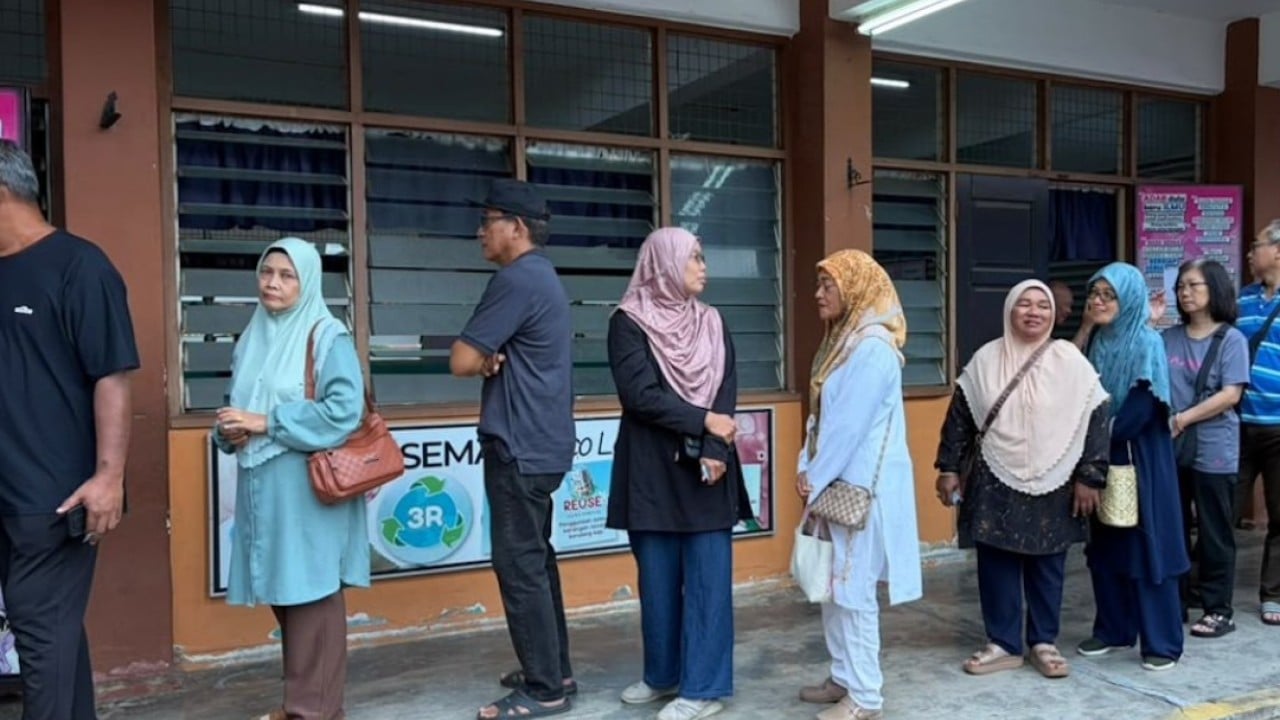
When nearly four out of ten registered voters decide that walking to a local school to cast a ballot is a complete waste of their Saturday, nobody won the election. Umno merely survived the apathy better than Pakatan Harapan, while Perikatan Nasional proved it could play spoiler without actually taking the crown.
Stop watching the seat counts. Watch the turnout numbers. Until Malaysian politicians give ordinary citizens a reason to believe their lives will actually improve after polling day, the largest, most powerful political party in the country will remain the Party of the Stay-At-Home Voter.


