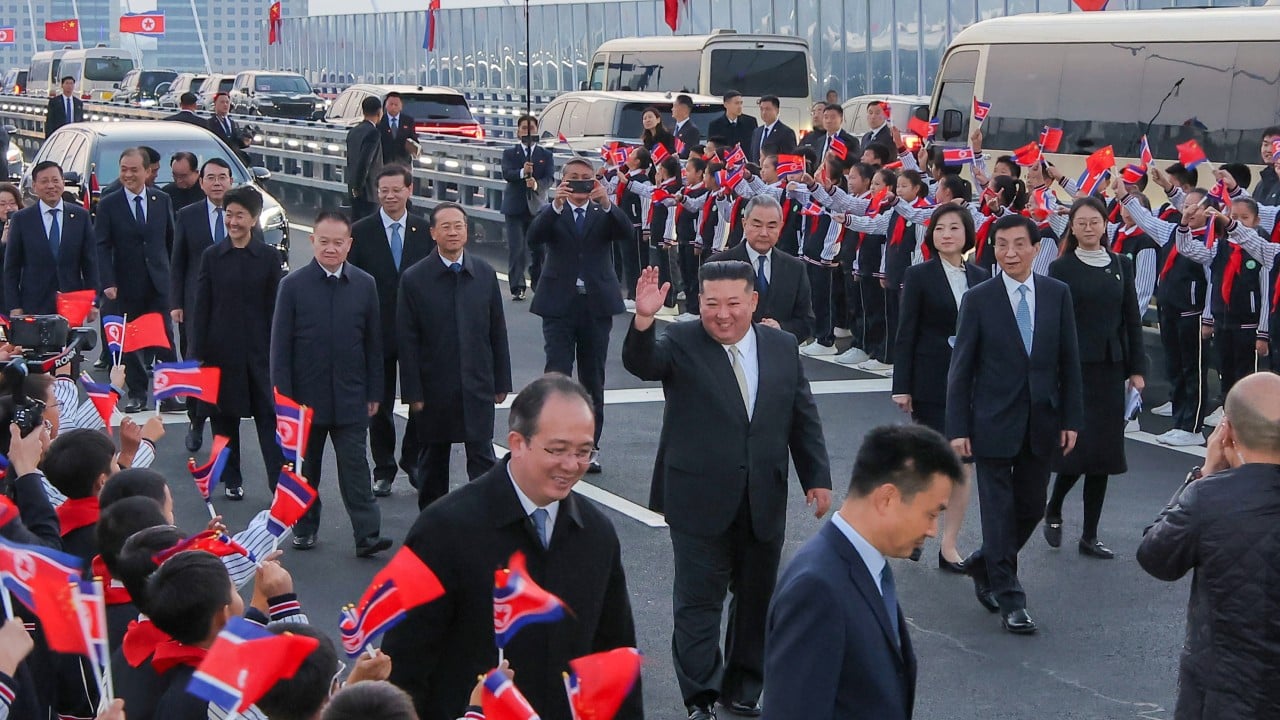
Mainstream foreign policy analysts love a simple villain pairing. When Chinese and North Korean officials step up their diplomatic schedule following a high-level Kim Jong-un visit, the standard commentary writes itself. Pundits immediately dust off Cold War metaphors, declare that an ironclad authoritarian axis is locking arms, and warn Washington that Beijing and Pyongyang are marching in lockstep.
That consensus is lazy. Worse, it is dangerously wrong.
If you actually look at the mechanics of Northeast Asian statecraft rather than the staged photo-ops on state television, a flurry of diplomatic meetings between Beijing and Pyongyang is rarely a sign of cozy solidarity. More often, it is a symptom of acute friction, mutual paranoia, and frantic damage control. When two neighbors truly trust each other, their communication runs quietly through established institutional channels. When they deploy an aggressive, high-visibility diplomatic drive right after a summit, someone is trying to contain a problem before it blows up their domestic agenda.
I have spent over a decade tracking East Asian security policy, watching think tanks and intelligence contractors burn through millions of dollars modeling a unified Sino-North Korean military front that simply does not exist in practice. Every time Pyongyang tests a new missile or rattles a saber, the conventional wisdom assumes Beijing gave the green light. Every time diplomats shuttle between the Yalu River and Beijing, commentators frame it as a joint victory lap. By treating a transactional marriage of convenience like a blood brotherhood, Western strategists routinely misread the leverage points that actually move the needle in both capitals.
The Myth of the Lips and Teeth
To understand why the current diplomatic blitz is mischaracterized, you have to strip away the propaganda phrase both regimes love to trot out for foreign cameras: the idea that China and North Korea are as close as "lips and teeth."
In reality, the historical relationship between the Chinese Communist Party and the Kim dynasty is defined by deep-seated resentment and competing survival instincts. Beijing’s primary objective on the Korean Peninsula has never been to empower Pyongyang. Beijing wants stability on its northeastern border, a buffer zone against U.S. troops stationed in South Korea, and an environment where Chinese coastal provinces can trade without worrying about nuclear fallout or millions of refugees crossing the Tumen River.
Kim Jong-un wants something entirely different. He wants regime survival backed by an untouchable nuclear deterrent, economic relief without political strings attached, and absolute strategic autonomy so he never becomes a Chinese vassal state.
Think about how fundamentally incompatible those two goals are. Every time North Korea advances its nuclear and ballistic missile programs, it hands Washington the exact justification needed to strengthen trilateral military alliances with Tokyo and Seoul, deploy advanced missile defense systems closer to Chinese territory, and expand naval patrols in the Yellow Sea. Pyongyang’s provocations directly sabotage Beijing’s broader regional strategy.
So when Chinese and North Korean officials suddenly ramp up diplomatic engagements in the wake of a Kim visit, do not read it as a celebration of shared strength. Read it as Beijing dispatching handlers to put guardrails on an unpredictable neighbor, while Pyongyang tries to extract maximum economic concessions in exchange for temporary restraint.
Why Diplomatic Volume Signals Friction
In diplomatic tradecraft, public noise is inversely proportional to private alignment.
Look at how Beijing manages its actual strategic partnerships versus how it manages Pyongyang. When China coordinates deep economic or security integration with states it trusts, the groundwork happens behind closed doors through technical ministries, sovereign wealth vehicles, and military-to-military working groups. You see the results in trade data months later, not in breathless press releases about "friendly exchanges" and "historic traditions."
Conversely, a sudden spike in high-level diplomatic visits following a leadership summit serves three very specific, non-allied functions:
- Verification and Babysitting: Summits between supreme leaders produce vague, sweeping political commitments. Lower-level officials then have to rush in to figure out what was actually promised and ensure the other side does not immediately violate the spirit of the room. Beijing sends senior party apparatchiks to Pyongyang not to toast their friendship, but to verify that Kim is not about to conduct an underground nuclear test that would embarrass Xi Jinping during sensitive trade negotiations with the West.
- Economic Triage: North Korea’s economy remains chronically brittle, squeezed by international sanctions and structural inefficiencies. When Kim travels to China, he brings a shopping list—fertilizer, refined petroleum, grain, and hard currency channels. The subsequent diplomatic drive is frequently a drawn-out haggling session where Chinese officials dole out aid in tiny, reversible increments to keep Pyongyang dependent without ever letting it become self-sufficient.
- Signaling to Third Parties: Both capitals use each other as theatrical props for an audience in Washington and Seoul. By staging visible diplomatic solidarity, Beijing reminds the United States that any resolution to the Korean security crisis must go through Zhongnanhai. At the same time, Pyongyang signals to South Korea and the U.S. that it is not isolated and feels zero pressure to return to denuclearization talks on Western terms.
None of this constitutes an alliance. An alliance requires shared threat perceptions, interoperable military command structures, and mutual trust. China and North Korea have none of those things. In fact, Chinese military planners quietly maintain contingency plans for securing North Korean nuclear sites in the event of a regime collapse in Pyongyang—hardly the behavior of a trusted ally.
Dismantling the Wrong Questions
If you search online for analysis of these diplomatic movements, you run into the same flawed questions dominating the public conversation. Let us dismantle them directly.
Does this diplomatic push mean China will abandon UN sanctions?
No. Beijing does not need to formally abandon United Nations Security Council resolutions to undermine them, and it has no incentive to blow up its international legal standing just to please Kim Jong-un. China prefers selective, quiet non-enforcement. It allows ship-to-ship transfers in murky waters, turns a blind eye to North Korean IT workers generating revenue abroad, and permits localized border trade when Pyongyang behaves. Formal sanctions relief would surrender Beijing’s single greatest lever over Kim. If China officially lifted sanctions, Kim would have zero reason to take Beijing’s phone calls the next morning.
Are China and North Korea forming a unified military bloc with Russia?
This is the favorite talking point of defense contractors looking to justify bigger naval budgets, and it ignores basic geography and economics. While Moscow has traded artillery shells and ballistic missiles with Pyongyang to fuel its war in Ukraine, Beijing views the burgeoning Moscow-Pyongyang relationship with cold suspicion. Russia’s willingness to supply North Korea with advanced satellite and propulsion technology erodes China’s monopoly of influence over Pyongyang. Beijing’s accelerated diplomatic outreach to North Korea after Kim’s visits is largely a defensive move to counter Russian encroachment in China’s traditional sphere of influence, not an effort to build a happy three-way coalition.
Will increased diplomacy lead to North Korean denuclearization?
Stop asking this question. Denuclearization is dead as a near-term diplomatic outcome, and pretending otherwise paralyzes serious policy analysis. Kim Jong-un watched what happened to Muammar Gaddafi in Libya and Saddam Hussein in Iraq after they gave up their weapons programs. To the Kim regime, nuclear weapons are not bargaining chips to be traded away for a peace treaty or a lift on luxury goods bans; they are the foundational life insurance policy of the dynasty. Chinese diplomats know this better than anyone. Their diplomatic drive is aimed at arms control and freeze mechanisms—convincing Pyongyang to cap its arsenal and stop testing—not dismantling a single warhead.
The Structural Leverage Nobody Talks About
To see who actually holds the cards during these diplomatic sprints, stop reading state media transcripts and start looking at infrastructure and energy flows.
North Korea relies on China for roughly ninety percent of its external trade. More critically, the lifeblood of the North Korean state—crude oil—flows directly through the Sino-DPRK Friendship Pipeline running from Dandong into North Korea. Technically, if Beijing ever shut off that pipeline for more than a few weeks during winter, the wax in the heavy crude would solidify inside the pipes, permanently ruining the infrastructure and bringing North Korea’s military transport and industrial base to a grinding halt.
That pipeline is the invisible third participant in every diplomatic meeting between Chinese and North Korean officials.
Imagine a scenario where Pyongyang pushes too far—say, by testing a thermonuclear device right before a major diplomatic summit in Beijing, or by sinking a South Korean naval vessel in the West Sea. Beijing does not need to issue a stern press release. It simply announces "routine maintenance" on the Dandong pipeline or tightens customs inspections on trucks crossing the Sino-Korean Friendship Bridge. Within days, North Korean diplomats are back at the table asking what Beijing wants.
Conversely, Kim Jong-un holds his own asymmetric card: the threat of chaos. Beijing’s leadership is obsessed with domestic stability and economic growth. Kim knows that if he pushes his economy to the brink of famine or triggers a military skirmish with the United States, the resulting shockwaves will hit China’s northeastern rust-belt provinces first. Pyongyang routinely weaponizes its own fragility, forcing Beijing to pay protection money in the form of food and fuel just to keep the border quiet.
This is a hostage negotiation disguised as a diplomatic tour.
Where the Contrarian View Has Blind Spots
Intellectual honesty requires admitting where a skeptical framework can fall short. If you view the China-North Korea relationship purely through the lens of cynical mutual distrust, you risk underestimating what happens when Washington makes strategic blunders.
While Beijing and Pyongyang do not trust each other, they share a deep, visceral hostility toward U.S. alliance architecture in the Indo-Pacific. When Washington conducts large-scale nuclear bomber drills on the Korean Peninsula or expands technology blockades against Chinese semiconductor firms, it inadvertently hands Beijing and Pyongyang a common enemy that temporarily papers over their bilateral disputes.
In those moments, ideological inertia inside both Communist parties can override cold pragmatism. Hardliners in Beijing argue that abandoning a socialist neighbor—no matter how irritating—would signal weakness to Washington and embolden separatists in Taiwan. So while the diplomatic drive is fundamentally about management and containment, outside pressure from the United States can occasionally force Beijing to provide Pyongyang with more diplomatic cover at the United Nations than Chinese diplomats actually want to give.
How to Actually Read the Room
If you want to understand what is truly happening between Beijing and Pyongyang over the coming months, ignore the rhetoric about eternal friendship and watch three concrete indicators instead:
- Border Infrastructure Activity: Watch satellite imagery and local trade reports around Dandong and Sinuiju. If diplomatic talks are genuinely productive for Pyongyang, you will see immediate increases in rail freight volume, bridge openings, and relaxed customs checks on consumer goods. If the diplomatic drive is merely Beijing lecturing Pyongyang, the border crossings remain sluggish regardless of how many smiles appear in the newspapers.
- The Rhetoric on "Denuclearization" vs. "Peace and Stability": Read the exact phrasing in Chinese Ministry of Foreign Affairs readouts. When Beijing is angry with Pyongyang, Chinese spokespeople explicitly reaffirm their commitment to the "denuclearization of the Korean Peninsula." When Beijing is trying to soothe Pyongyang and secure short-term cooperation, that phrase quietly disappears, replaced by softer calls for "maintaining peace and stability" and addressing "legitimate security concerns."
- Seniority of the Envoys: Pay attention to who is traveling. Visits by Politburo Standing Committee members carry real policy weight and signal major strategic recalibrations. When the diplomatic drive relies heavily on mid-level party liaison officials or provincial governors, it means the core disputes remain unresolved and Beijing is simply keeping the engine idling.
The next time a headline warns that China and North Korea are forging an unstoppable front after a summit, look past the staged handshakes. You are not watching two allies prepare to conquer the region; you are watching a nervous landlord try to keep a volatile tenant from burning down the building.