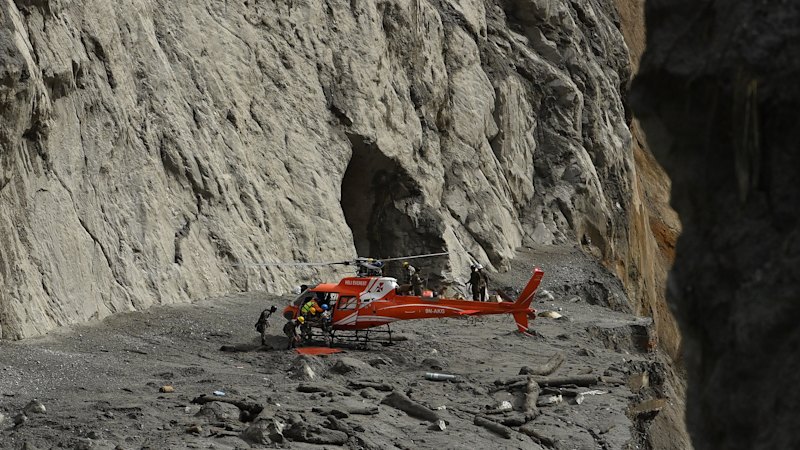
The internet loves a miracle. When headlines celebrate underground "Goldilocks zones" and air pockets following catastrophic flash floods, the public eats it up. Experts step forward, citing past triumphs in India or Chile, urging families to hold onto blind faith. It is a comforting narrative. It is also engineering illiteracy masquerading as hope.
When a mountain collapses and millions of tons of glacial slurry, boulders the size of cars, and compressed hydraulic debris roar down a hydropower tunnel, physics does not negotiate. There are no stable subterranean sanctuaries waiting for Hollywood scripts to unfold. Treating underground flash flood disasters as recurring variations of a localized cave-in is a dangerous delusion that misallocates scarce rescue assets and peddles false comfort to the bereaved.
Look at the mechanics of hydro-tunnel inundation. Unlike a dry structural collapse where steel ribs or fallen slabs might arch to form a dry void, a dynamic hydraulic surge inside a closed concrete penstock or access tunnel operates under immense pressure. Water moving at terminal velocity carrying abrasive debris fills every square millimeter of available volume before slamming into dead ends. Air is not preserved; it is violently displaced, compressed into lethal pressure spikes, or poisoned by pulverized organic matter and displaced gases.
The media fixates on rare anomalies, treating them as repeatable design features. Surviving days in a dry rock collapse like Silkyara is an exercise in structural integrity and oxygen diffusion through loose soil. Surviving inside a concrete hydraulic conduit blasted by a high-energy debris torrent is a lottery with zero winning tickets. When water recedes, what remains is not an oxygen-rich cavern, but a vacuumed tomb packed solid with dense silt, gravel, and unyielding sediment.
Rescuers do not need more romanticized theories about miraculous air pockets. They need brutal, unfiltered realism. When specialists argue that silence from a blocked tunnel is merely the "absence of a signal" rather than proof of death, they misunderstand the acoustic and physiological reality of a mud-choked pipe. A human body sealed behind fifty meters of compacted slurry is insulated from sound, oxygen, and rescue drills alike.
The obsession with finding pockets shifts focus away from systemic infrastructure vulnerabilities. Hydropower expansion in fragile Himalayan corridors proceeds with woefully inadequate early warning triggers and obsolete defensive engineering. Instead of retrofitting tunnels with automated rapid-closure blast gates and hyper-baric safe chambers designed to withstand catastrophic hydraulic loads, authorities rely on the heroic intervention of international specialists after the mountain has already fallen.
Engineering is supposed to mitigate risk, not depend on miracles. Every dollar and hour spent chasing ghost pockets in collapsed water tunnels should be redirected toward upstream acoustic telemetry, fail-safe remote diversion valves, and hard engineering that stops water from entering the tubes in the first place. Stop romanticizing survival against impossible odds. Fix the infrastructure before the next wall of mud arrives.


