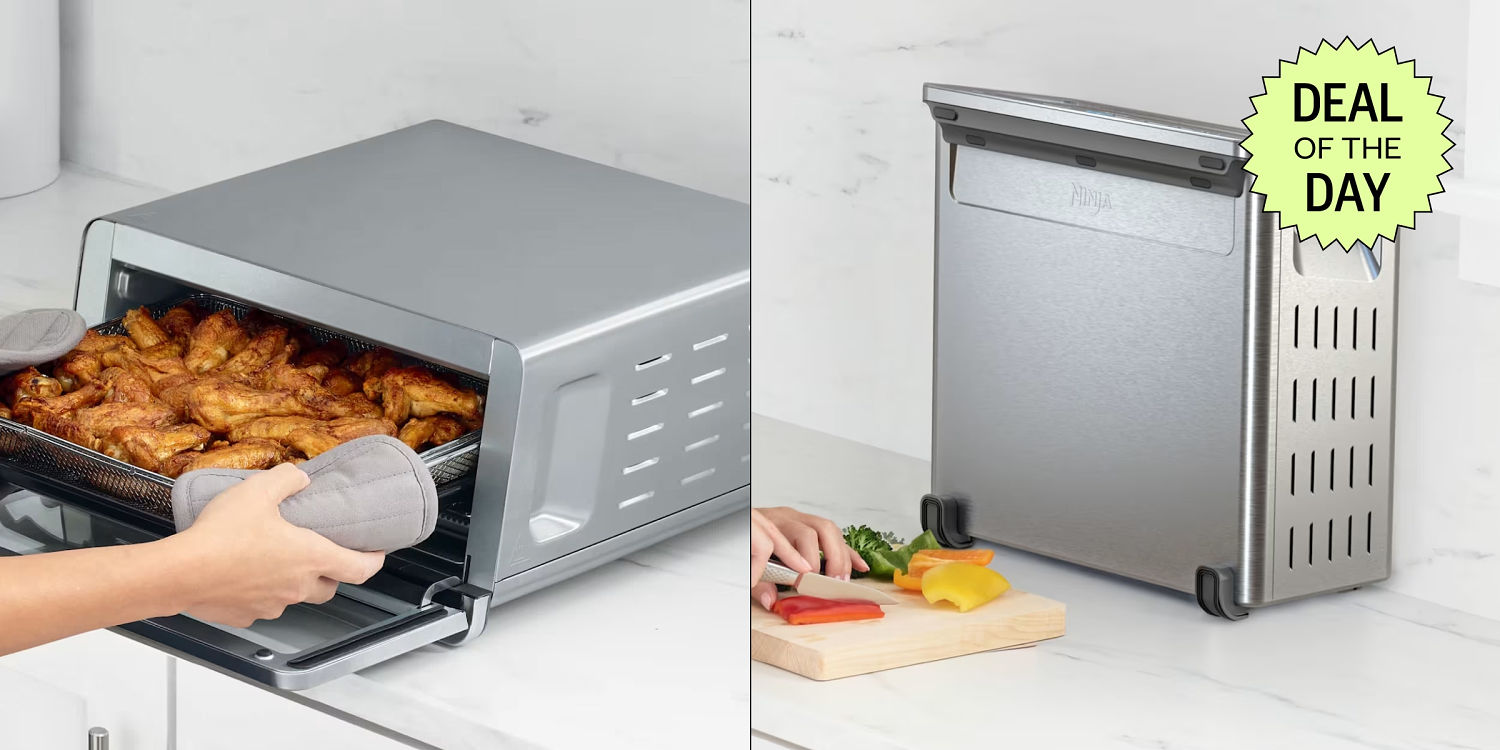
Every June, the tech and lifestyle blogs copy and paste the same seasonal script. "Beat the summer heatwave with this countertop air fryer!" "Turn off your oven and save your AC!" It sounds logical on the surface. Ovens are massive, insulated boxes that radiate ambient heat into your living space, forcing your air conditioner to work double-time. The media's lazy consensus tells you to shell out $100 or $200 for a compact, fast-cooking alternative like a Ninja dual-zone basket fryer to rescue your utility bill and your sweat glands.
It is a comforting narrative. It is also a fundamental misunderstanding of thermodynamics and kitchen physics. In other news, read about: Why School Uniform Caps Are Bankrupting Families While Schools Pretend To Care About Equity.
If you are buying a countertop air fryer specifically to keep your apartment cool during a July heatwave, you are falling for clever marketing disguised as appliance efficiency. The math does not check out, the physics do not support it, and your kitchen is not actually getting any cooler.
The Open-System Thermal Trap
Let us look at how an oven works versus how an air fryer works. Vogue has analyzed this critical topic in great detail.
A standard residential thermal oven is a heavily insulated chamber. When you preheat it to 400°F, it takes a significant amount of energy to get there, yes. But once it reaches temperature, that fiberglass insulation retains the vast majority of that heat inside the cavity. The heat transfer to your kitchen happens slowly, leaking out through the door seals and the top vent over a prolonged period.
Now look at your shiny new countertop air fryer. It is essentially a high-powered convection oven stripped of its heavy insulation and paired with a high-velocity fan.
To cook food quickly, an air fryer relies on rapid air exchange. It pulls in ambient room air, passes it over a superheated electric coil, forces it through the food basket, and then immediately vents that blistering 400°F air straight out of the back of the unit directly into your kitchen.
An air fryer is a literal space heater disguised as a culinary savior.
Because it lacks the thermal mass and thick insulation of a traditional range, it continuously dumps hot, moisture-laden exhaust into your living space the entire time it runs. If you run a dual-basket air fryer at 1600 to 1800 watts for 30 minutes, you are injecting the exact same amount of thermal energy into your home as you would running a dedicated portable space heater on its highest setting for the same duration. Your air conditioner does not care whether British Thermal Units (BTUs) come from a cozy radiator or a basket of crispy chicken wings. Heat is heat.
The Efficiency Myth: Watts, Time, and Real Math
The counterargument from the appliance industry is always the same: But it cooks faster, so it runs for less time.
Let us break down the actual energy consumption. I have spent years analyzing residential energy profiles, and the numbers rarely favor the panic-buy countertop appliance.
- Standard Electric Oven: Draws roughly 3,000 watts during the initial preheating phase. Once it hits the target temperature, the thermostat cycles the heating elements on and off. It only draws power about 25% to 30% of the active baking time to maintain that heat.
- Dual-Basket Countertop Fryer: Draws between 1,600 and 1,800 watts. Because it constantly vents its heat into your room, the heating element must stay turned on almost continuously to maintain cooking temperatures against the incoming cool air.
Imagine a scenario where you are cooking a standard dinner that takes 40 minutes in a traditional oven (including preheat) or 25 minutes in an air fryer.
$$Oven\ Energy = 3000W \times (15\ min\ preheat) + (3000W \times 0.30 \times 25\ min\ baking) = 0.75\ kWh + 0.375\ kWh = 1.125\ kWh$$
$$Air\ Fryer\ Energy = 1700W \times 25\ min = 0.708\ kWh$$
The net savings to your electricity bill? Roughly 0.4 kilowatt-hours. At the average United States residential electricity rate of about 16 cents per kWh, you saved a grand total of six cents.
You did not stop global warming in your kitchen. You spent $100 on a new plastic appliance to save six cents on a Tuesday night, all while blowing a steady stream of 400-degree exhaust directly toward your thermostat.
The Crowd-Out Factor
The physical footprint of these "space-saving" appliances introduces another hidden tax on your sanity: kitchen utility.
A dual-zone air fryer takes up roughly the same counter real estate as a standard microwave. If you live in an urban apartment where counter space is measured in inches, you are sacrificing valuable prep area for a machine that does exactly one thing: move hot air.
When you crowd your countertops, you change how you cook. You stop prepping fresh, raw ingredients because you have nowhere to put the cutting board. Instead, you start buying highly processed, pre-packaged, frozen finger foods designed specifically to fit into those rectangular Teflon baskets.
The industry sells you the appliance under the guise of health and comfort. In reality, it dictates your diet, pushing you toward frozen mozzarella sticks and pre-battered commercial appetizers just to justify the machine sitting on your counter.
What the Appliance Giants Do Not Want You to Ask
"Can't I just use my existing oven's convection setting?"
Yes. If your range was manufactured in the last decade, there is a high probability it has a "Convection" or "Air Fry" mode. This setting engages a fan inside your already insulated oven, mimicking the exact mechanics of a countertop unit without requiring extra plug space. The only difference is the larger cavity takes slightly longer to heat up—but again, that heat stays trapped inside the insulated box rather than venting into your face.
"Don't air fryers use less oil, making them better for summer dining?"
Oil content has nothing to do with ambient room temperature or seasonal utility. You can roast a dry-rubbed chicken breast or charred broccoli in a standard oven with minimal oil. The air fryer does not possess a magical proprietary mechanism that alters the molecular structure of fat; it just uses high-velocity wind to crisp the surface.
How to Actually Keep Your Kitchen Cool
If your true goal is to survive a record-breaking August heatwave without turning your home into a sauna, buying more plastic countertop electronics is the worst path forward. You need to change the cooking methodology entirely, not just shrink the size of the heating element.
1. Weaponize the Induction Burner
If you must buy an appliance, buy a single-zone portable induction cooktop. Standard gas burners waste up to 60% of their energy heating the air around your pan. Regular electric coils are not much better. Induction uses magnetic fields to heat the cookware directly. Zero ambient heat is wasted. You can boil water or sear a steak, and the air six inches away from the pan remains exactly the same temperature as the rest of the room.
2. Embrace Thermal Retention Cooking
Instead of generating active heat for 30 to 60 minutes, use a heavy Dutch oven. Bring your food to a boil on the stove for five minutes, then shut off the heat completely and place the pot inside a non-powered, insulated thermal container (or even wrap it securely in heavy towels). The retained heat continues to braise, cook grains, or stew meats over the next few hours without drawing a single watt of power or emitting a single BTU of ambient heat into your living room.
3. Move the Heat Generation Outside
If you have a balcony or backyard, a $30 electric skillet or portable grill plugged into an outdoor outlet keeps 100% of the cooking heat outside your thermal envelope.
Stop letting affiliate marketing sites dictate your home economics based on flawed, superficial science. Your kitchen is hot because summer is hot, and adding an uninsulated, high-velocity wind tunnel to your counter is only making your air conditioner work harder. Put the credit card away, turn on your existing oven's convection fan if you have one, or change your menu to items that do not require an electric element to run continuously for half an hour.
The best way to beat the heat is to stop paying companies to pump it into your kitchen.