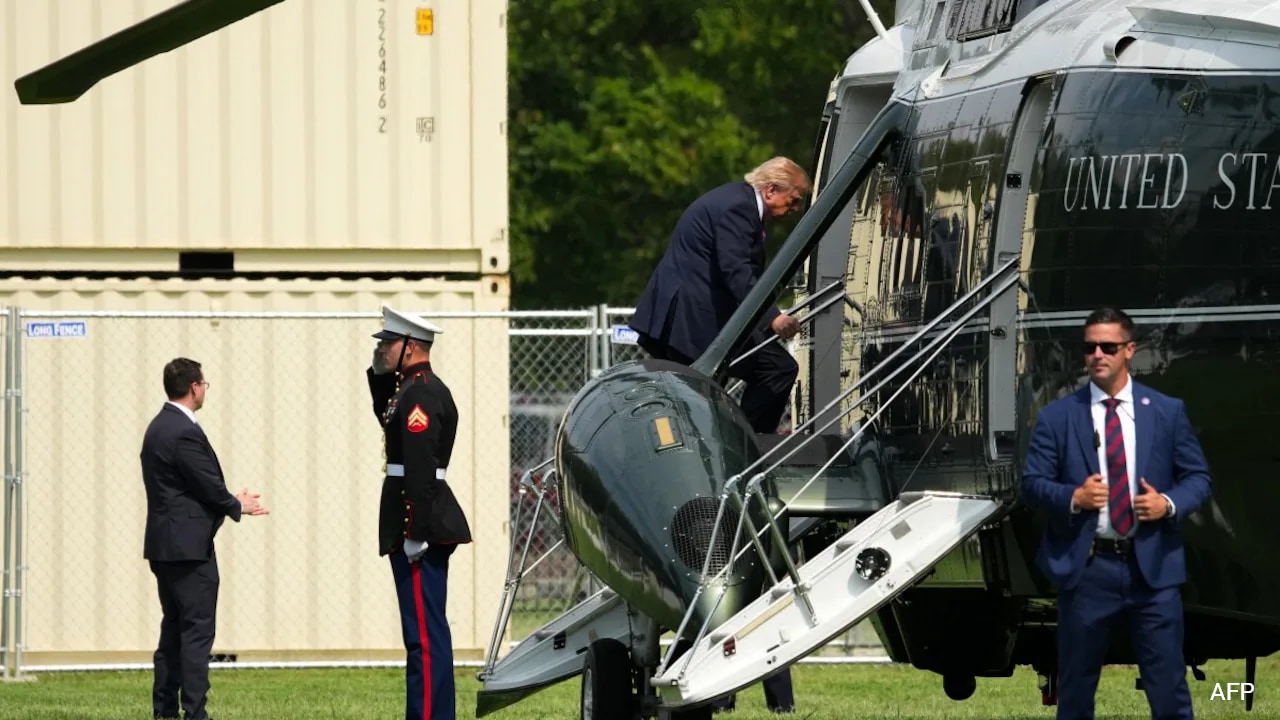
The media narrative around Donald Trump’s recent helicopter close call with a jet near Washington is built on a foundation of pure laziness. The moment reports surfaced that construction work at the White House—specifically the ongoing East Wing security enhancements or barrier retrofits—distracted air traffic controllers or obscured radar lines of sight, the pundits rushed to judgment. They blamed the physical footprint of the renovation. They pointed to cranes, temporary staging areas, and shuffled personnel.
It is a neat, tidy scapegoat. It requires zero systemic analysis and lets the actual culprits off the hook.
Let us be entirely clear. Conflating heavy civil construction with dynamic air traffic management failures is an amateur mistake. I have spent two decades analyzing the bureaucratic friction between federal infrastructure upgrades and national capital airspace operations, and I can tell you that the cranes parked on the South Lawn are not the threat. The real danger is a calcified, risk-averse institutional culture that treats basic coordination like an exotic luxury.
Air traffic control near Washington is among the most tightly monitored, heavily radar-blanketed zones on planet Earth. The idea that a physical building project—however disruptive to the aesthetic of the Rose Garden—suddenly blinded seasoned controllers to an approaching commercial or private jet is mathematically and operationally absurd.
The Myth Of The Distracted Controller
The lazy consensus claims that the stress of managing a massive, multi-million dollar federal construction footprint creates cognitive overload for the tower. This argument collapses the second you examine how modern terminal radar control actually functions.
Controllers do not stare out the window tracking aircraft paths with binoculars. They stare at glass. They process transponder squawks, altitude vectors, and separation algorithms managed by automation systems designed to scream the moment two targets violate minimum separation criteria. If a helicopter carrying a high-profile political figure and an incoming jet converged to a degree that triggered alarm bells, the root cause was not a backhoe digging up turf near the Treasury Department.
The breakdown happened in procedural discipline and handoff protocols between overlapping jurisdictions. The Washington Special Flight Rules Area operates under a microscope of redundant layers. When a near miss happens in this airspace, it exposes a systemic failure of human communication, not a lack of concrete barriers.
Blaming the construction is a convenient deflection. It allows the Federal Aviation Administration and the Secret Service to point at a physical mess on the ground instead of examining their own internal handoff checklists.
Why Bureaucratic Silos Create Sky-High Risks
We treat federal facilities as if they exist in a vacuum, completely detached from the airspace roaring above them. That is the core pathology.
When capital projects kick off at the White House, they require an ungodly number of inter-agency permissions. You have the National Park Service, the Secret Service, the Department of Defense, the FAA, and the General Services Administration all sitting at tables reviewing environmental impact statements and perimeter security upgrades. Yet, somewhere between the security architecture reviews and the logistical staging plans, dynamic airspace management gets treated as an afterthought.
The agencies do not talk to each other in real time. They operate like feudal fiefdoms guarding their little patches of turf. When an aircraft trajectory shifts due to weather, temporary presidential movement, or standard routing adjustments, the left hand literally has no clue what the right hand is doing.
I watched a multi-agency infrastructure overhaul stall for six months simply because two regional directors refused to sign off on a temporary crane height waiver. They were worried about liability, not safety. That obsession with paperwork creates the exact conditions for operational blind spots. When everyone is protecting their badge, nobody is watching the sky.
The Dangerous Allure Of Simple Scapegoats
We love blaming physical objects for human errors because objects cannot defend themselves. A construction crane is tangible. You can photograph it against a sunset. You can run cable news chyrons about it.
Human error, structural institutional rot, and poor inter-agency communication are much harder to film. They require investigative grit. They require holding senior bureaucrats accountable for failing to update protocols that were written during the Cold War.
If you want to fix the safety record of the skies over the District of Columbia, stop worrying about the scaffolding and start auditing the command structure. Force the FAA and federal security details to run joint operational drills that mimic worst-case traffic scenarios. Strip away the jurisdictional red tape that forces controllers to jump through hoops just to flag an anomaly to a motorcade detail.
Until we stop letting institutions hide behind physical renovations, these close calls will keep happening. The cranes will eventually come down, the grass will grow back, and the next mid-air scare will catch everyone by surprise all over again.