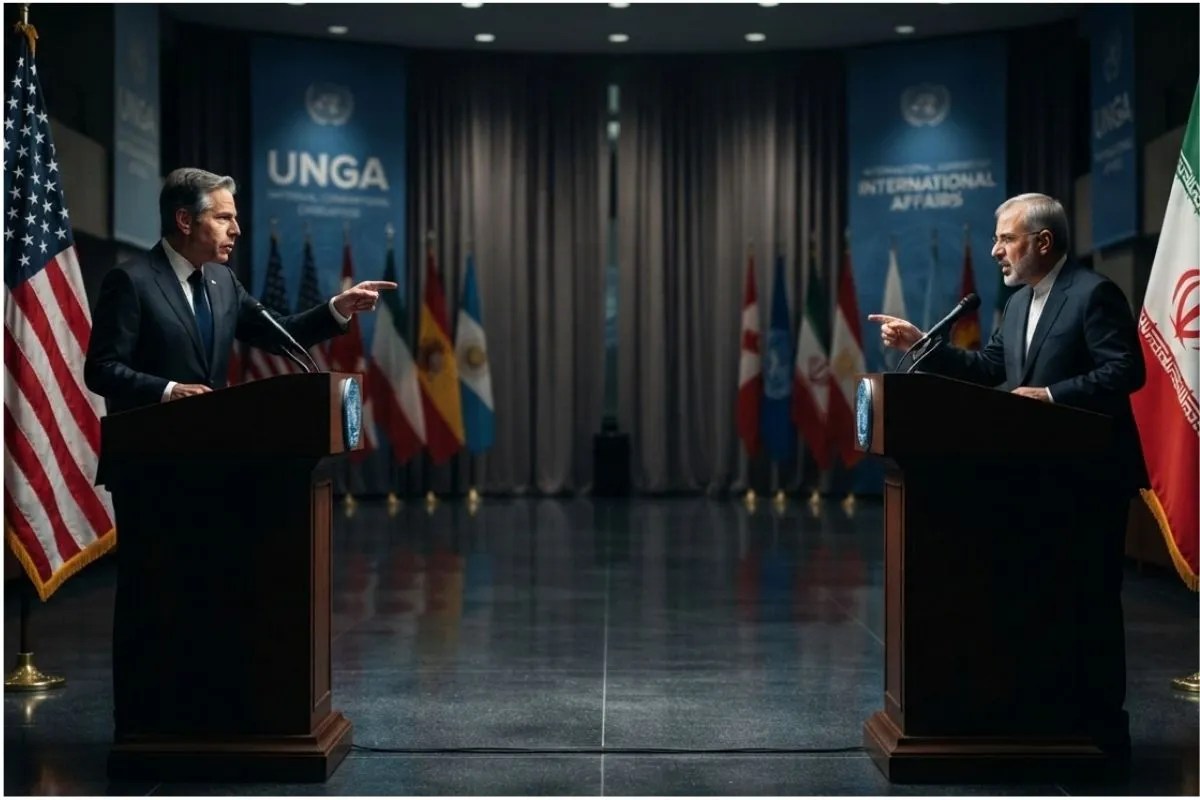
Every time Washington slaps a trade penalty or whispers a protectionist threat, New Delhi’s political opposition hyperventilates. They trot out the same lazy, juvenile script. They point to hugs, stadium rallies, and friendly phone calls, declaring that personal chemistry has failed and that India is being pushed around by an American bully. It is a narrative built for television soundbites, and it displays a staggering, almost willful ignorance of how great power economics actually operate.
Foreign policy is not a Bollywood buddy movie where sharing a cup of tea dissolves structural trade deficits or centuries of national self-interest. When critics scream that Prime Minister Narendra Modi’s diplomatic capital has been squandered because of a tariff notice, they are revealing that they do not understand the first thing about international trade architecture. They want you to believe that a competent leader can simply charm an American president into granting perpetual exemptions, as if global commerce runs on warm fuzzy feelings instead of cold balance sheets.
That lazy consensus is dead wrong. The friction between Washington and New Delhi over trade is not a symptom of failed chemistry. It is the natural, inevitable byproduct of two massive economies trying to carve out industrial dominance in a fractured world. If you think the solution to trade disputes is a better smile, you belong in a kindergarten classroom, not a boardroom or a parliament.
The Myth of the Personal Chemistry Fallacy
Let us dismantle the core delusion first: the idea that personal rapport between leaders should eliminate economic friction.
I have watched commentators and opposition lawmakers hyperventilate over every shift in Washington rhetoric, treating every trade dispute as a personal betrayal. They assume that if Modi and Donald Trump share a mutual admiration society, American protectionism should magically bypass Indian steel, textiles, or tech services. This logic treats international relations like a mafia protection racket where loyalty buys immunity.
Real life does not work that way. American trade policy is driven by domestic electoral pressures, rust-belt anxiety, and a bipartisan consensus on manufacturing reshoring. It cares nothing for whether two leaders ate together or exchanged compliments on a stage. In fact, seasoned diplomats know that strong personal chemistry between leaders is not meant to prevent trade disputes; it is meant to contain them before they blow up into catastrophic security fractures.
When Trump or any other American leader targets foreign imports, they are pandering to domestic constituencies who feel left behind by globalization. Modi understands this calculus completely because he plays the exact same game at home, protecting domestic agriculture, dairy, and manufacturing sectors when Indian interests demand it. To label this standard protectionist posturing as bullying—and to blame the Indian administration for failing to stop it—is either dishonest partisan posturing or profound economic illiteracy.
Why Tariffs Are Math, Not Malice
Let us look at the mechanics of what the critics call a "bully" dynamic.
Trade deficits do not vanish because of a handshake. The United States runs massive global trade imbalances, and successive administrations have sought to correct them through unilateral pressure, anti-dumping duties, and tariff walls. India is far from a unique target. Washington has sparred with the European Union, Japan, South China Sea neighbors, and traditional allies with the exact same blunt instruments.
When American officials demand market access for agricultural goods or medical devices, they are executing a play straight out of the mercantilist playbook. They want concessions. They use tariffs as a pressure point to pry open protected foreign markets.
How does a serious government respond to that kind of pressure? You do not cave instantly to avoid hurt feelings, nor do you throw public tantrums calling names. You negotiate hard behind closed doors, you offer calibrated concessions where they benefit your own modernization, and you retaliate selectively where domestic pain can be inflicted without triggering a broader economic war.
New Delhi’s actual record on this front demonstrates a calculated pragmatism that drives the opposition crazy. India has resisted caving on sensitive agricultural subsidies and dairy protections because millions of rural livelihoods depend on them. At the same time, it has lowered duties on high-end American tech, defense hardware, and energy exports where India desperately needs capital goods and resource diversification. That is not weakness. That is ruthlessness in defense of national interest.
If the government had folded entirely to avoid American tariff threats, the opposition would scream about surrender of sovereignty. When the government stands its ground while keeping the strategic alliance intact, the opposition screams about failed diplomacy. You cannot have it both ways unless your only goal is permanent, unconstructive outrage.
The Dangerous Illusion of Subservience
The opposition narrative relies heavily on painting India as a helpless victim caught in the crosshairs of an American empire. This is a comforting myth for politicians who want to score cheap anti-imperialist points reminiscent of Cold War rhetoric, but it bears zero resemblance to today's multipolar reality.
India is no longer a peripheral player begging for foreign aid or food security handouts. It is the world's most populous nation, the fifth-largest economy, and a critical geopolitical anchor in the Indo-Pacific. Washington needs New Delhi to check rising hegemony in Asia far more than New Delhi needs American market access for a handful of export sectors.
Because of this strategic reality, American tariff threats have a hard ceiling. Washington can bark about market access, but it cannot afford to alienate its most important democratic counterweight in the Eastern Hemisphere. To pretend that Modi is cowering before a foreign bully is to ignore the fundamental leverage India holds in every high-level security dialogue.
Imagine a scenario where India panicked at the first sign of American trade hostility, rolling back all domestic industrial policies and opening every market sector unconditionally to appease Washington. Within months, domestic manufacturing initiatives would stall, local MSMEs would collapse under subsidized foreign competition, and India would reduce itself to a tributary state. The refusal to yield on core economic sovereignty, even amid noisy tariff salvos, is precisely what keeps India at the table as an equal partner rather than a subordinate client state.
The Real Vulnerabilities No One Is Talking About
While the opposition wastes breath complaining about personal chemistry and television optics, they miss the actual structural vulnerabilities threatening the Indian economy.
The danger is not that Trump or any other American president dislikes Modi. The danger lies in domestic structural bottlenecks, supply chain inefficiencies, and lagging productivity growth.
Fixating on bilateral trade spats ignores the broader global fragmentation happening right now. Global supply chains are decoupling. Friend-shoring is replacing globalization. Nations everywhere are erecting industrial policies, subsidies, and tariff walls. This is the new normal. The winners of the next decade will not be the countries that whine about unfair trade practices; they will be the countries that build resilient domestic manufacturing bases, secure critical mineral supply chains, and invest aggressively in deep tech and infrastructure.
India has made massive strides with digital public infrastructure, production-linked incentive schemes, and highway construction. Yet, red tape, land acquisition bottlenecks, and judicial backlogs still strangle high-end manufacturing scale. Those are the fights that matter. Arguing over whether a tariff announcement proves that a friendship is fake is a distraction designed for people who prefer theater over substance.
Navigating the Noise
If you are a business leader, an investor, or a policy strategist trying to navigate this environment, stop listening to the daily noise of trade headlines.
Tariffs are negotiating tactics, not permanent laws of nature. They fluctuate with electoral cycles, political posturing, and short-term domestic lobbies. Smart capital looks past the theater and evaluates the underlying trajectory.
The structural trajectory between Washington and New Delhi is cemented by converging security imperatives, defense technology co-production, and shared concerns over regional stability. Trade friction is simply the friction of two giants learning to share a crowded room. It will get noisy. There will be retaliation, threats, and aggressive posturing from both sides.
Accept that reality, price it into your models, and stop expecting diplomatic fairy tales. The adults in the room understand that friendship and friction can coexist simultaneously. It is time the critics grew up and learned the difference between theater and strategy.