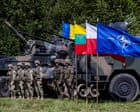
Every six months, a delegation of intelligence directors steps before European parliaments with grim expressions, dark suits, and PowerPoint presentations designed to curdle your blood. The latest headlines breathlessly echo their warnings: Moscow is planning more decisive action against NATO. Tanks at the Fulda Gap. Missiles raining down on European capitals. Saboteurs poisoning municipal water supplies.
It makes for a fantastic spy thriller. It also happens to be a lazy, self-serving caricature of geopolitical reality.
I have spent years watching the security apparatus operate from the inside, tracking how threat assessments transform from sober tactical evaluations into multi-billion-dollar marketing campaigns for the defense-industrial complex. When the state apparatus tells you an adversary is preparing for an existential escalation, your first instinct should not be panic. Your first instinct should be to check who is cashing the checks.
The lazy consensus in modern security journalism is that Russia operates as a comic-book villain, driven by pure revanchist fury and an appetite for national suicide. Under this narrative, Vladimir Putin wakes up every morning consulting a map of Europe with a red marker, deciding which NATO member state to invade next.
This view completely misunderstands how modern statecraft works. It mistakes operational friction for grand strategy, and it ignores the structural reality of what happens when massive bureaucracies are handed blank checks under the guise of emergency preparedness.
Let us look at the actual incentives at play.
European intelligence agencies have faced years of budget stagnation, post-Afghanistan drift, and severe questions regarding their relevance in an era dominated by decentralized non-state actors and commercial satellite imagery. When anyone with an internet connection can track Russian troop movements via open-source intelligence on X, traditional spy agencies lose their monopoly on threat reporting. What is the cure for institutional obsolescence? A terrifying existential threat that only professional spymasters can interpret and neutralize.
When European spy chiefs warn of imminent, decisive escalation, they are not delivering objective scientific assessments. They are lobbying. They are securing long-term procurement funding, insulating themselves from parliamentary oversight, and manufacturing the political consensus required to pass multi-year defense spending packages that would otherwise face fierce domestic resistance from voters struggling with inflation and failing public services.
Moscow is not planning a conventional land war against NATO. To believe they are is to ignore every single lesson of the Ukraine conflict.
The Russian military machine has been ground down to a structural nub. Its elite professional units were hollowed out in the opening phases of the 2022 invasion. Its supply chains rely on salvaged microchips from washing machines and artillery shells imported from isolated rogue states. Its officer corps has suffered catastrophic institutional brain drain. A military that struggles to secure logistical dominance across a localized regional theater against a non-NATO state is not quietly plotting a multi-front conventional blitzkrieg against thirty nuclear-armed industrial democracies possessing a combined GDP that dwarfs Russia’s several times over.
To suggest otherwise is strategic illiteracy.
So what is Moscow planning? What do the threat assessments obscure behind their theatrical warnings?
Russia is pivoting entirely to sub-threshold gray-zone operations. This is not "more decisive action" in the cinematic sense of tank treads rolling across foreign borders. It is the exact opposite. It is deniable, sub-conventional friction designed to exploit the seams of Western societies without crossing Article 5 thresholds.
We are talking about cyber attacks on municipal logistics grids, GPS jamming in the Baltic airspace, targeted disinformation campaigns designed to amplify domestic political polarization, and occasional covert sabotage of undersea cables and energy pipelines. These are the tools of a declining regional power trying to punch above its weight class through asymmetric nuisance, not the opening salvo of World War III.
Conflating a severed fiber-optic cable in the Baltic Sea with an imminent military invasion of Western Europe is either an analytical failure of staggering proportions or an intentional deception designed to manipulate public anxiety.
Consider the second-order effects of this panic. By framing every minor act of cyber mischief or industrial sabotage as an existential war footing, European governments are effectively granting Moscow an asymmetric victory. They are militarizing civil society, eroding constitutional privacy protections under emergency decrees, and normalizing a state of permanent low-grade fear.
When you treat every hostile cyber probe as an impending blitzkrieg, you force your own economy to run on a wartime footing during peacetime. You bankrupt public treasuries on redundant hardware while ignoring the rot in your healthcare, education, and transportation systems. You create a garrison state where dissent is sidelined as unpatriotic because any questioning of defense expenditures is framed as aiding the enemy.
Let us dismantle the core premise of the threat warnings piece by piece.
First, the myth of limitless Russian resurgence. The structural constraints on the Russian Federation are absolute. Demographic collapse is not a future projection for Moscow; it is happening right now. The working-age population is shrinking, capital flight has decimated long-term investment, and technological isolation from Western semiconductor markets has turned Russian industry backward. A petro-state dependent on volatile hydrocarbon revenues cannot finance a protracted global confrontation with the wealthiest coalition in human history.
Second, the myth of unified hostility. European intelligence briefings love to paint Moscow as an omniscient, hyper-coordinated mastermind orchestrating a unified campaign across the continent. The reality is far more bureaucratic, chaotic, and reactive. Much of what gets attributed to a grand master plan is actually decentralized opportunism by regional intelligence directorates trying to justify their existence to superiors in the Kremlin. When a proxy group burns down a warehouse in London or sprays paint on a Holocaust memorial in Paris, it is often sloppy operational work by low-level contractors recruited over Telegram channels, not elite Spetsnaz deep-cover missions.
Third, the myth that NATO is caught unprepared. The alliance has spent the last decade forward-deploying battle groups, modernizing command structures, and pouring resources into eastern flank deterrence. Moscow knows this. Russian military doctrine explicitly acknowledges that a direct conventional clash with NATO is unwinnable. Their entire strategic doctrine revolves around deterrence through escalation dominance—using nuclear signaling and rapid, localized faits accomplis to freeze a conflict before NATO can react, rather than picking a fight they know will annihilate their remaining conventional forces.
Why do our own leaders ignore these obvious structural realities in favor of breathless warnings?
Because fear is politically useful.
For incumbent European politicians facing plunging approval ratings, industrial stagnation, and fractious coalition politics, nothing rallies a fractious population quite like an external existential enemy. It provides a convenient excuse for economic malaise. Why are public services crumbling? Because we must spend billions on artillery shells. Why is manufacturing fleeing to Asia? Because energy prices are constrained by geopolitical confrontation.
It creates an unfalsifiable shield for governance failures. Any criticism of domestic policy can be deflected into a conversation about national security readiness.
If you want to understand the true state of European security, look past the press releases issued after closed-door intelligence committee meetings. Look at where the money is flowing. Look at the long-term procurement contracts signed with defense primes that guarantee multi-decade revenue streams regardless of geopolitical shifts in Moscow.
The threat is real, but its nature has been deliberately misrepresented. Moscow wants to bleed Europe through a thousand cuts, keeping our societies unstable, divided, and suspicious of one another. They want us to do their work for us by panicking ourselves into economic sclerosis and civil liberty erosion.
When European spy chiefs step up to the microphone to warn you that Moscow is planning more decisive action, ask yourself what they are trying to distract you from. Ask yourself what budget is being approved tomorrow, what oversight is being waived, and what freedoms are being quietly signed away in the dark.
True deterrence does not look like institutional hysteria. It looks like cold, boring, systematic economic resilience, internal political stability, and the refusal to let a declining regional power dictate the psychological rhythm of our continent.
Stop buying the panic. Start demanding competence.