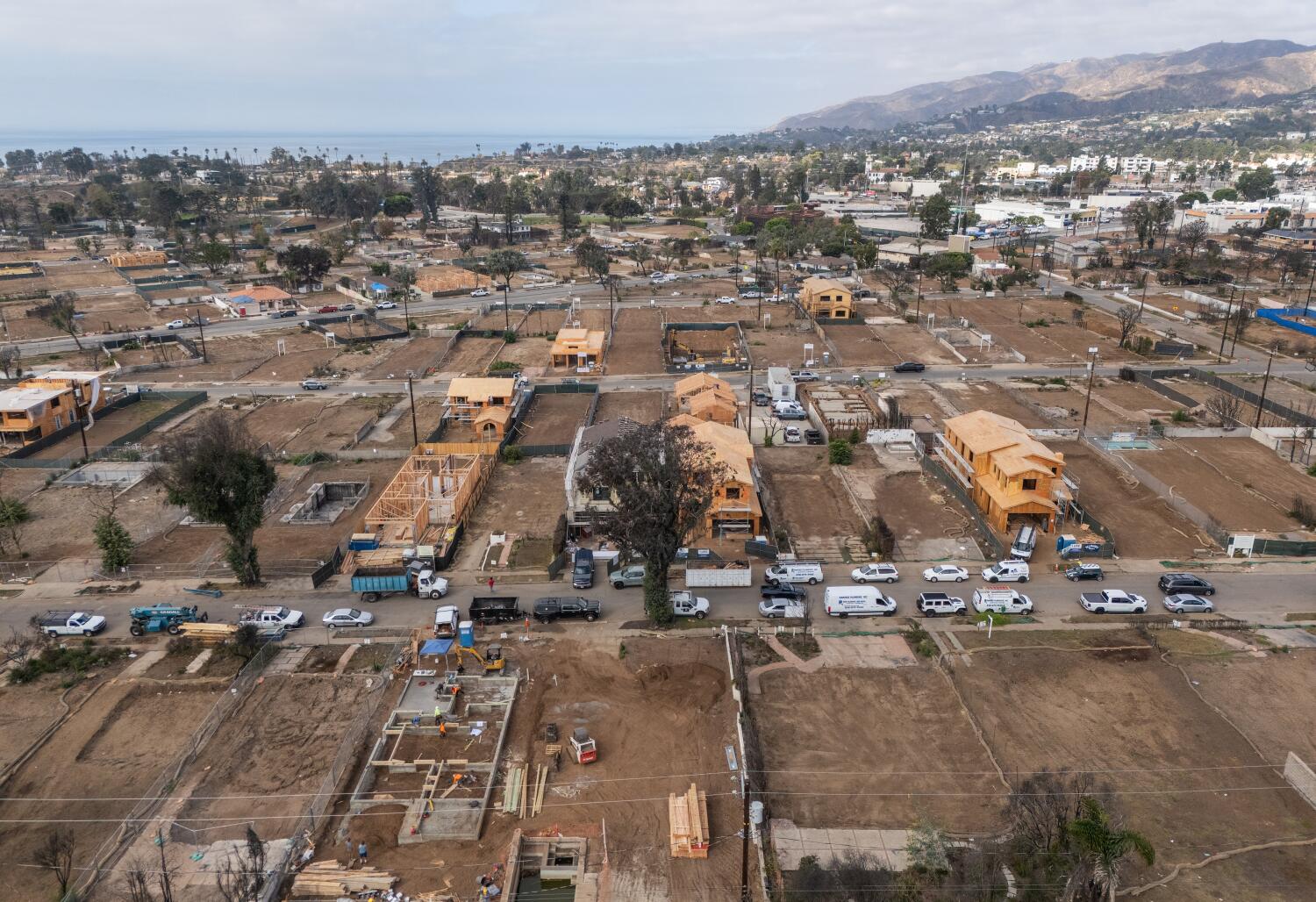
Local prosecutors just wrapped up another high-profile sting operation in the ashes of the Palisades fire zone. Six contractors were hauled off in handcuffs. The charge? Bidding on reconstruction work without a valid California state license. The media coverage followed the predictable, lazy script. Authorities patted themselves on the back for "protecting vulnerable disaster victims from predatory scams."
It sounds noble. It makes for a great press release.
It is also completely missing the point.
These enforcement sweeps do not protect disaster victims. They protect a protectionist cartel. By turning a paperwork violation into a headline-grabbing felony roundup, the state actively harms the very homeowners it claims to defend. We are artificially choking the supply of skilled labor precisely when a community faces an existential supply crisis.
The Illusion of the Consumer Protection Shield
The prevailing narrative relies on a massive logical fallacy: the assumption that a state-issued piece of plastic automatically equals competence, and the lack of it equals criminal intent.
Let us dismantle that premise immediately.
California requires a state contractor license for any job totaling $500 or more in labor and materials. Think about that threshold. In the current economic climate, $500 barely covers the cost of a high-end exterior door, let alone the labor to install it. If a skilled carpenter from a neighboring state—or an independent local craftsman who refuses to pay the extortionate annual fees to the Contractors State License Board (CSLB)—offers to repair a broken deck for $600, they are legally classified as a criminal.
This is not consumer protection. It is economic protectionism dressed up as public safety.
When a wildfire tears through a community like the Palisades, the immediate economic reality is a severe, localized supply shock. Demand for trade skills—roofing, framing, electrical, drywalling—spikes by thousands of percentage points overnight. The local, licensed supply of labor is instantly overwhelmed.
By aggressively prosecuting unlicensed bidders who flock to the area to offer their skills, the state creates an artificial bottleneck.
[Spike in Reconstruction Demand] + [Aggressive State Licensing Stings]
= Artificial Labor Bottleneck
= Hyper-Inflated Construction Costs & Years of Rebuilding Delays
The result? Homeowners face hyper-inflated bids from the few licensed contractors available, or they wait years just to get a foundation poured.
The Monopolization of Disaster Recovery
I have spent two decades analyzing market distortions in heavily regulated sectors. I have seen municipal boards and state agencies deploy enforcement teams under the guise of safety, only to achieve one real-world outcome: insulating established industry players from raw market competition.
When the CSLB runs undercover operations, posing as wildfire victims to catch handymen bidding on clean-up or minor structural work, they are acting as the enforcement arm of a monopoly.
Consider the mechanics of the licensing process itself. To get a general contractor license in California, an applicant must prove four years of journey-level experience, pass two written exams, post a bond, and jump through months of bureaucratic hoops.
For a large construction firm, this is a minor cost of doing business. For an independent trade professional, it is a massive barrier to entry.
When a disaster hits, we need every hammer, every saw, and every able-bodied trade professional on the ground. Instead, the state diverts law enforcement resources to set up sting operations in hotels, trapping people whose only crime was offering to rebuild a fence without paying the state its cut first.
Who Actually Profits From The Crackdown?
- Established corporate contractors who can maintain high margins due to wiped-out competition.
- Insurance conglomerates that use the lack of available "approved" labor to drag out claims payouts.
- State agencies that justify their bloated annual budgets through inflated arrest statistics.
The homeowner pays the price. They pay it in delayed move-in dates. They pay it in out-of-pocket expenses when insurance allocations fall short of monopolized local rates.
Dismantling the Preying on the Vulnerable Premise
The most emotionally manipulative argument used by prosecutors is that unlicensed contractors are systematically defrauding elderly or traumatized wildfire victims.
Let us inject some reality into this claim.
Are there actual scammers out there? Absolutely. There are predatory actors who take down payments and vanish. But those individuals are guilty of fraud, grand theft, and larceny—crimes that are already illegal under the penal code, regardless of whether the perpetrator holds a contractor license.
An unlicensed contractor offering a competitive bid to rebuild a retaining wall is not a fraudster. They are an un-permitted economic actor.
By conflating the two, the state commits a massive disservice to the public. They convince homeowners that a license number is a magical guarantee of integrity.
It is not.
Ask anyone who has been through a major home renovation. The CSLB database is filled with complaints against fully licensed, bonded contractors who abandoned jobs, did substandard work, or went bankrupt mid-project. A license does not guarantee quality; it merely guarantees that the individual checked the boxes required by Sacramento.
The Better Alternative to the Handcuff Strategy
Imagine a scenario where the state actually prioritized the speed and affordability of disaster recovery over bureaucratic turf wars.
Instead of arresting unlicensed tradespeople, the state could implement an emergency provisional registry during declared disasters. If a contractor holds a valid license in Arizona, Nevada, or Oregon, or if they can demonstrate verifiable trade experience, they should be granted an immediate, temporary waiver to operate in the disaster zone.
Instead of weaponized stings, the state could provide consumers with a transparent, decentralized rating system for independent contractors, letting the market weed out the bad actors based on real-world performance rather than state paperwork.
But that would require relinquishing control. It would require admitting that the free market can allocate labor more efficiently during a crisis than a slow-moving state board.
The Actionable Reality for Property Owners
If you are a homeowner trying to rebuild in a disaster zone, stop relying on state licensing status as your primary metric for trust. You are being lied to about what that status actually means.
Do not dismiss an independent craftsman simply because they lack a state rubber stamp. Instead, pivot your vetting process entirely to verifiable history and structural escrow.
Demand to see past projects. Speak directly to previous clients. Use milestone-based payments tied to independent third-party inspections rather than paying large sums upfront. Protect yourself through ironclad contracts and escrow accounts, not by relying on the false security of a state license database.
The system is broken, and the recent arrests in the Palisades are not a victory for public safety. They are a display of state-enforced scarcity designed to keep prices high and choices low when citizens need options the most. Stop applauding the handcuffs. Start demanding the freedom to rebuild.