Power is a devastatingly lonely architecture.
If you walk the corridors of the West Wing late at night, when the tourists are long gone and the television monitors are muted, the silence is heavy. It smells of old carpet, expensive floor wax, and the quiet panic of people who believe they are running the world. In those hours, the physical proximity to the Oval Office ceases to be a job. It becomes an atmosphere. And inside that atmosphere, the human ego does strange, fragile things to survive.
We often view history through the lens of macro-economics, grand strategies, and sweeping legislative battles. We analyze press briefings. We dissect policy memos. But history is rarely made by bloodless institutions; it is forged by deeply flawed, deeply insecure human beings seeking validation in rooms where validation goes to die.
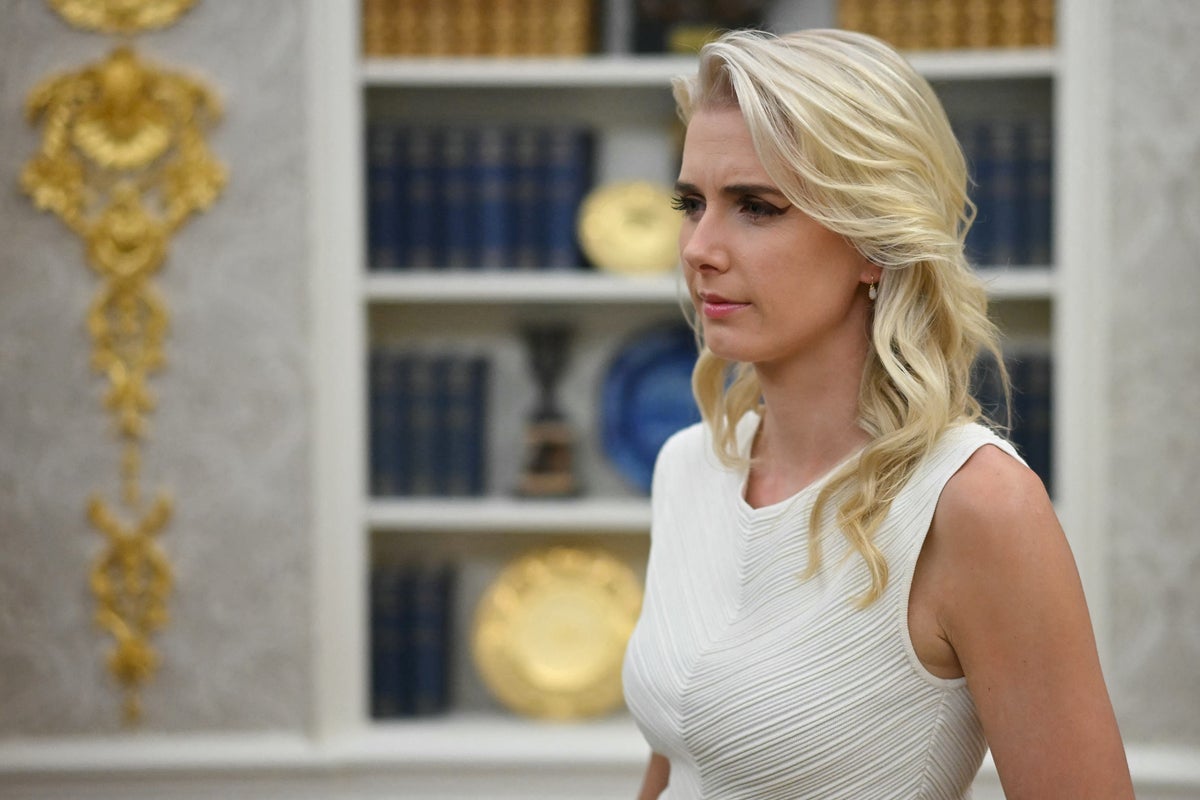
Recently, a revelation emerged from the pages of a new insider memoir detailing the inner workings of the Trump administration. It did not concern a nuclear standoff or a trade tariff. Instead, it focused on a series of small, handwritten notes. A senior White House aide, driven by an almost desperate urge to soothe her boss, routinely left adoring messages hidden in the President’s private spaces.
"You are all that matters to me," one note read.
Think about that phrase for a moment. It wasn't written in a teenage diary. It wasn't slipped into a high school locker. It was placed on a mirror, or perhaps beside a bathroom sink, inside the most heavily guarded complex on earth, meant for the eyes of a man with his finger on the nuclear button.
To understand why this happens, you have to look past the political theater. You have to look at the mechanics of the courtier.
Throughout history, power has demanded a specific type of ecosystem. Henry VIII had his Gentlemen of the Privy Chamber—men whose entire career trajectory depended on their ability to read the King's fluctuating moods before he even woke up. Louis XIV turned the simple act of putting on his chemise into a competitive sport for the French nobility at Versailles. The modern White House, despite its democratic veneer, is no different. It operates as a secular court.
In a courtly environment, information is currency, but proximity is life.
Imagine the daily routine of an aide operating at that level. Every morning you wake up before dawn. Your phone is already vibrating with a hundred notifications. You step into a building where everyone is hyper-competent, intensely ambitious, and utterly replaceable. The stress is not a localized headache; it is a permanent weather system. You quickly realize that logic, policy data, and traditional competence are only mildly effective shields. The real game is emotional resonance.
If the leader is angry, the entire apparatus stalls. If the leader feels under siege, the walls close in.
So, you adapt. You look for the cracks in the armor. You discover that the most powerful man in the world is also, by virtue of his position, the most isolated. Surrounded by adversaries, scrutinized by the global press, and distrusted by institutional bureaucrats, a leader becomes starved for a rare commodity: uncritical, unvarnished devotion.
The handwritten notes were a brilliant, if unsettling, piece of psychological engineering. By bypassing the formal channels of the Chief of Staff’s office, by avoiding the official paper trail of the Executive Secretariat, these messages created an artificial intimacy. They whispered to the recipient that amidst the chaos of a hostile capital, there was a sanctuary of pure loyalty.
But look closer at the emotional transaction taking place.
This isn't just about a subordinate flattering a boss to get a promotion. It is a symbiotic loop of anxiety. The aide needs the President to feel secure because an insecure leader is unpredictable, volatile, and dangerous to work for. The President needs the aide's reassurance because the crown is heavy and the throne is sharp. It is an exchange of psychological oxygen in a low-gravity environment.
Consider what happens next when this becomes the norm.
When the primary metric of success inside an administration shifts from intellectual honesty to emotional soothing, the quality of governance changes. Advisers stop telling the leader what they need to hear and start telling them what makes them sleep at night. The private spaces of governance—the dressing rooms, the small dining rooms off the Oval Office—become echo chambers lined with yellow legal pad declarations of love.
The danger isn't the flattery itself; it is the distortion of reality.
When you spend your days reading notes that tell you you are all that matters, the outside world begins to blur. The complex nuances of global diplomacy, the granular suffering of regular citizens, the objective boundaries of the law—all of it shrinks. The universe contracts to the size of the room you are standing in.
We are prone to looking at these stories with a sense of cynical amusement. We mock the sycophancy. We laugh at the absurdity of grown professionals acting like starstruck teenagers. But beneath the ridicule lies a deeply sobering truth about human nature and governance.
Our institutions are only as robust as the psychological health of the people inhabiting them.
When we design systems of government, we create checks and balances. We write constitutions. We establish committees. We build elaborate legal frameworks to ensure that no single person can wield absolute authority without oversight. We do all of this because we assume, rationally, that power must be managed through structure.
Yet, we continually forget that a sticky note left on a bathroom mirror can bypass every single check and balance ever devised by the Founding Fathers.
No constitutional amendment can prevent a leader from preferring a comforting lie over a harsh truth. No congressional oversight committee can regulate the private reassurance passed between a courtier and a commander-in-chief. The entire magnificent, terrifying apparatus of the modern state ultimately rests on the fragile scaffolding of human ego and the small, quiet interactions that happen when the cameras are turned off.
The notes are gone now, likely filed away in boxes or preserved in archives, artifacts of a specific, surreal era in American politics. But the architecture that created them remains completely intact. The rooms are still there. The mirrors are still clean. And somewhere in the West Wing, right now, someone is walking down a quiet hallway, carrying a piece of paper, wondering exactly what words it will take to make the person in charge feel safe.