The Outrage Industry Meets Fiscal Arithmetic
When state funding drops, the playbook never changes.
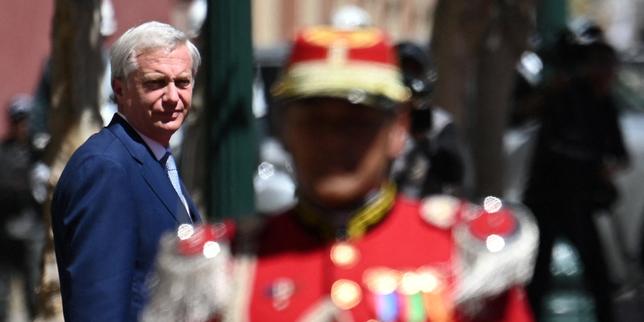
Outrage erupts across newsrooms, artists march in Santiago, and commentators lament the impending death of creative expression. The narrative following the budget adjustments proposed by José Antonio Kast’s administration in Chile frames the reductions to the Ministry of Cultures, Arts and Heritage as an existential tragedy.
This reflexive outrage misses the entire point.
State-subsidized art has spent decades operating as a self-referential ecosystem detached from audience demand, economic accountability, and genuine creative risk. When a government faces systemic fiscal deficits and sluggish growth, treating cultural subsidies as a sacred, untouchable entitlement is not artistic defense—it is administrative denial.
The standard critique argues that reducing state allocations cripples cultural production. The inverse is far closer to the truth: unconditional state funding creates institutional complacency, incentivizes bureaucratized art, and turns creators into policy lobbyists instead of cultural innovators.
The Illusion of State-Sponsored Creativity
For years, public arts funding in Latin America has operated under a comfortable consensus: central governments collect tax dollars and distribute them through committees to select projects deemed culturally valuable.
The structural flaw in this model lies in who the artist must satisfy.
When survival depends on grant applications, formal proposals, and institutional panel approvals, the primary audience ceases to be the public. The primary audience becomes the bureaucrat reading the grant application.
- Grant-oriented production: Creative decisions shift to align with state-approved thematic trends, administrative metrics, and institutional buzzwords.
- Audience detachment: Projects secure funding long before a single audience member views them, removing the direct feedback loop between creator and community.
- Administrative overhead: A significant fraction of public cultural spending disappears into ministry operations, grant management, and bureaucratic compliance rather than reaching front-line artists.
Having analyzed fiscal allocations across public sector arts programs, a clear pattern emerges: administrative inflation consistently outpaces creative yield. Bureaucracies expand to manage the distribution of funds, while the underlying creative community grows increasingly reliant on a single, politically volatile paymaster.
Why Public Budget Cuts Force Real Innovation
When public subsidies shrink, institutions face a forced choice: adapt to market reality or demonstrate tangible value to voluntary supporters.
The narrative that culture dies without direct state patronage ignores basic historical and contemporary evidence. Independent cultural hubs, commercial media, grassroots theater networks, and digital-first creators routinely build sustainable models without relying on public grants.
Consider how private sponsorship, direct-to-audience patronage, and international co-productions operate compared to state-dependent models:
| Funding Model | Primary Accountability | Operational Incentive | Risk Distribution |
|---|---|---|---|
| State Subsidies | Ministry Panels & Committees | Administrative Compliance | Absorbed by Taxpayers |
| Direct Audience Support | Paying Public & Community | Engagement & Value Creation | Borne by Creator |
| Private Sponsorship | Corporate & Philanthropic Partners | Reach, Impact & Alignment | Shared Partner Risk |
| Hybrid/Commercial | Market & Ticket Buyers | Efficiency & Financial Return | Market-Driven |
A forced reduction in public funding breaks the monopoly of state patronage. It compels cultural institutions to diversify their revenue, build direct relationships with audiences, and seek private philanthropic backing or commercial partnerships.
When the state steps back, the immediate result is short-term discomfort. The long-term result is structural resilience.
The Economics of Fiscal Reality
Protesting a 10% budget adjustment in isolation ignores the broader macroeconomic context.
A state managing sovereign debt, high public spending, and economic stagnation cannot treat any single ministry as an exempt sanctuary. When public health, public infrastructure, and basic economic security compete for finite treasury revenue, prioritizing state subsidies for non-essential artistic projects becomes mathematically unviable.
Imagine a scenario where a country refuses to adjust its discretionary spending despite mounting debt service costs. To maintain flat funding for every legacy ministry, the state must either raise taxes on productive enterprises or issue high-yield debt. Both options reduce private capital investment, slow job growth, and ultimately shrink the very tax base that funds public institutions in the first place.
Austerity is rarely popular, but fiscal solvency is a prerequisite for long-term stability. Expecting taxpayers to absorb continuous fiscal deficits to insulate cultural organizations from economic gravity is unsustainable.
Decentralized Culture vs. Centralized Patronage
The core misconception in the current debate is equating state ministry budgets with national cultural vitality.
The state is not the creator of culture; it is merely an intermediary that redistributes capital. Culture exists in local communities, digital spaces, private studios, and independent venues completely independent of government sanction.
When governments centralized cultural funding in the 20th century, they created single-point-of-failure ecosystems. If the political administration shifts, the funding shifts, and the entire sector enters crisis. The solution is not to demand eternal state funding from every successive government; the solution is to remove the state as the sole arbiter of artistic survival.
- Build direct monetization: Creators leveraging subscription models, digital distribution, and direct community patronage bypass state gatekeepers entirely.
- Engage private philanthropy: Developing robust tax-incentivized corporate and individual donation frameworks builds stable, non-governmental funding pipelines.
- Focus on operational efficiency: Cultural institutions that reduce administrative overhead preserve core programming even during broader economic downturns.
The panic surrounding Chile's cultural budget adjustments exposes a fragile dependency model. The path forward is not lobbying for perpetual state dependence, but building an independent, economically viable creative sector that thrives regardless of who occupies the presidential palace.