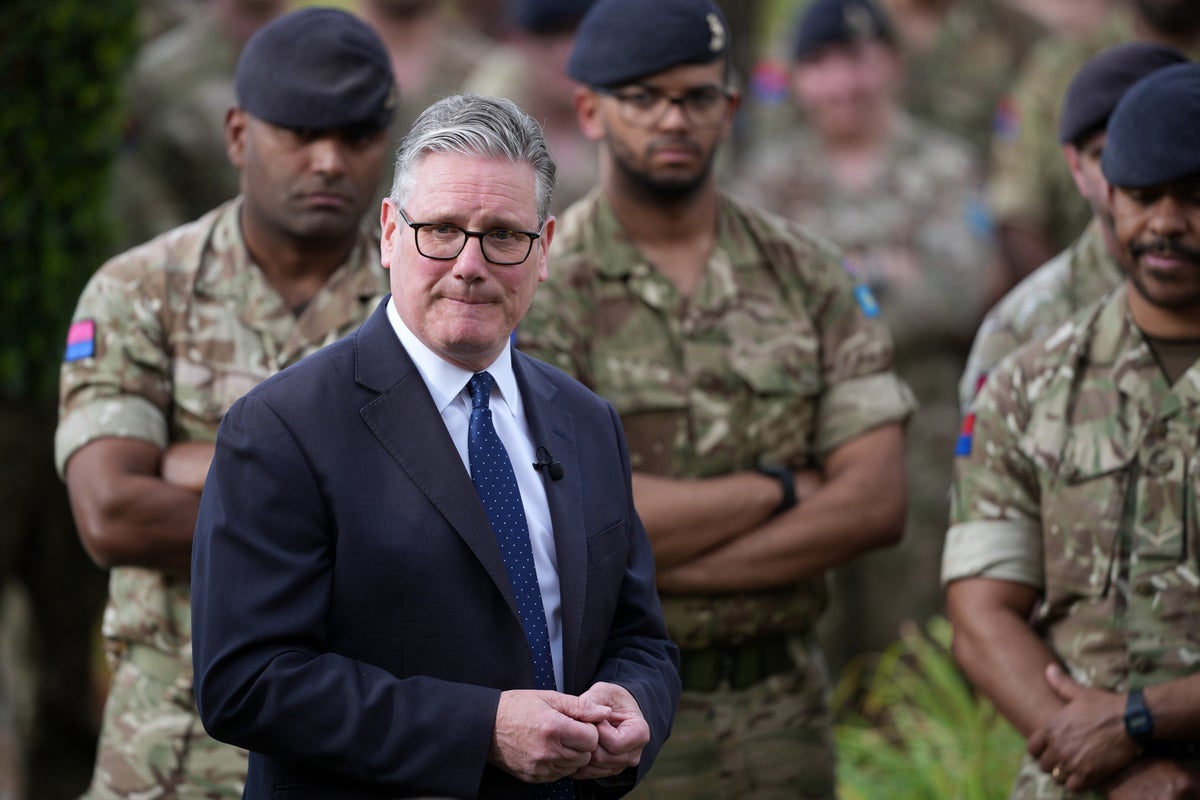
Keir Starmer has signaled a fundamental shift in British diplomacy by directly challenging the rhetoric of Donald Trump regarding Iran. For years, the "special relationship" operated under a silent pact of non-interference in domestic campaign rhetoric. Starmer broke that pact. By questioning the fundamental values of an American presidential candidate who threatened to wipe out a whole civilization in Iran, the Labour leader isn't just playing to his base. He is drawing a hard line in the sand for future UK-US relations that rejects the nihilism of total-war threats as a legitimate tool of statecraft.
The Cost of Total Rhetoric
When a political figure suggests the annihilation of an entire culture, the diplomatic fallout usually happens in hushed rooms. This time it went public. Starmer’s critique focuses on the proportionality and legality of such threats, which fly in the face of the Geneva Convention and the international order Britain helped build after 1945. This is not about being "soft" on Tehran. It is about whether the leader of the free world can remain a credible arbiter of peace while flirting with the idea of genocide.
The geopolitical reality is far grimmer than a campaign soundbite. Threatening to erase a civilization of eighty-five million people isn't just a tough-guy stance. It is a strategic disaster. It eliminates the middle ground for moderates within the Iranian establishment and forces the entire population to huddle under the wing of the hardline Revolutionary Guard. Starmer knows this. He understands that when the West abandons its moral high ground, it loses its most effective weapon against autocracy.
Britain’s New Strategic Autonomy
London has spent decades following Washington’s lead, sometimes into the abyss. We saw it in 2003 with Iraq. We saw it again with the haphazard withdrawal from Afghanistan. Starmer’s recent interventions suggest a pivot toward a more independent European-aligned security posture. He is signaling to the world—and specifically to the EU—that a Labour-led Britain will not be a rubber stamp for erratic American populism.
This isn't just a clash of personalities. It is a clash of worldviews. On one side is a transactional, scorched-earth approach to foreign policy that views international law as a nuisance. On the other is Starmer’s legalistic, multilateral framework. By highlighting the "values" gap, Starmer is prepping the British public for a world where the UK might have to say "no" to its most powerful ally more often than it says "yes."
The Shadow of the 2015 Nuclear Deal
Much of this friction traces back to the Joint Comprehensive Plan of Action (JCPOA). The UK, along with France and Germany, invested massive diplomatic capital into the deal. Trump’s unilateral exit in 2018 didn't just hurt Iran; it embarrassed the British Foreign Office. Starmer’s current stance is a defense of the idea that signed treaties must mean something. If a civilization can be threatened with extinction at the whim of a single leader, then no deal—nuclear or otherwise—is worth the paper it is written on.
Critics argue that Starmer is being naive. They claim that in the brutal theater of Middle Eastern politics, only the threat of total destruction keeps the peace. But history suggests otherwise. Total threats usually lead to total mobilization. By calling out the extremity of Trump’s language, Starmer is attempting to lower the temperature before it reaches a boiling point that drags British troops into another unwinnable conflict.
Internal Politics and the Labour Base
There is, of course, a domestic calculation at play. Starmer has faced significant pressure from his own party over his stance on international conflicts. Standing up to Trump is a low-risk, high-reward move for a UK politician. It unites the left wing of the party with centrist liberals who view the former president as an existential threat to the liberal democratic order.
However, the risk is real. If Trump returns to the White House, Starmer will have to face a man known for holding grudges. The "veteran investigative journalist" lens reveals a pattern here: Starmer is betting that the global community is tired of the chaos. He is positioning himself as the "adult in the room," a stark contrast to the populist firebrands on both sides of the Atlantic. It is a gamble on stability over volatility.
The Intelligence Gap
British intelligence officials have long expressed private concerns about the lack of nuance in American policy toward the Persian Gulf. They see a region on a knife-edge. A single miscalculation, fueled by inflammatory rhetoric, could shut down the Strait of Hormuz and send the global economy into a tailspin. Starmer’s comments are rooted in these briefings. He isn't just talking about morals; he is talking about the price of oil, the stability of markets, and the prevention of a refugee crisis that would make the last decade look like a rehearsal.
The Iranian "civilization" Trump referred to is one of the oldest in human history. To suggest its erasure is to suggest the erasure of global heritage. For a former Director of Public Prosecutions like Starmer, this isn't just bad politics—it’s a confession of intent to commit a crime against humanity. He is framing the argument in a way that makes it impossible for his opponents to disagree without looking like they support mass slaughter.
Redefining the Special Relationship
The old version of the UK-US bond was based on shared intelligence and shared wars. The new version, as envisioned by Starmer, seems to be based on shared accountability. He is asserting that being an ally doesn't mean being a sycophant. If the US moves toward a policy of "civilizational" threats, the UK will move toward its European neighbors.
This shift has profound implications for NATO. If the leading member of the alliance is seen as a rogue actor by its closest partner, the entire structure of Western security begins to fray. Starmer is effectively telling the American electorate that their choice has consequences for the viability of their alliances. He is making the "values" of the US president a matter of British national interest.
The Reality of Iranian Ambition
Acknowledge the gray area: Iran is not a benign actor. Its proxy network, from Hezbollah to the Houthis, is a genuine threat to regional stability. Starmer is not ignoring this. His argument is that you cannot defeat an ideology by threatening to murder a population. You defeat it through targeted sanctions, rigorous diplomacy, and a united international front—none of which are possible if the US leader is acting like a warlord.
The hard truth is that Trump’s rhetoric serves the Iranian regime’s propaganda machine perfectly. It allows the Supreme Leader to frame the West as a bloodthirsty entity bent on the destruction of Islam and the Persian people. Starmer’s intervention breaks that narrative. It shows the Iranian people that there is a distinction between the "Great Satan" of their government's imagination and the actual democratic leaders of the West.
Why the Rhetoric Matters Now
We are in a period of extreme global volatility. The war in Ukraine has already stretched Western military resources. A conflict in the Middle East on the scale Trump’s threats imply would be a terminal blow to the current international system. Starmer’s decision to speak out now is a pre-emptive strike against a policy of escalation. He is trying to bake a "sanity clause" into the UK’s foreign policy before the next US election cycle reaches its peak.
This is the end of the era where British Prime Ministers (or candidates) wait for permission from the Oval Office to speak their minds. Starmer has realized that the only way to save the special relationship is to be honest about when it is failing. Silence is no longer a strategic option when the stakes are the survival of entire nations and the integrity of the law.
The next move for the UK government—or a prospective one—will be to formalize these boundaries. Expect to see more coordination with Paris and Berlin on Middle East policy, and less reliance on the whims of whoever happens to be sitting in the West Wing. Starmer has opened a door that cannot be easily shut. He has made it clear that while Britain remains an ally, it is no longer an accomplice to the language of annihilation.


