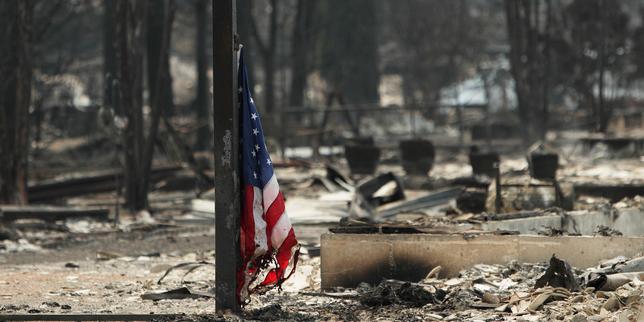
Ash drifts from a sky colored the shade of a bruised plum. Smoke chokes out the sun. If you walk through Spokane right now, you aren't just smelling burning pine; you're breathing the suffocating reality of a climate breaking down in real time.
The Pacific Northwest is staring down a wildfire season that defies ordinary statistics. Officials call it exceptional. Locals trapped behind evacuation lines call it terrifying. When entire neighborhoods transform overnight into landscapes resembling bombed-out urban centers, standard disaster preparation fails. You need to know what is actually happening on the ground, why this region is uniquely vulnerable, and how communities are fighting back against an enemy made of wind, timber, and dry heat.
The Anatomy of a Pacific Northwest Catastrophe
Geography is destiny in the American Northwest. You get towering pine forests, massive mountain ranges, and dry summers that turn millions of acres of timber into a giant tinderbox.
When a ridge of high pressure parks itself over Washington and Oregon, it creates a meteorological lid. Heat gets trapped. Moisture evaporates from the soil and the trees long before August rolls around. Throw in a dry lightning storm or a stray spark, and you have an ignition switch ready to flip.
Spokane sits right in the crosshairs of this ecological trap. To understand why the city feels like a military zone during peak burn periods, you have to look at the interface where urban sprawl crashes directly into heavy timberland. Homes sit nestled among dry brush and dense pine. When winds whip up from the west, fire doesn't creep. It sprints.
- Embers travel miles ahead of the actual fire front.
- Firefighters face zero visibility on major local thoroughfares.
- Power grids fail instantly under the strain of heat and wind.
People forget that these blazes move faster than a car can drive on a winding mountain road. That speed is what turns a quiet suburb into an evacuation zone in minutes.
Why Standard Warnings Fail
Governments love issuing simple evacuation orders. Pack a bag, fill your gas tank, head south. Reality is rarely that clean.
When the power cuts out, traffic lights go dark. Gas pumps stop working because the grid is dead. If you wait for a mandatory alert before you hook up your trailer or round up your pets, you might already be trapped in gridlock with heavy smoke blinding your windshield.
Emergency management agencies often struggle to scale their response fast enough when multiple mega-fires ignite simultaneously. Resources get stretched thin. Air support grounded by heavy smoke can't drop water on the ridges threatening homes. You are essentially on your own for the first twenty-four hours.
That is why living through a modern wildfire season requires a shift in mindset. You don't hope for the best. You assume the worst-case scenario is arriving tomorrow.
Practical Survival Steps for Smoke and Fire Zones
If you live anywhere near the timber belt of Washington, Idaho, or Oregon, passive preparation is a death sentence. You have to take physical steps long before the sky turns orange.
Clear a defensible space around your property. Cut back tree branches hanging over your roof. Clean the pine needles out of your gutters because a single wind-driven ember turning dry leaves to ash will take down your entire house while the main fire is still miles away.
Build a grab-and-go kit that handles more than just clothes.
- N95 or P100 respirators for everyone in the household. Cheap paper masks do nothing against wildfire particulate matter.
- Hard copies of critical documents like property deeds, insurance policies, and identification. Digital files stored in the cloud are useless when cell towers melt or lose power.
- A battery-powered or hand-crank emergency radio to track evacuation orders when local networks crash.
- Two weeks of prescription medications stored in a watertight container.
Keep your vehicle's gas tank above the halfway mark all summer long. If you hear the sirens and see the ash falling like snow, you don't have time to stop at a crowded service station where the pumps have no electricity anyway.
What Recovery Actually Looks Like
The news cameras leave the moment the flames die down. That is when the real hardship begins for places like Spokane and the smaller towns scattered across Eastern Washington.
Insurance claims take months or years to process. Toxic runoff poisons local watersheds when the first autumn rains hit charred mountain slopes, turning hillsides into mudflows. The psychological toll lingers much longer than the physical damage. Every time the wind picks up on a dry afternoon, the collective anxiety of an entire city spikes.
We are past the point of treating these events as anomalies. This is the new baseline for the region. Ignoring the reality of escalating fire seasons guarantees more destruction, more displaced families, and more towns looking like war zones. Take the threat seriously, harden your home, and have an exit strategy ready before you ever need to use it.