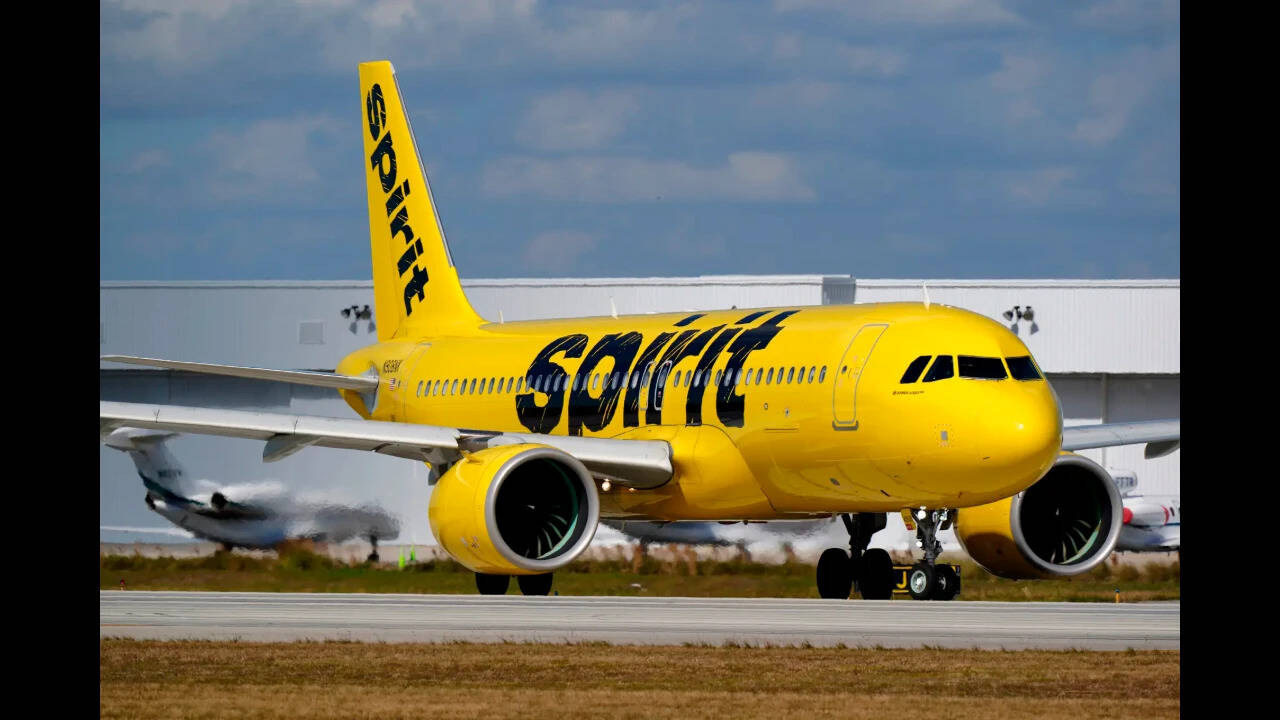
The internet melted down because a website crashed. Headlines screamed that mass interest in Spirit Airlines signaled a massive buying opportunity. Retail investors—the same crowd that thinks a spike in traffic is synonymous with long-term profitability—piled in, convinced they discovered a hidden gem.
They are wrong. They are chasing a mirage built on the ruins of a broken business model.
When a digital storefront collapses under user demand, the average observer sees popularity. The seasoned operator sees a fundamental failure in infrastructure and a glaring lack of margin to support growth. A carrier that cannot handle a surge in traffic is not a company "in demand." It is a company operating on fumes, lacking the capital expenditure to maintain the basics of consumer interaction.
The Myth of Low Cost Efficiency
The industry keeps repeating the mantra that the low-cost carrier model is the future of travel. This is a fairy tale for those who ignore the balance sheet. Spirit survives by stripping every conceivable value from the passenger experience, turning the act of flying into a transaction-based extraction. They don't sell flights; they sell the illusion of affordability, then make up the deficit through fees that negate the initial price gap against legacy carriers.
I have spent years watching companies attempt to scale this race-to-the-bottom strategy. It works until the cost of acquisition—the advertising, the social media hype, the constant discounting—outpaces the revenue per available seat mile. Spirit is currently trapped in a cycle where they must constantly burn cash to attract customers who are fundamentally brand-agnostic.
These customers will switch to Frontier or Southwest the moment a single dollar is saved elsewhere. There is no loyalty, no moat, and no brand identity beyond "the cheap option."
The Retail Investor Delusion
Imagine a scenario where a company operates on razor-thin margins and faces massive debt obligations. Now, imagine that same company relies on a volatile consumer base that disappears at the first sign of a broader economic dip. That is not an investment. That is a speculative gamble disguised as a turnaround play.
Retail traders love to mistake high volume for high value. They look at the "Spirit Airlines" search trends and see a bullish indicator. They fail to understand that an airline’s health is not measured by the number of clicks on a landing page. It is measured by fuel efficiency, fleet utilization, labor relations, and the ability to command pricing power during downturns.
Spirit has none of these.
They are susceptible to fuel price volatility because they cannot pass costs on to a customer base that is allergic to price hikes. They are plagued by labor disputes because their model requires squeezing productivity from staff to unsustainable levels. When the "movement" overwhelms their servers, it does not prove they are a powerhouse. It proves they are a company that didn't bother to upgrade their server capacity because, in their view, that would be an "unnecessary cost."
The Cost of Cheap
Look at the underlying numbers that the hype merchants ignore. When you strip away the marketing, you find a company with a high debt load and limited cash flow generation capabilities.
- Fixed Costs: Airlines are capital intensive. Regardless of whether a seat is filled or empty, the plane needs fuel, the crew needs pay, and the lease payments are due.
- Operating Leverage: Spirit has massive operating leverage, meaning small changes in revenue lead to massive changes in profitability. Right now, that leverage is working against them.
- Pricing Power: They have none. Their market position is strictly defined by being the lowest cost. If they raise prices to achieve profitability, they lose their only competitive advantage.
This is not a business; it is a treadmill. They have to keep running faster just to stay in the same spot.
Operational Incompetence as a Feature
The crash of their website during this supposed wave of interest is the perfect metaphor for the firm. If a major retailer cannot manage a spike in traffic, they lose revenue. If an airline cannot manage its own booking engine, it loses credibility.
I’ve seen operations teams blow millions on trying to patch together legacy software, only to realize the issue wasn't the software—it was the decision to under-invest in technology to boost quarterly numbers. You can only ignore the cracks in the foundation for so long before the ceiling comes down.
When you see a company cheering for "overwhelming" traffic while their systems fail to process payments, you aren't watching a business succeeding. You are watching a team that is ill-equipped to handle the very growth they claim to want.
The Truth About Airline Valuations
Don't listen to the analysts who talk about "turnaround stories" or "market penetration." These are terms used to mask the reality of a company that is fighting for its life. The only thing worse than a company that makes no money is a company that makes no money while requiring constant, expensive maintenance of a massive physical asset fleet.
If you are looking for a bargain, stop looking at the bottom of the barrel. Real value in the airline sector exists in carriers that have enough pricing power to survive inflation and enough operational depth to scale without breaking.
Spirit has burned the bridges of brand loyalty and replaced them with a fee structure that makes every customer a potential enemy. They are a relic of a time when low costs were enough to dominate a market. Today, low costs are just a quick way to go bankrupt while everyone on social media watches the server error pages in real-time.
Stop confusing a crashing website with a soaring stock. It is a sign of internal weakness, not external triumph. Keep your capital far away from this mess.