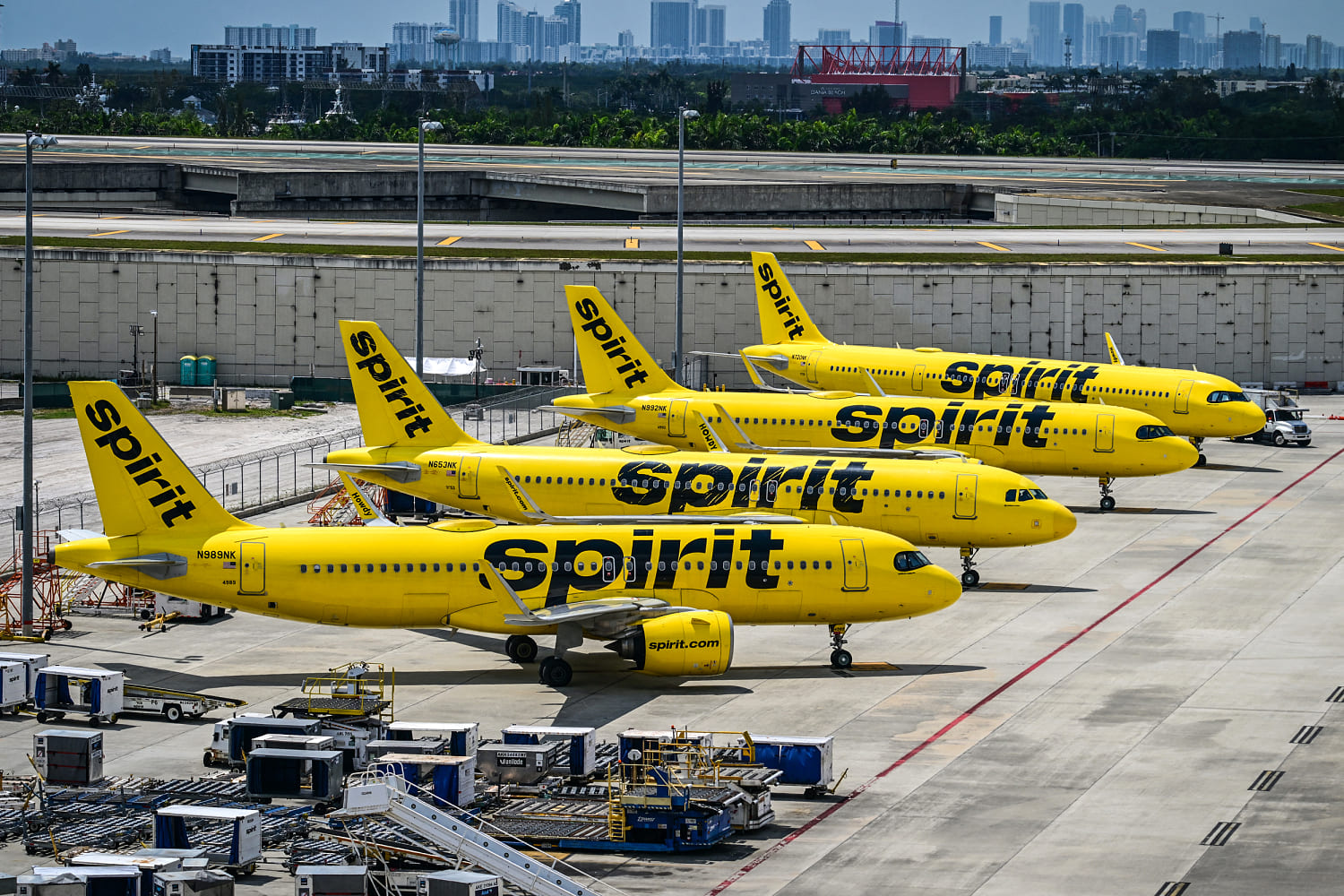
Spirit Airlines is officially done. After years of dodging financial bullets, the yellow-clad pioneer of budget travel has grounded its fleet for good. If you've been following the headlines, you've probably heard that high fuel prices and "recent geopolitical events" are the culprits. That's the story the court documents tell, anyway. But honestly, blaming the Iran-Israel conflict for Spirit’s death is like blaming a rainy day for a roof that’s been leaking for a decade. It was the final blow, sure, but the structure was already rotting.
The reality is much messier. Spirit tried to survive two separate bankruptcy filings in less than two years—a rare "Chapter 22" maneuver—but the math just stopped working. When the U.S. government walked away from a $500 million bailout deal last week, the airline had no choice but to start an orderly wind-down. For the 30 million passengers who relied on Spirit's dirt-cheap fares in 2025, the sky just got a lot more expensive. Also making news lately: The Gilded Ghost of the Great Sea.
The Geopolitical Trap and the Fuel Spike
Let’s look at those "geopolitical events" mentioned in the court filings. Since the start of the conflict in the Middle East earlier this year, jet fuel prices in the U.S. have jumped nearly 70%. For a legacy carrier like Delta or United, that’s a massive headache. For a low-cost carrier like Spirit, it’s a death sentence.
Spirit’s entire business model relied on razor-thin margins. They’d lure you in with a $40 ticket and hope to make their profit on the $60 carry-on bag or the $5 bottle of water. When jet fuel prices doubled almost overnight, those margins vanished. According to JPMorgan analysts, Spirit’s costs were projected to skyrocket by $360 million just to keep the planes fueled through the end of 2026. They didn't have that kind of cash. They barely had enough to keep the lights on in their Miramar headquarters. More details into this topic are detailed by The Wall Street Journal.
The timing couldn’t have been worse. Spirit had just emerged from its first bankruptcy in March 2025, thinking it had cleared its debt. Then it fell right back into Chapter 11 by August. When the Strait of Hormuz—a major oil chokepoint—faced disruptions, the global energy market went sideways. Spirit was caught in the middle with an empty wallet and a fuel-hungry fleet.
Why the JetBlue Merger Failure Mattered
You can't talk about Spirit’s demise without talking about the merger that never happened. In early 2024, a federal judge blocked JetBlue’s $3.8 billion attempt to buy Spirit. The Biden administration’s Justice Department argued that losing Spirit would hurt budget-conscious travelers. They won the case, but in doing so, they essentially trapped Spirit in a burning building with no exit.
I’ve seen this play out before in other industries. When a struggling company is denied a lifeline because of antitrust concerns, the "protection" often results in the company disappearing entirely. That’s exactly what happened here. JetBlue was willing to pay a premium to take over Spirit’s planes and pilots. Once that deal died, Spirit’s stock price cratered, and its creditors started circling.
- The Debt Load: Spirit was carrying over $1 billion in loyalty-program-backed debt that was set to mature.
- The Engine Crisis: Dozens of Spirit's Airbus A320neo planes were grounded due to a massive recall of Pratt & Whitney engines.
- The Shift in Taste: Post-pandemic travelers started wanting "premium" experiences. They wanted legroom and free snacks, not a seat that doesn't recline.
The Failed $500 Million Bailout
The last-ditch effort to save the airline happened in the halls of the Trump administration. For weeks, officials debated a $500 million bailout package. The idea was for the government to take a massive equity stake in exchange for the cash. President Trump even publicly mentioned he’d "like to save the jobs."
But the deal fell apart. Sources say the administration couldn't find a clear funding source, and advisors were wary of throwing taxpayer money at a company that had already gone bankrupt twice in twelve months. Transportation Secretary Sean Duffy was blunt about it, noting that Spirit’s model was fundamentally broken long before the war in Iran started. By the time the final 2 a.m. flight landed this past Saturday, the decision was made. No more checks. No more Spirit.
What Happens to Your Tickets and Points
If you have a flight booked or a mountain of Free Spirit points, here’s the cold truth: you’re at the back of a very long line.
Spirit has stated it will automatically process refunds for flights purchased directly with a credit or debit card. If you booked through an Expedia or a travel agent, you’ve got to call them yourself. But if you’re holding "flight credits" or vouchers from a previous cancellation, don't hold your breath. Those are now unsecured claims in a bankruptcy court. Historically, that means you’ll get pennies on the dollar, if anything at all.
As for the routes, Frontier and JetBlue are already moving in. They’ve announced dozens of new flights out of Fort Lauderdale and Orlando to fill the void. They’ll take the planes and the gates, but they won't be taking the $19 base fares. Those are likely gone for good.
Next Steps for Stranded Travelers
If you're currently away from home and were supposed to fly Spirit back, your first move is to check other low-cost carriers like Allegiant or Frontier. The Department of Transportation has asked other airlines to cap fares for stranded Spirit passengers, though "capping" a fare during a fuel crisis is a relative term.
Don't wait for a Spirit representative to call you. Their customer service lines are effectively dead. Document everything, file a chargeback with your credit card company if your refund doesn't show up in 7-10 business days, and prepare for a much more expensive summer travel season. The era of the ultra-low-cost carrier just hit a mountain, and it’s going to take years for the market to settle.