The Myth of the Mediterranean Conscience
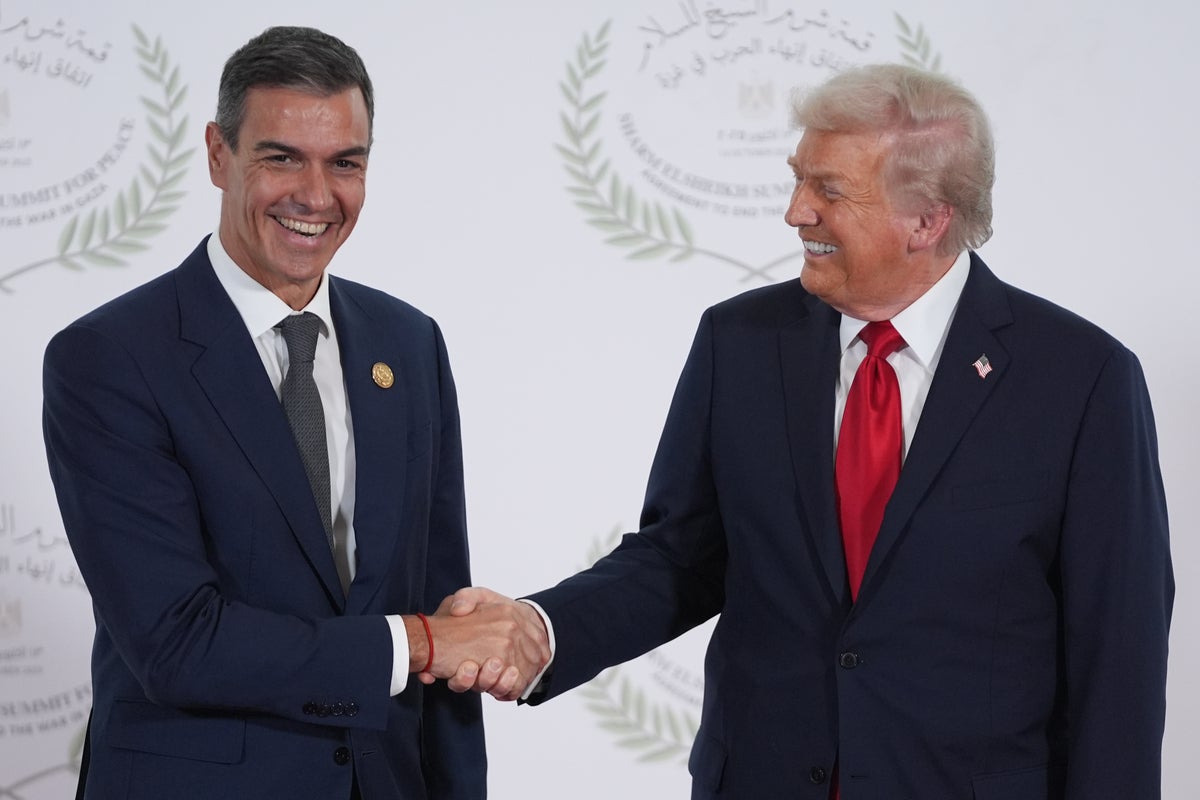
The narrative is seductive. Pedro Sánchez, the sharp-suited Prime Minister of Spain, stands at a podium and stares down the giants of the West. He is framed as the "moral compass" of Europe, the only leader with the backbone to challenge Washington’s blank check to Israel. International headlines paint this as a courageous pivot toward human rights.
It isn't. It’s a cynical exercise in domestic brand management and a desperate attempt to stay relevant in a European Union that is moving its center of gravity toward the Baltics and Poland.
While the press swoons over the "Sánchez Doctrine," the reality is a masterclass in low-stakes signaling. Spain is not leading a moral revolution; it is exploiting a vacuum of leadership to score points with a domestic base while ignoring the brutal arithmetic of Mediterranean security.
The Domestic Grift Behind the Diplomacy
To understand Spain's recent shifts, stop looking at the map of the Middle East and start looking at the seats in the Cortes Generales. Sánchez leads a fragile coalition. To stay in Moncloa, he must appease a hard-left faction—Sumar and its satellites—that views anti-Zionism as a core pillar of identity.
This isn't about Gaza. It’s about Madrid.
When Sánchez takes a hardline stance against the U.S. position on Israel, he isn't moving the needle on global policy. He is buying himself another six months of legislative peace at home. It is a classic "cheap signal." In game theory, a cheap signal is a communication that costs the sender nothing but aims to influence the receiver. Spain knows it lacks the military or economic weight to force a ceasefire. Therefore, the rhetoric can be as fiery as possible because there is zero risk of having to back it up with actual force or meaningful sanctions.
I have watched governments play this game for decades. They substitute adjectives for action. They trade on "morality" because their "material" influence has hit a ceiling.
The Hypocrisy of the Southern Border
The "conscience of Europe" branding falls apart the moment you look south toward Ceuta and Melilla.
If Spain is the champion of the oppressed and the defender of international law, how do we reconcile that with the brutal reality of its own border management? The Moroccan-Spanish border is one of the most fortified and violent frontiers on the planet. When thousands of migrants attempted to cross into Melilla in 2022, the resulting crackdown led to dozens of deaths and allegations of summary deportations—actions that human rights organizations have repeatedly condemned.
The "moral" pushback against the U.S. and Israel is a convenient distraction from the fact that Spain relies on an increasingly authoritarian Moroccan monarchy to do its dirty work. Madrid recently performed a total U-turn on Western Sahara, abandoning its historical commitment to the Sahrawi people’s right to self-determination just to keep Rabat happy.
Where was the "moral conscience" then? It was traded for border security.
You cannot claim the moral high ground on the Levant while selling out the Sahrawis for a quieter fence in North Africa. It is a staggering double standard that the mainstream media refuses to acknowledge because it ruins the "Sánchez as David vs. Goliath" trope.
The Irrelevance of the Soft Power Play
Spain is betting that by positioning itself as the leader of the "Global South" within Europe, it can gain a unique seat at the table. This is a fundamental misreading of how the EU functions in a post-Ukraine world.
Power in Europe is no longer measured by how many treaties you sign or how many "values-based" speeches you give at the UN. It is measured by defense spending, energy independence, and technological sovereignty.
While Sánchez is busy trying to "humanize" European foreign policy, the real decisions are being made in Berlin, Paris, and Warsaw. The North Atlantic alliance cares about hard power. Spain’s defense spending remains among the lowest in NATO as a percentage of GDP. By antagonizing the U.S. on high-visibility issues, Spain isn't showing strength; it’s ensuring that when the real deals are cut regarding the future of European security, Madrid will be the last one called.
The Israel-Spain Trade Paradox
Let’s talk about the money. For all the talk of a "moral pushback," Spain’s trade relationship with Israel hasn't collapsed.
In fact, Spain remains a significant importer of Israeli defense technology. Even as the government talks about suspending arms export licenses, the fine print often reveals a different story: existing contracts are frequently honored, and "dual-use" technologies continue to flow.
If Spain were truly the "conscience" of the continent, it would lead a total economic decoupling. But it won't. Because Spain’s tech and agricultural sectors are deeply integrated with Israeli innovation. This creates a "schizoid" foreign policy where the mouth yells at Jerusalem while the hand continues to sign checks for cybersecurity software and irrigation tech.
Why the "Conscience" Argument Is Dangerous
The most dangerous part of this "moral" narrative is that it creates a false sense of European unity that doesn't exist.
When Spain acts as a lone wolf on the international stage, it undermines the High Representative of the Union for Foreign Affairs. It tells the world that the EU is not a bloc, but a collection of twenty-seven different egos. This fragmentation is exactly what geopolitical rivals want.
Imagine a scenario where every EU nation decided to have its own "moral" foreign policy. Sweden could decide to sanction Turkey over the Kurds. Hungary could (and does) cozy up to Russia. Greece could go rogue on Libya. The result isn't a more "moral" Europe; it’s a chaotic, paralyzed continent that no one takes seriously.
Sánchez isn't "leading" Europe. He is fragmenting it for the sake of a 4-point bump in the polls.
The Actionable Truth
If you are an investor or a policy analyst, do not be fooled by the headlines. Spain’s "moral" stance is a lagging indicator, not a leading one. It is the sound of a middle-tier power trying to maintain its dignity in a world that is rapidly moving toward a brutal, realist multipolarity.
Stop asking: "Is Spain the new leader of the European left?"
Start asking: "How long can Spain ignore its own border contradictions before the 'moral' brand collapses?"
The reality is that Spain is playing a game it cannot win. You cannot be the moral arbiter of the world when your own backyard is fenced with barbed wire and political compromises. Spain’s "pushback" isn't a revolution. It’s a press release.
History doesn't remember the leaders who gave the best speeches; it remembers those who had the power to change the outcome. On that front, Madrid is shouting into a void of its own making.