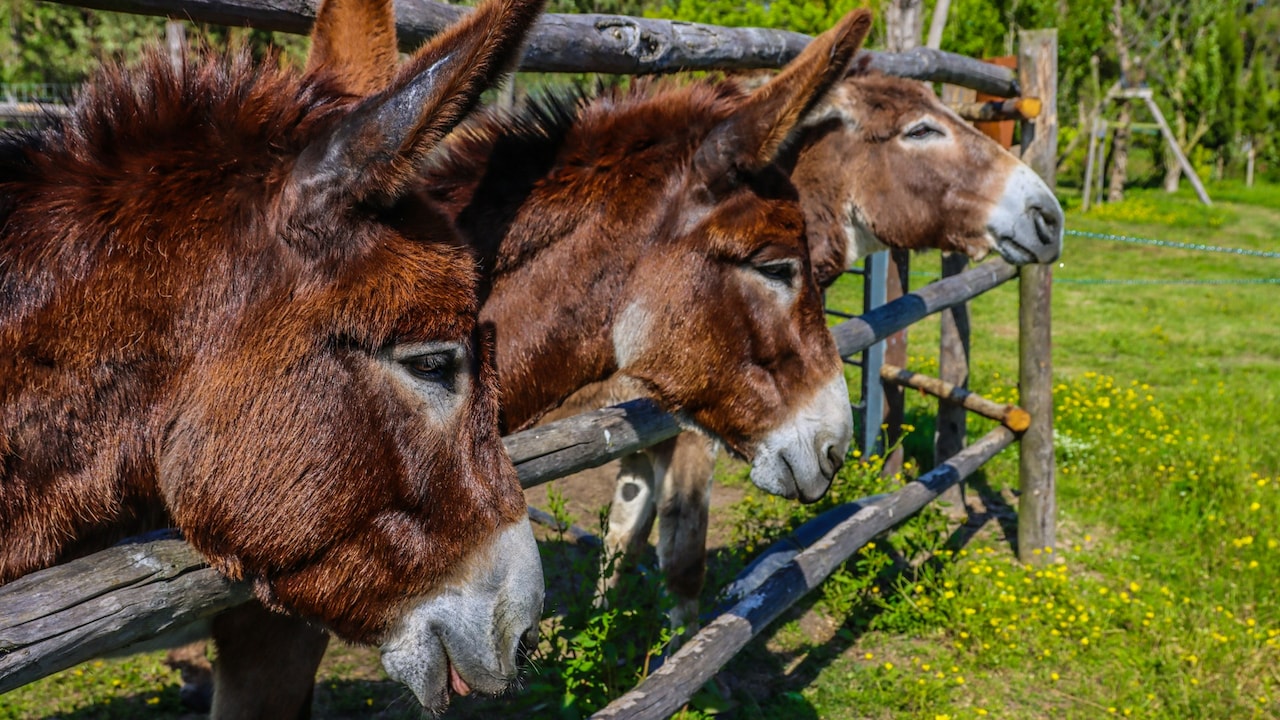
When heatwaves sweep through southern Europe, the immediate response usually involves heavy machinery, aerial water bombers, and satellite tracking systems. Yet across fire-prone regions in Spain, an ancient and remarkably effective fire prevention method is quietly taking center stage. It doesn't rely on fossil fuels, complex software, or high-tech equipment. It relies on a steady appetite.
In places like Doñana National Park in Andalusia and rural Catalonia, herds of rescued donkeys are working as active land management teams. By systematically eating through tons of dry scrub, grass, and flammable underbrush, these animals clear strategic firebreaks across terrain that heavy vehicles simply can't reach. Learn more on a related subject: this related article.
It sounds like a quirky gimmick, but the results speak for themselves. In key areas of Doñana National Park, where a donkey brigade has been patrolling since 2014, there hasn't been a single major wildfire in over nine years.
The Problem With Modern Scrubland
For thousands of years, the Mediterranean countryside was maintained by a delicate balance of traditional agriculture and grazing. Farmers kept herds of livestock that naturally cleared the understory, while rural communities collected firewood and managed brush. Further reporting by NBC News delves into related perspectives on this issue.
Over the past half-century, that dynamic shifted dramatically. Industrialized farming took over, rural populations migrated to cities, and traditional grazing declined. Without livestock to manage the growth, fast-growing woody plants, dry brush, and tough grasses began to choke the forest floors.
When dry summer weather hits Spain, this unchecked vegetation turns into fine fuel. It ignites in seconds and feeds fast-moving canopy fires.
Mechanical clearing is expensive, energy-intensive, and often impossible on steep, rocky hillsides. Fire crews can't run mowers across every hectare of vulnerable forest. That's where grazing animals fit in.
Why Donkeys Outperform Other Grazers
Sheep and goats have long been used in traditional brush clearing, but donkeys bring several unique physical advantages to wildfire prevention.
First, a donkey's digestive system handles tough, fibrous plants that other animals reject. While cattle prefer lush pasture and sheep stick to tender grass, donkeys happily consume dry, woody stems, thorny brambles, and coarse brush. They turn prime fire fuel into manure.
Scale also matters:
- Massive Consumption: A single donkey consumes roughly ten times as much material per day as a goat, clearing larger swaths of land much faster.
- Mechanical Impact: Weighing three times more than a goat, a donkey physically breaks up dense vegetation simply by walking through it. Their hooves crush dry twigs and stamp down thick brush layers, making the ground far less susceptible to wind-driven ignition.
- Tough Terrain Access: Donkeys navigate rocky, unstable slopes without causing the severe soil erosion associated with heavy tractor clearing.
By grazing 40-by-15-meter strips for up to seven hours a day between March and November, a small herd can maintain critical perimeter lines around high-risk zones.
[Image of donkey]
Rescued Animals on the Front Lines
What makes the Spanish model particularly compelling is its dual focus on animal welfare and environmental restoration. Many of the animals involved are rescued from abuse, abandonment, or slaughterhouses.
In Andalusia, the non-profit association El Burrito Feliz ("The Happy Little Donkey"), alongside the volunteer group Mujeres por Doñana, manages a squad of 18 donkeys assigned to protect sensitive park boundaries. Among them are animals like Roberto, a former racing donkey rescued from slaughter, and Paloma, who arrived severely overweight from an improper diet of kitchen scraps before transitioning to a natural grazing lifestyle.
A similar project in Catalonia, launched by Joan Cedó in 2020 under the name Tivissa Donkey Firefighters, began with just three animals. Today, that herd has expanded to over 60 donkeys clearing roughly 400 hectares of high-risk land.
In the municipality of Tivissa, local authorities haven't recorded a single wildfire since the donkeys were introduced.
The Limits of Biological Fire Prevention
While the success of these programs is undeniable, researchers and foresters emphasize that donkeys aren't a standalone fix for global wildfire risks.
Dr. Jordi Bartolomé Filella, an expert in animal science at the Universitat Autònoma de Barcelona, notes that effective wildland management requires a multi-layered approach. Grazing reduces fuel loads and lowers flame height, making fires far easier for human crews to control when they do break out. However, it cannot prevent every spark caused by lightning or human negligence.
The most successful models combine targeted donkey grazing with intentional forest management. This includes thinning dense pine plantations, performing controlled burns, and maintaining broad access roads for emergency crews.
How to Implement Grazing Firebreaks in Your Community
If you manage rural property or work with local municipal councils in fire-prone regions, integrating livestock into fire mitigation plans is surprisingly straightforward.
- Map Your High-Risk Zones: Identify overgrown perimeters, fence lines, and steep slopes where mechanical mowers can't operate.
- Partner With Local Herders or Rescue Organizations: Instead of buying animals outright, contract with regional animal rescues or traditional shepherds who need seasonal grazing land.
- Use Rotational Fencing: Set up temporary electric fencing to concentrate grazing on specific 20-to-40-meter wide strips along property edges. This creates dense, clear firebreaks rather than sparse, scattered clearing.
- Ensure Daily Care: Grazing herds need reliable access to fresh water (donkeys consume 20–30 liters daily during summer) and shade during peak heat hours.
- Monitor Vegetation Levels: Move the herd once the understory is eaten down to ground level to prevent overgrazing and soil disruption.
Restoring old agricultural wisdom isn't about rejecting modern technology. It's about recognizing when nature already offers the cleanest, most efficient tool for the job.