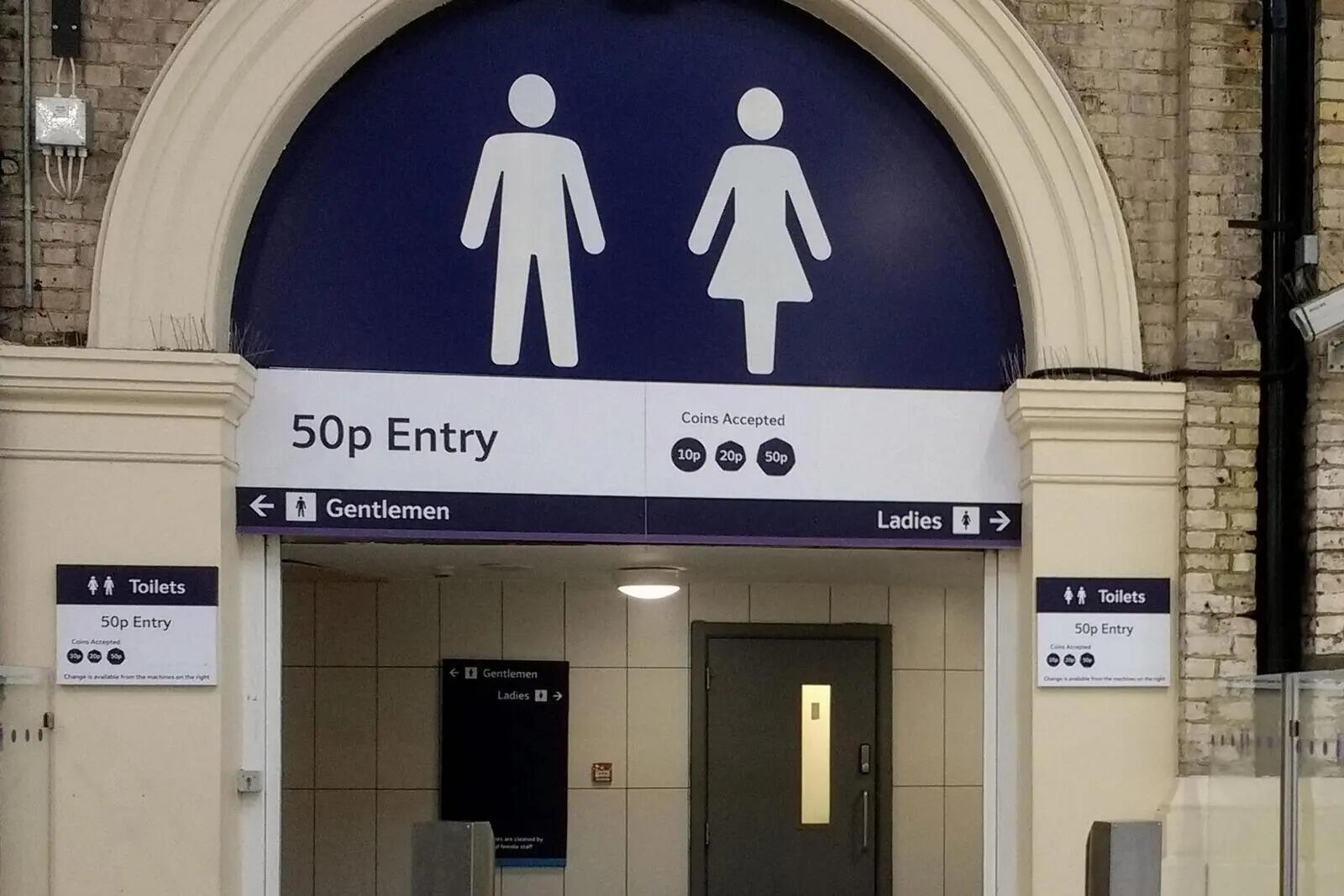
The click of a latch is a sound we rarely notice. We hear it in office corridors, bustling restaurants, and the quiet corridors of community centers. It is the sound of a door closing, securing a boundary between the public world and a private moment. For generations, that boundary was understood without a second thought. You walked toward a sign on a door, pushed it open, and stepped into a shared, predictable expectation of privacy.
Lately, that click has carried a heavy weight.
What happens when the rules governing our most vulnerable spaces change? This is not a theoretical debate for late-night television panels or academic seminars. It is a live, breathing reality currently unfolding across the United Kingdom. The British government has initiated a sweeping overhaul of guidelines governing single-sex spaces. The changes alter how hospitals manage wards, how businesses design restrooms, and how public institutions define safety and inclusion.
To understand the friction of this moment, we have to look past the political speeches. We have to look at the brick, the mortar, and the human bodies navigating them.
The Architecture of Safety
Consider a standard NHS hospital ward late at night. The machines hum. The air carries the sharp, sterile scent of antiseptic. On one side of a privacy curtain lies a woman recovering from major surgery, feeling physically exposed and deeply vulnerable. On the other side of the hospital corridor, a transgender woman seeks dignity, medical care, and a environment where she does not feel targeted or out of place.
Two distinct human needs. One physical layout.
The new directives from Westminster attempt to draw clear lines through these complicated scenarios. Under the updated framework, the NHS is instructed to implement stricter enforcement of single-sex wards based on biological sex. For the woman in the hospital bed, the government argues this provides an essential layer of psychological comfort when she is least able to defend her boundaries. For the transgender community, however, the policy raises immediate, practical hurdles regarding where they can safely receive care without facing scrutiny or exclusion.
The policy ripples far beyond hospital walls. It dictates the blueprint of every new public building.
The government has mandated that all new non-residential buildings in England must provide separate single-sex toilets for men and women, or entirely self-contained, individual fully enclosed toilets. The era of the shared, multi-stall gender-neutral restroom in new developments is effectively being paused by legislative pen strokes.
This is where the debate transitions from ideology to architecture. The challenge is no longer just about definitions; it is about plumbing, square footage, and the physical flow of human beings through a workday.
The Cost of the Threshold
Imagine managing a historic high-street theater. The building has narrow hallways, Victorian piping, and limited space. Under the new expectations, adjusting to compliance is not a matter of changing a plastic sign on a door. It requires a significant capital investment to remodel facilities, or navigating the logistical headache of ensuring that single-sex spaces remain strictly defined while still providing accessible options for everyone.
The tension exists because privacy is a zero-sum game in a confined layout.
When a space becomes entirely open, some individuals feel their privacy has been compromised. When a space is rigidly segregated by biology, others feel erased or placed in physical jeopardy. It is a friction born of the physical world. We cannot download more space. We cannot patch reality with a software update.
The rationale driving these policy shifts is grounded in data regarding public comfort, particularly among women who have expressed growing discomfort over the rapid, often uncoordinated rollout of gender-neutral facilities. Surveys and public consultations consistently revealed a quiet, persistent anxiety. Many women reported self-regulating their behavior—skipping hydration, avoiding public facilities, or leaving venues early—when faced with shared, multi-stall spaces.
Yet, the counter-perspective is equally rooted in human anxiety. A transgender man, bearded and muscular, walking into a women’s restroom because of a biological mandate, causes the very disruption the policy aims to prevent. A transgender woman using a men’s facility faces statistically documented risks of verbal harassment and physical violence.
The threshold of a public restroom becomes a gauntlet of micro-decisions. Take a breath. Check the sign. Scan the room. Wait for the latch to click.
Rewriting the Social Contract
Britain is not navigating this cultural moment in isolation, but its approach is distinct in its systemic, top-down implementation. By embedding these rules into the NHS constitution and national building regulations, the government is attempting to create a standardized baseline. The goal is to remove the ambiguity that has left individual store managers, school principals, and head nurses to invent their own policies on the fly.
Ambiguity, after all, breeds conflict. When there are no clear rules, every encounter at a sink or a waiting room door becomes a potential confrontation.
But a standardized baseline possesses its own rigidity. It struggles to account for the nuances of human empathy. It overlooks the nurse who quietly moves a distressed patient to a private side room, or the shopkeeper who looks past the rulebook to offer kindness to a customer in distress.
We are watching a live experiment in how a society balances competing rights. It is an uncomfortable, clumsy process because it forces us to articulate things we prefer to leave unsaid. It requires us to define exactly what we expect from a stranger when we are at our most exposed.
The Quiet Room at the End of the Hall
The discussions will continue in courtrooms and parliamentary chambers. The language will be clinical, legalistic, and sharp. Lawyers will parse terms like "proportionate means" and "legitimate aims." Politicians will utilize the issue to rally their bases or point fingers at their opponents.
Away from the noise, the reality remains stubbornly local.
Think of a parent standing outside a changing area, holding a child’s hand, looking at a newly altered sign. Think of an elderly patient looking up from a hospital gurney as a new shift of medical staff walks in. These are the moments where the policy lands. Not in the headlines, but in the quiet, mundane choices of daily life.
The door remains there, painted wood or brushed aluminum, separating the chaotic public square from the quiet interior. We approach it with our histories, our fears, and our basic human needs. We reach for the handle, hoping that whatever rules have been written in distant government offices, the space on the other side will hold enough room for our dignity.


