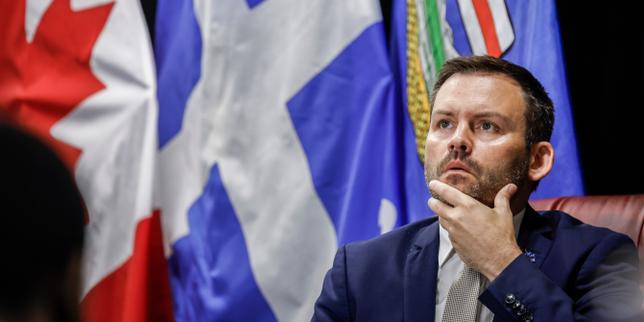
Paul St-Pierre Plamondon just played his cards. By tethering the dream of Quebec sovereignty to the calendar of the American presidency, the Parti Québécois leader has done something far more dangerous than just delaying a vote. He has surrendered the most powerful weapon in any independence movement: the initiative.
The current consensus is simple, lazy, and utterly wrong. It suggests that a referendum requires a "serene" global climate to succeed. It argues that because Washington is currently a vortex of unpredictability, Quebecers are too distracted to focus on their national future. This is the tactical equivalent of a commander waiting for a thunderstorm to stop before deciding to move his troops. Politics is not a garden party; it is a contact sport. Waiting for your neighbor's house to stop burning before you renovate your own is not prudence. It is paralysis. For an alternative view, check out: this related article.
The Illusion Of The Perfect Moment
St-Pierre Plamondon claims that removing the "Trump variable" from the equation clears the air for a "calm and informed debate". Let’s call this what it is: a tactical retreat disguised as a moral stand.
Imagine a scenario where a movement gains momentum because it thrives on external friction. Every time a global leader threatens trade, destabilizes markets, or shifts geopolitical alliances, it creates a vacuum. Nations don't become sovereign during periods of global stability; they become sovereign when the status quo proves it can no longer provide security or prosperity. By tying the referendum to the exit of an American president, the PQ has effectively told the electorate that Quebec’s future is secondary to the whims of the Oval Office. Related analysis regarding this has been provided by Associated Press.
If your national project is so fragile that a volatile neighbor can derail it, your project isn't ready. If you believe the Canadian federation will suddenly become more palatable after 2029, you are ignoring the tectonic shifts in North American trade, energy, and defense that will persist regardless of who occupies the White House.
Dismantling The Fear Factor
The opposition argues that the PQ’s delay is a sign of unseriousness. They are right, but for the wrong reasons. The delay isn't unserious because it’s a "bad time"; it’s unserious because it assumes that Quebecers are incapable of chewing gum and walking at the same time.
The average voter isn't sitting in their living room, paralyzed by the latest news from Washington, unable to process the cost of their groceries or the state of their healthcare system. They are living the consequences of current governance. When a political party says, "We will deal with the big structural question later because the world is noisy right now," they aren't protecting the debate. They are conceding the narrative to their opponents.
The "fear of the unknown" is the default setting for any unionist movement. By promising to wait, the PQ has handed a three-year calendar of "stability" to the current government. They have invited the establishment to define the terms of the next few years, ensuring that the only "serious" conversations are those about incremental management rather than transformative change.
Experience Over Expediency
I have watched enough political campaigns to recognize a "kick the can" strategy when I see one. You isolate a contentious, high-stakes issue and bury it in the future, hoping the political winds will shift in your favor. It never works. History isn't kind to movements that offer "sovereignty, but only when the weather is nice."
The reality is that crises—whether in the housing sector, the economy, or the environment—are not pausing for the 2029 inauguration. By stalling, the PQ risks becoming a party of status quo management, identical to the ones they aim to replace. If you don't use the current turmoil to demonstrate why the current Canadian arrangement is inadequate for protecting Quebec's specific interests against external shocks, you will never build the mandate to break away.
The Real Question
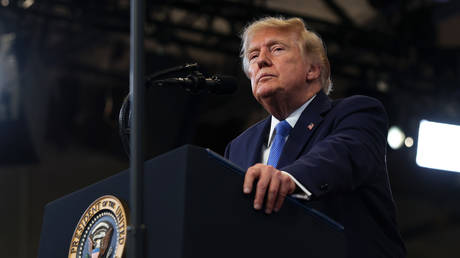
The question isn't whether Donald Trump makes it difficult to have a "serene" debate. The question is: why does the debate need to be serene?
Conflict produces clarity. When the stakes are high and the global environment is hostile, people are forced to make hard choices. That is the exact moment when a movement for change should be hitting the gas, not hitting the brakes. The PQ’s pivot is a tactical blunder that confuses caution with strategy.
If they wanted to win, they would be using the "unpredictability" of the global environment to prove why Quebec needs its own seat at the table. They would be arguing that being tied to a larger, struggling federal entity is a liability in a world that is fragmenting. Instead, they’ve chosen to wait for the storm to blow over.
But the storm isn't going anywhere. It’s just changing names. And by the time 2029 rolls around, the people of Quebec might find that the reasons they wanted independence have been replaced by the apathy of a movement that stopped believing its own momentum was enough.
Stop waiting for permission from history. Start writing it.