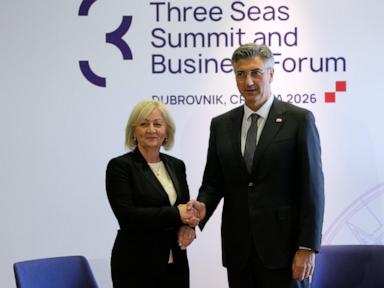
The deal between Croatia and Bosnia and Herzegovina to build the Southern Interconnection natural gas pipeline is not merely a regional infrastructure project. It is a calculated move to dismantle a decades-old monopoly held by Russian state interests. By linking the Bosnian gas grid to the Krk Island Liquefied Natural Gas (LNG) terminal in Croatia, the two nations are attempting to wire a new energy reality into the map of Southeast Europe. This project aims to provide a direct alternative to the TurkStream pipeline, which currently keeps the region tethered to Gazprom's price volatility and political leverage.
However, moving from a handshake to a functioning valve is a process riddled with ethnic friction, corporate maneuvering, and the harsh realities of European energy financing. While the press releases focus on "security of supply," the ground-level truth involves a bitter struggle over who will turn the literal and metaphorical keys to the pipeline. In other developments, take a look at: The Blue Flame and the Shadow of Debt.
The Geography of Dependence
For years, Bosnia and Herzegovina has existed as an energy island with only one point of entry for natural gas. This single entry point, located at the Serbian border, carries gas that originates in Russia and travels via the TurkStream route. This isn't just an engineering bottleneck; it is a strategic vulnerability. When Moscow decides to adjust its foreign policy, the thermostat in Sarajevo often feels the chill.
The Southern Interconnection changes the math. The proposed route runs from Dugopolje in Croatia to Zagvozd, then crosses the border into Bosnia toward Posušje, eventually branching out to Novi Travnik and Mostar. This 160-kilometer stretch of steel represents the first time Bosnia will have access to non-Russian gas, specifically from global markets via the floating terminal at Krk. The Economist has provided coverage on this critical subject in great detail.
The terminal on Krk has been a quiet success story for Croatia. Since it began operations, it has allowed Zagreb to transition from a consumer to a regional hub. By expanding its capacity, Croatia is positioning itself as the gatekeeper for energy in the Western Balkans. This is a lucrative role, but one that carries the weight of regional stability.
The Battle for the Valve
Engineering a pipeline is easy compared to navigating the internal politics of Bosnia and Herzegovina. The project has hit a significant wall not because of technical difficulties, but because of a dispute over management.
Currently, BH-Gas, a state-owned company based in Sarajevo, is the designated operator for the project. However, political leaders in the Federation’s Croat-majority areas have pushed for the creation of a new, separate operator based in Mostar. This demand has sparked a standoff that has drawn the attention of the United States State Department.
The argument for a new operator is framed as a matter of local interests and administrative efficiency. The counter-argument, championed by international observers, is that creating a second company would lead to "dualism," inefficiency, and potential corruption. They see it as a play for ethnic control over a vital resource.
This isn't just bureaucratic red tape. It is the central friction point that could stall the project indefinitely. Without a unified management structure, international lenders like the European Bank for Reconstruction and Development (EBRD) are hesitant to release the necessary capital. The money is there, but it won't move until the governance structure is settled.
The Economic Weight of Krk Island
To understand the Southern Interconnection, you have to look at the Krk LNG terminal. When it was first proposed, skeptics called it a white elephant. They argued that Russian pipe-gas would always be cheaper than LNG shipped across the Atlantic or from the Middle East.
They were wrong.
The volatility of the last three years has proven that price is secondary to reliability. The Krk terminal has allowed Croatia to keep its industrial sector humming while neighbors scrambled to fill storage tanks. By connecting Bosnia to this terminal, the Southern Interconnection effectively brings Bosnia into the European energy fold.
Why LNG Matters Now
- Source Diversification: Bosnia can buy from the US, Qatar, or North Africa.
- Price Competition: Forcing Gazprom to compete with global LNG prices.
- Volume: The planned expansion of the Krk terminal to 6.1 billion cubic meters per year provides enough surplus to feed the entire region.
The Green Transition Conflict
There is an elephant in the room that the regional governments are hesitant to discuss: the European Union's Green Deal. Brussels is currently tightening the purse strings on fossil fuel infrastructure. While natural gas is often marketed as a "bridge fuel," the bridge is getting shorter.
Croatia and Bosnia are framing this pipeline as a security necessity to bypass the EU’s general moratorium on new gas funding. They argue that because it replaces coal-heavy energy sectors—particularly in the industrial heartlands of central Bosnia—it serves a decarbonization purpose. This is a delicate rhetorical dance. If they can’t convince the EU that this pipeline is a net win for the environment, they may have to rely on more expensive private financing or state budgets that are already stretched thin.
The clock is ticking on these exemptions. Every year of delay caused by internal political squabbles makes the project more expensive and less likely to receive the "Project of Common Interest" status that brings European subsidies.
Serbia and the Eastern Counter-Play
While Croatia and Bosnia move south, Serbia remains a staunch hub for Russian energy interests in the Balkans. Belgrade has its own ambitions of becoming a transit country via the Balkan Stream. This creates a competitive environment where two different visions for Balkan energy are clashing.
One vision is a north-south axis led by Croatia and supported by the West. The other is an east-west axis that maintains traditional ties to the East. For Bosnia, which sits between these two spheres of influence, the Southern Interconnection is more than a pipe; it is a declaration of alignment. Choosing the Croatian route is a move toward the European internal market and away from the bilateral deals that define Gazprom’s business model.
The Industrial Impact
Natural gas is the lifeblood of Bosnia’s remaining heavy industry. From aluminum plants to steel mills, the cost of energy determines whether these companies can compete on the global market. Currently, these industries are at the mercy of a single supply line.
If the Southern Interconnection is completed, these industrial giants gain leverage. They can negotiate contracts based on global indices rather than being forced to accept whatever price is handed down through the Serbian border. This economic sovereignty is often overlooked in favor of the grand geopolitical narrative, but it is what will ultimately pay for the project.
The pipeline also opens the door for gasification in southern Bosnia and Herzegovina, a region that currently relies heavily on electricity and wood for heating. Transitioning these areas to gas would reduce the strain on the aging electrical grid and improve air quality in valleys that suffer from intense winter smog.
Technical Hurdles and Trans-Border Logistics
The construction itself involves traversing rugged karst terrain, which requires specialized drilling and significant environmental safeguards. The border crossing at Posušje requires a synchronized regulatory framework between two countries with very different legal systems. Croatia is an EU member and must follow strict Third Energy Package rules, which mandate the separation of gas production from gas transport. Bosnia, as a candidate country, is still in the process of aligning its legislation.
This regulatory gap creates a "legal friction" that can be as difficult to overcome as the physical mountains. If Bosnia does not modernize its energy laws to match EU standards, the gas flowing from Croatia might hit a wall of bureaucracy at the border.
The American Influence
It is no secret that Washington is a major backer of the Southern Interconnection. U.S. diplomats have been uncharacteristically blunt in their criticism of local politicians who are perceived as blocking the project. To the United States, this is a clear-cut case of national security. Every cubic meter of gas that comes from the Krk LNG terminal is a cubic meter that doesn't fund the Russian treasury.
This pressure from the West has put local leaders in a corner. They are forced to choose between maintaining their traditional patronage networks—which thrive on controlling state-owned utilities—and aligning with the strategic goals of their most powerful international allies.
The Reality of the Cost
The estimated cost of the Bosnian section of the pipeline hovers around 100 million Euros. While this seems like a manageable sum for a national project, the secondary costs of building the distribution networks in cities like Mostar and Travnik will double or triple that figure.
Investors want to see a clear return. They want to see a unified operator that won't be dissolved by the next election cycle. They want to see a consumer base that is ready to switch from coal to gas. Most importantly, they want to see that the Southern Interconnection is not just a political talking point, but a viable business venture.
The deal signed between the two countries is a necessary first step, but the "definitive" nature of this project remains on paper. The steel isn't in the ground yet. Until the first trench is dug and the first contract for non-Russian gas is signed, Bosnia remains a hostage to its own geography and its internal divisions.
The Southern Interconnection represents a rare moment where local economic needs perfectly align with global geopolitical strategy. The only thing standing in the way is the same provincial power-playing that has historically kept the Balkans on the periphery of European prosperity. If the project fails, it won't be because of a lack of gas or a lack of money; it will be because the people in charge couldn't agree on whose name is on the letterhead.
The path to independence is rarely paved with good intentions; it is built with high-grade steel and the courage to break a monopoly. Bosnia and Croatia have the plan. Now they need to find out if they have the will to execute it before the window of European fossil fuel investment slams shut forever.
The next twenty-four months will determine if this pipeline becomes a lifeline for a new era or remains a phantom project discussed in the hallways of Sarajevo and Zagreb while the heaters stay cold.