Summer smells like popcorn, damp asphalt, and ozone. If you close your eyes near the perimeter fence of an amusement park, you can trace the architecture of joy entirely by the acoustics. There is the rhythmic, metallic clack-clack-clack of the chain lift dragging a train of strangers up an engineered incline of gravity and terror. There is the collective intake of breath—a soft, thousand-voiced gasp—and then the drop. The drop is where the screaming turns into laughter.
Until it doesn't.
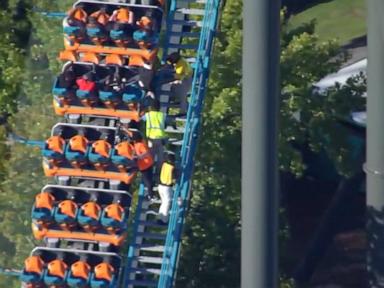
On a Tuesday that started with ordinary humidity and ticket lines spilling out onto sun-baked concrete, a roller coaster at a Six Flags park stopped being a machine for manufactured thrills and became something else entirely. Police cruisers arrived with lights spinning silent blue strokes against the afternoon glare. Yellow tape fluttered. And somewhere beneath the structural geometry of tubular steel and painted pylons, a family’s geometry was shattered forever. One life ended. Several others fractured.
We read headlines like this on our phones while waiting for the subway or drinking lukewarm coffee, our eyes scanning the cold digits of the casualty toll before we swipe away to the next weather report or sports score. We treat tragedy as data. But safety is not an abstract statistical probability when you are the one strapped into seat four, listening to the safety harness click down against your thighs with a heavy, final thud.
Consider the physics of trust.
When you board a roller coaster, you are engaging in an act of absolute surrender. You are handing over your skeletal integrity, your heartbeat, and your tomorrow to a complex synthesis of mechanical engineering, daily maintenance logs, and operators making minimum wage who signed up to check lap bars under a merciless July sun. You do not check the bolt torques. You do not examine the welds on the brake fins. You step past the turnstile because of a social contract so deep we rarely even name it: the tacit agreement that invisible people have done their invisible jobs with uncompromising precision.
When that contract breaks, the psychological fallout is immediate and violent.
I remember standing on the midway of a regional park years ago, decades before this specific tragedy, watching a maintenance crew swarm an empty train after an abrupt emergency stop. The silence of that park was louder than any ride. The music over the loudspeakers kept playing—some bouncy, looped steel-drum pop meant to manufacture perpetual vacation vibes—and the jarring mismatch between the audio track and the pale, shaken faces of the passengers being unclipped from their restraints felt almost dystopian. Music is meant to cover the silence, but sometimes silence wins.
Accidents on modern thrill rides are statistically rare. The International Association of Amusement Parks and Attractions and federal safety databases routinely remind us that you are vastly more likely to be injured driving to the park than riding inside it. The numbers are reassuring. They are also cold comfort to the relatives of the dead.
Statistics do not bleed.
Behind every incident report is a chain of small, human moments. The morning coffee shared in the kitchen before packing the sunscreen. The argument over whether to buy the fast-pass wristband. The snapshot taken against a backdrop of artificial mountains and cotton candy. Then, the sudden, violent intersection of mass, velocity, and mechanical failure.
We need to talk about what happens to the operators, too. The teenager whose entire world shrank in a single second from watching teenagers giggle in line to watching first responders run past with trauma kits. The sleepless nights that follow when a job born of summer boredom turns into a lifetime witness to catastrophe. Trauma is not confined to the hospital ward; it lingers in the damp grass beneath the coaster supports long after the investigators have packed up their clipboards and cleared the scene.
Parks are shrines to calculated risk. We go there precisely because the danger is fake, because we want to brush shoulders with mortality while wearing a Mickey Mouse hat or a Six Flags lanyard, knowing that at the end of the two minutes we will buy an overpriced funnel cake and walk back to the parking lot. That illusion of controlled chaos is what makes the ride thrilling.
When the illusion fails, the reality rushes in with the brutal efficiency of raw physics.
Gravity has no malice. It does not care about safety inspections, corporate liability waivers, or the screams of bystanders. It simply pulls downward, exactly as it has since the beginning of time. Our entire technological civilization is just a series of temporary bargains we strike against that pull. We weld steel, pour concrete, write maintenance manuals, and invent redundancy systems, all to pretend we have mastered the drop.
The yellow tape will eventually come down at the park. The police reports will be filed, analyzed, debated by litigators, and filed away into cabinet drawers. New coats of paint will cover the structural repairs, and eventually, the line will form again. People will pay for tickets, hand over their bags, and climb into the cars. They will pull down the shoulder harnesses, lock their eyes on the horizon, and wait for the chain to catch.
They have to. Because if we stopped riding—if we let the rare, devastating exceptions permanently eclipse our appetite for height and speed—we would be admitting something too terrifying to bear: that we are always, at every second, completely out of control.
So the chain will start clicking again. The cars will climb. And somewhere in the back of our minds, behind the laughter and the summer heat, we will listen a little closer to the sound the steel makes.