Ink dries quickly on official stationary. The stamp comes down with a heavy, wooden thud. Case closed. Or rather, case never opened.
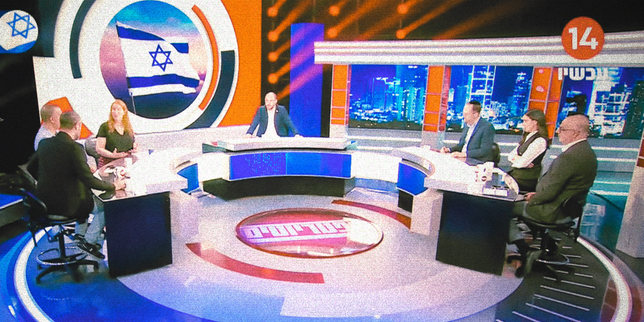
Imagine sitting at a kitchen table in Tel Aviv, staring at a screen where a television broadcast casually erases your humanity. The words spoken on the airwaves are not mere insults or political disagreement. They are a systematic deconstruction of existence. When a prominent media voice declares that there are no innocents across a border, they are not shouting into an empty void. They are broadcasting permission. They are drawing an invisible target on the backs of millions, including children clutching torn blankets in the dust, and the authorities who hear this incitement simply shrug.
Law is supposed to be a shield. Instead, recent events reveal a chilling administrative paralysis. When a formal legal complaint was filed against a television network for airing language that crossed the absolute threshold of genocidal incitement, the Israeli police did not deliberate for months. They refused to investigate. Not because the words were unsaid. Not because the broadcast vanished into thin air. But because, in the calculation of the enforcers, some speech carries a state-sanctioned immunity that trumps the fundamental rules of civilized society.
Words have weight. In history, every mass catastrophe begins with a vocabulary shift. The architecture of destruction is always built first in the lexicon of dehumanization before it manifests in physical ruin. Long before the concrete crumbles, the language softens the blow. People stop being neighbors, fathers, sisters, or students. They become demographic threats. They become targets. They become, in the chilling rhetoric accepted by the screen and protected by the badge, entirely devoid of innocence.
Consider the mechanics of this refusal. A citizen takes the trouble to document the broadcast. They collect the transcripts. They cite the penal codes regarding incitement to violence and racism. They walk into a precinct, placing their trust in the dry, mechanical gears of justice. They expect the system to function as advertised. They expect an inquiry.
Silence.
The police department’s rejection is not merely an administrative choice; it is an active participation in the normalization of the unthinkable. When the guardians of the law decide that preaching collective guilt is acceptable public discourse, the boundary line separating a democratic society from an abyss vanishes entirely. It creates a vacuum where accountability goes to die.
To understand the terror of this moment, one must look past the legal jargon and examine the human cost of unpunished speech. When a television channel tells millions of viewers that innocence is a geographic impossibility, it reaches into the living rooms of families and plants the seeds of moral exemption. Soldiers on the ground hear it. Bureaucrats signing orders hear it. Ordinary citizens walking down the street hear it. It whispers a dangerous reassurance: whatever happens next, you are authorized. Whatever follows, no one is truly innocent, which means no one is truly protected.
This is how impunity operates. It does not arrive with a dramatic explosion. It arrives in quiet offices where files are slid into drawers and marked as unworthy of attention. It arrives in the deliberate choice of a police investigator who looks at a transcript of hate and decides to look the other way.
The refusal to investigate sends a tremor through the foundations of legal ethics. If incitement to genocide is protected under the guise of free expression or wartime necessity, then the law has ceased to be a universal principle. It has become a weapon used selectively to shield the powerful while abandoning the vulnerable to the mercy of the prevailing wind.
We have seen this script before. History is littered with the skeletons of societies that convinced themselves that certain human beings did not count. The warning signs are never hidden. They are broadcast in high definition, spoken by pundits with polished smiles, and rubber-stamped by institutions too cowardly or too compromised to uphold their own oaths.
The ink on the police report remains dry. The television screen continues to flicker with the bright, toxic colors of televised justification. But somewhere in the dark, the echo of that uninvestigated complaint remains, a haunting reminder of what happens when justice closes its eyes, plugs its ears, and pretends it cannot hear the drums beating in the distance.