The neon signs of Jordan do not blink; they buzz. It is a low, electric hum that vibrates through the soles of your shoes, competing with the hiss of roasting geese and the clatter of mahjong tiles spilling onto folding tables. If you stand at the intersection of Temple Street and Jordan Road at nine o'clock on a Tuesday night, the air smells of diesel fuel, peanut oil, and the sharp, metallic tang of the South China Sea.
This is Hong Kong. Or, at least, it is the version of Hong Kong that lives in the global imagination.
But three miles away, in a glass tower overlooking the financial district of Central, the silence is absolute. The air conditioning is chilled to a precise, antiseptic temperature. From the sixty-second floor, the city below looks like an intricate circuit board, glowing with predictable efficiency.
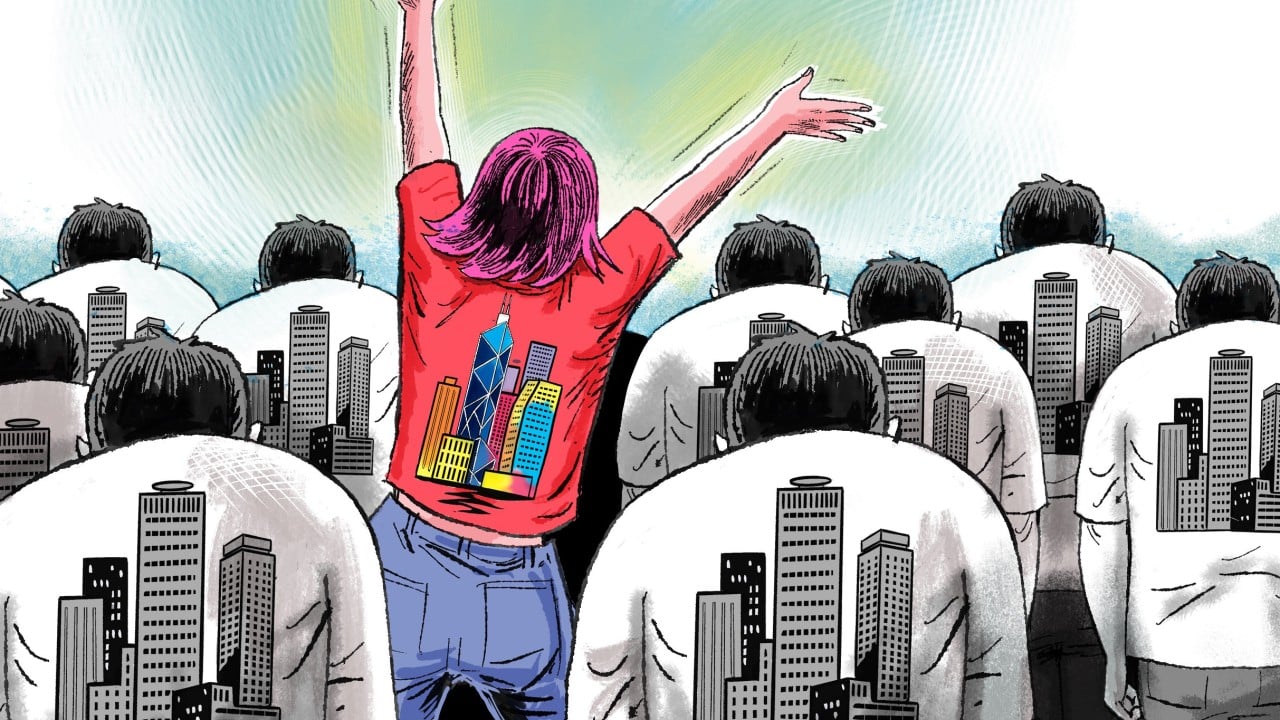
To understand why Hong Kong is slipping into a dangerous identity crisis, you have to look at the space between that buzzing neon street and that silent glass tower. The city is facing an existential threat that cannot be measured by stock market indices or gross domestic product. The threat is assimilation. The danger is that Hong Kong might wake up tomorrow and realize it has become just another metropolis on the map, indistinguishable from Shanghai, Singapore, or Shenzhen.
Standard economic analyses look at this problem through the lens of infrastructure and policy. They talk about tax incentives, high-speed rail links, and regulatory frameworks. They miss the point entirely. A city is not merely a collection of skyscrapers and transit systems. It is an emotional contract between its history and its people.
Consider Mr. Leung. He is a hypothetical composite of three different men I met while walking through the disappearing wet markets of Sham Shui Po, but his reality is undeniable. Mr. Leung has run a small metalware shop for forty-two years. His hands are mapped with deep, carbon-stained lines. His business survives not because he is integrated into a global digital supply chain, but because the local mechanics, chefs, and contractors trust his word.
When a city modernizes by simply tearing down the old to build the uniform, it does not just displace Mr. Leung. It erases the social tissue that makes the city magnetic.
If you replace Mr. Leung’s shop with a generic luxury mall featuring the exact same three Italian fashion brands you can find in Paris, Tokyo, or Dubai, you have not upgraded the city. You have hollowed it out. The tourist from Frankfurt or the investor from New York does not fly across an ocean to sit in an air-conditioned box that looks exactly like the one they left behind. They come for the friction. They come for the specific, chaotic energy that can only exist when East and West collided on a rocky outpost of southern China for over a century and a half.
The numbers tell a story that the policy papers try to polish away. For decades, Hong Kong enjoyed a unique position as the undisputed gateway to China. It was the place where capital found safety and Western businesses found a translator. But the world changed while Hong Kong was sleeping.
Shenzhen, just across the northern border, transformed from a sleepy fishing village into a tech leviathan that produces hardware at a speed that baffles Silicon Valley. Shanghai reclaimed its historic role as the financial heartbeat of the mainland. Singapore positioned itself as the ultra-manicured, predictable alternative for regional corporate headquarters.
Hong Kong found itself squeezed in the middle. It is no longer the cheapest option, nor the most technologically advanced, nor the most politically predictable.
When a product loses its unique selling proposition, a business school professor will tell you to cut costs or find a new market. But a city cannot just change its product line. It must double down on its soul.
The strategy to prevent Hong Kong from fading into the background cannot be built on copying its neighbors. Shenzhen will always have more land. Singapore will always have more predictability. Hong Kong’s true competitive advantage has always been its wild, untamed hybridity. It is a place of contradictions: British common law protecting capital while Daoist priests bless new corporate headquarters; hyper-dense urban cages sitting mere miles from pristine, subtropical hiking trails.
To preserve this, the city needs a radical shift in how it views its own value.
First, the obsession with mega-infrastructure projects must be re-evaluated. Huge reclamation projects and massive bridges are impressive from an engineering standpoint, but they often result in sterile spaces. Think of it as the difference between a master-planned suburb and an old, winding European alleyway. The alleyway has magic because it evolved organically over time based on human needs. The planned suburb is efficient, but it leaves the spirit cold.
Hong Kong needs to protect its micro-economies. The street food hawkers, the independent art spaces in old industrial buildings in Kwun Tong, the traditional junk boat builders—these are not museum pieces. They are the economic catalysts that attract talent.
The global creative class—the software engineers, designers, financial innovators, and entrepreneurs who can work from anywhere in the world—do not choose a city based on its container port capacity. They choose it based on texture. They want to live in a place that feels alive, a place that surprises them when they turn a corner.
The real problem lies in the misconception that modernization requires uniformity.
Look at what happened to Tokyo. In the late twentieth century, the Japanese capital faced immense pressure to completely westernize and bulldoze its historic wooden neighborhoods. Instead, it chose a path of layered preservation. You can walk out of a hyper-modern digital art exhibition and instantly step into a tiny, five-seat yakitori bar that has unchanged since 1950. The contrast is the attraction.
Hong Kong has historically been a master of this contrast, but the balance is tipping.
The high cost of real estate is acting as a cultural filter, straining out the weird, the experimental, and the local in favor of the corporate, the safe, and the franchised. When rent in Mong Kok or Central becomes so astronomical that only an international bank or a multinational coffee chain can afford the ground floor, the street loses its vernacular voice. It becomes a duplicate of every other global commercial zone.
But there is a way forward that does not require turning back the clock or resisting economic growth. It requires a policy of deliberate, aggressive preservation of the city's unique cultural ecosystem.
This means creating zoning laws that protect small, local businesses from being priced out by massive property developers. It means treating cultural heritage not as a hobby for historians, but as a core economic asset. If the government can subsidize tech startups, it can subsidize the preservation of the neon craftsmen, the dim sum masters, and the independent theaters that give the city its specific creative spark.
Furthermore, the city must lean into its role as a cultural bridge, rather than just a financial conduit.
Hong Kong’s film industry once dominated global imagination, influencing directors from Hollywood to Seoul. Its music and literature created a distinct Cantonese identity that resonated across the global diaspora. This cultural capital is incredibly resilient, but it requires cultivation. By investing in the arts with the same ferocity that it invests in financial technology, Hong Kong can reclaim its position as the cultural trendsetter of Asia.
It is easy to get lost in the anxiety of the present moment. The geopolitical shifts are heavy, and the economic pressures are real. It is tempting to look at the massive growth of the surrounding Greater Bay Area and conclude that Hong Kong must conform to survive, that it must become a seamless cog in a larger regional machine.
That would be a historic mistake.
The cities that survive the test of time are the ones that refuse to blend in. Venice did not survive by trying to compete with the industrial output of Milan; it survived by remaining stubbornly, beautifully Venice. New York did not maintain its status by mimicking the manufacturing efficiency of Chicago; it stayed New York because of its relentless, noisy individuality.
Hong Kong’s future cannot be bought with more concrete. It cannot be secured by building another runway or another business park that looks like an office complex in Ohio.
The sun sets over Victoria Harbour, painting the water in shades of bruised purple and liquid gold. The Star Ferry, a green and white relic from 1888, thumps rhythmically against the wooden piers of Tsim Sha Tsui. On board, a young woman in a tailored business suit sits next to an old man carrying a birdcage. Outside the window, the skyline blazes to life—a wall of light that is spectacular, yes, but only meaningful because of the humans moving through its shadows.
If that ferry ride ever feels exactly like a subway ride in any other city, the battle will have been lost. The true task is to ensure that the thump of that engine, the smell of the harbor, and the chaotic, brilliant collision of two worlds remains stubbornly, defiantly unique.


