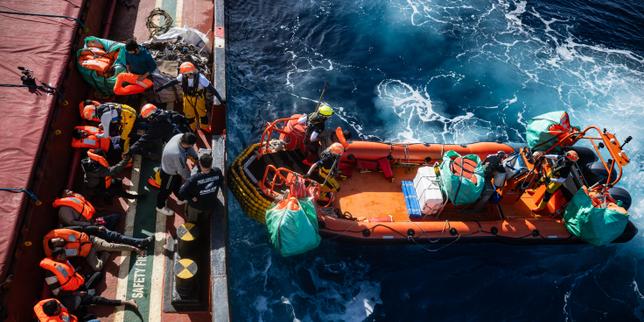
The central maritime corridor connecting North Africa to Europe has quietly turned into an increasingly hostile zone where rescue crews and people fleeing violence face direct, escalating danger. SOS Méditerranée recently sounded the alarm over a sharp rise in aggressive actions targeting migrant watercraft and humanitarian rescue vessels.
For years, public debates focused mostly on port closures and bureaucratic blockades imposed by European governments. Today, the reality on the water is far more physical and immediate. Armed threats, high-speed chases in international waters, and deliberate rammings have changed the stakes for everyone operating in these remote blue spaces.
The Reality of Armed Harassment at Sea
Humanitarian organizations don't just worry about bad weather anymore. Between June and July, SOS Méditerranée documented at least seven separate incidents where vessels linked to Libyan actors or unidentified armed groups approached rescue ships at high speed. Some of these boats trailed humanitarian crews for hours, pushing deep into international waters.
These aren't simple warning maneuvers. Witnesses and crew logs report terrifying tactics, including the deliberate ramming of fragile rubber boats carrying people in absolute distress. When speedboats smash into overloaded dinghies, human lives vanish instantly beneath the surface.
This aggression follows a trajectory of violence that shocked maritime lawyers and human rights observers. Just a year prior, the humanitarian ship Ocean Viking became the target of a prolonged attack in international waters. A Libyan patrol vessel fired more than one hundred bullets toward the ship during a twenty-minute barrage while eighty-sept rescued survivors huddled on deck. Miraculously, no one died that day, but the message was clear: civilian rescue crews are treated as hostile targets. Despite legal complaints filed across France, Italy, and Germany, the perpetrators face zero accountability while official investigations stall.
How European Policy Enabled the Chaos
Why is this happening now? Humanitarian leaders point directly to European Union migration deterrence policies. By outsourcing border control to Libyan entities and funneling financial resources into local interception networks, European capitals created a dangerous vacuum of oversight.
When regional patrols are incentivized to stop departures at all costs, standard maritime laws regarding human life and rescue obligations get thrown overboard. The strategy relies on containment. If people cannot leave, Europe doesn't have to process them. But people keep fleeing absolute misery, war, and detention centers because the alternative at home is worse.
The result is a chaotic gray zone. State-led search and rescue operations remain critically low across the central basin, leaving civilian NGOs as the primary lifeline. Yet, these same NGOs face continuous administrative roadblocks, heavy fines, and now, physical violence from armed factions operating with virtual impunity.
The Human Cost Behind the Statistics
Data from the International Organization for Migration shows that thousands have perished along this corridor over the past decade, keeping its grim title as the deadliest migration route globally. While overall crossing attempts fluctuate due to shifting border enforcement, the proportion of fatalities relative to those who try remains staggering.
When rescue vessels are chased away, delayed by hostile armed boats, or forced to spend days dealing with legal harassment, response times stretch out. Every minute lost at sea translates directly to bodies washing ashore or disappearing into the deep.
Ignoring these maritime clashes won't make the migration crisis disappear. Real progress requires holding armed actors accountable for attacks on civil society, demanding transparency from state-backed partners, and enforcing international maritime laws that mandate saving lives without criminalization.